Showing posts with label 2014. Show all posts

Wednesday, November 12, 2014

Program Reminder for 12 NOV 2014

Just a reminder that 7:00 PM tonight I will be presenting a program on my search for the Wildflowers of 2014 to the Chippewa Valley Audubon Club.  The CVAC meets in the Veterans Memorial Library at 301 S. University in Mt. Pleasant.  I will be discussing my goals for the year, the rules I set for myself, and the results of my search.  Of course there will be lots of photos.


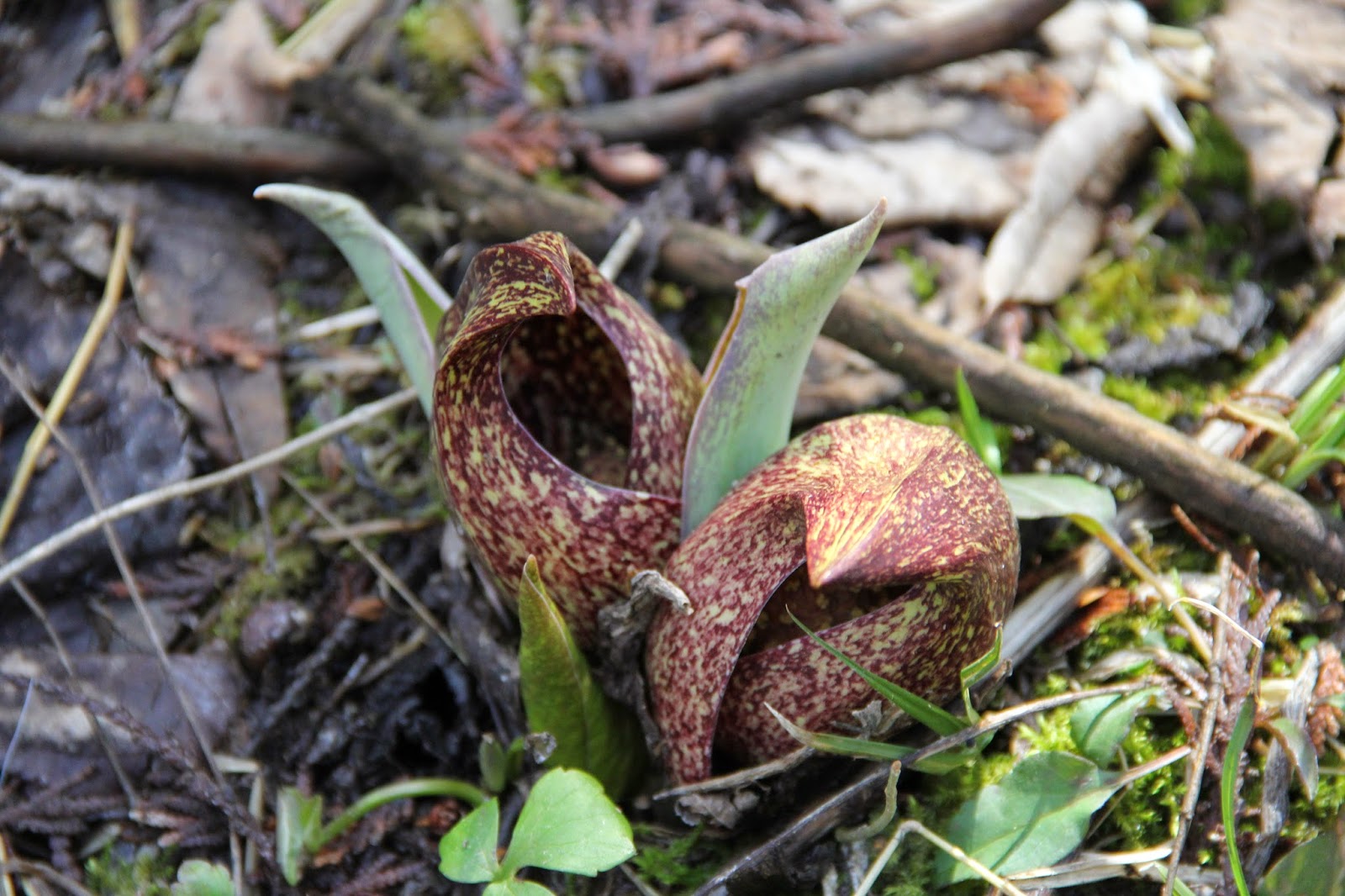
My first wildflower photo of the year - Skunk Cabbage photographed on 10 APR

My last wildflower photo of the year - Witch-hazel photographed on 14 OCT

A self portrait taken at Mission Creek Park (29 June 2014) during my search for new wildflowers.

Tuesday, October 28, 2014

Wildflowers of 2014 - The Complete (and Final) List

It appears that my Big Year of Wildflowers has reached an end.

Earlier this Spring, I started making a list of (and photographing)  all the wildflowers I could find in one growing season.  Here are the rules that I gave myself for this self-imposed challenge.

  •  Any native or non-native plant (including trees) can be photographed if it meets two conditions
    • It must be growing in a wild population - it cannot be in a location where it was planted.
    • It must be growing in one of the parks or other city properties within the city of Mt. Pleasant, Michigan.
  • I have to photograph the plant on the day I first find the flower - but I can photograph any flower of the species that I find on that day.
  • I have to be able to identify the species for it to count - unknown specimens do not count.
In total, I found 238 wildflower species during the 2014 growing season.  My first flower was found on 10 April (the 100th day of the year) and my final flower was found on 14 October (the 287th day of the year).   I averaged 1.27 new species per day over the course of 187 days.  Of the 238 total species, 168 (70.6%) have been native and 70 species (29.4%) have been introduced to Michigan. 

Here is my complete list for the year. 

Thursday 10 April 2014
     #1  Skunk Cabbage (Symplocarpus foetidus)

 Monday 14 April 2014
     #2  Yellow Birch (Betula alleghaniensis)
     #3  Pussy Willow (Salix discolor)

Wednesday 16 April 2014
     #4  Quaking Aspen (Populus tremuloides)

Monday 21 April 2014
     #5  Bloodroot (Sanguinaria canadensis)
     #6  Dutchman's Breeches (Dicentra cucullaria)
     #7  Common Blue Violet (Viola sororia)

Tuesday 22 April 2014
     #8  Red Maple (Acer rubrum)
     #9  Speckled Alder (Alnus rugosa)

Thursday 24 April 2014
     #10  Spring Beauty (Claytonia virginica)

Tuesday 29 April 2014
     #11  Boxelder (Acer negundo)
     #12  Cut-leaved Toothwort (Cardamine concatenata)
     #13  Marsh Marigold (Caltha palustris)
     #14  Yellow Trout Lily (Erythronium americanum)

Thursday 01 May 2014
     #15  Field Penny-cress (Thlaspi arvense)     NON-NATIVE
     #16  Silver Maple (Acer saccharinum)
     #17  Wild Ginger (Asarum canadense)
     #18  Common Dandelion (Taraxacum officianale)     NON-NATIVE

Monday 05 May 2014
     #19  Large-flowered Trillium (Trillium grandiflorum)
     #20  Blue Cohosh (Caulophyllum thalictroides)
     #21  Squirrel Corn (Dicentra canadensis)

Tuesday 06 May 2014
     #22  False Rue Anemone (Enemion biternatum)
     #23  White Trout Lily (Erythronium albidinum)

 Sunday 11 May 2014
     #24  Wood Anemone (Anemone quinquefolia)
     #25  Jack-in-the-pulpit (Arisaema triphyllum)
     #26  Spring Cress (Cardamine bulbosa)
     #27  American Dog Violet (Viola labradorica)
     #28  Swamp Buttercup (Ranunculus hispidus)
     #29  Downy Yellow Violet (Viola pubescens)
     #30  Two-leaf Mitrewort (Mitella diphylla)
     #31  Mouse-ear Chickweed (Cerastium fontanum)     NON-NATIVE
     #32  Woodland Strawberry (Fragaria vesca)
     #33  Garlic Mustard (Alliara petiolata)     NON-NATIVE (INVASIVE)

Tuesday 13 May 2014
     #34 Broad-leaved Toothwort (Cardamine diphylla)
     #35 Downy Serviceberry (Amelanchier arborea)
     #36 American Black Currant (Ribes americanum)
     #37 Shepherd's Purse (Capsella bursa-pastoris)     NON-NATIVE
     #38 Mouse-ear Cress (Arabidopsis thaliana)     NON-NATIVE
     #39 Common Winter-cress (Barbarea vulgaris)     NON-NATIVE
     #40 Hoary Alyssum (Berteroa incana)     NON-NATIVE
     #41 Field Peppergrass (Lepidium campestre)     NON-NATIVE
     #42 Creamy Violet (Viola striata)


 Sunday 18 May 2014
     #43 Wild Geranium (Geranium maculatum)
     #44 Star-flowered False Solomon's Seal (Maianthenum stellatum)
     #45 Common Periwinkle (Vinca minor)      NON-NATIVE (INVASIVE)

Tuesday 20 May 2014
     #46 Common Yellow Wood-sorrel (Oxalis stricta)
     #47 Wild Strawberry (Fragaria virginiana)
     #48 Nodding Trillium (Trillium cernuum)
     #49 Early Meadow-rue (Thalictrum dioicum)
     #50 Wild Blue Phlox (Phlox divaricata)
     #51 Small-flowered Buttercup (Ranunculus arbortivus)
     #52 Downy Solomon's Seal (Polygonatum pubescens)
     #53 Small Pussytoes (Antennaria howellii)
     #54 American Mountain Ash (Sorbus americana)
     #55 Purple Dead-nettle (Lamium purpureum)     NON-NATIVE     

Wednesday 21 May 2014
     #56 Horse-gentian (Triosteum aurantiacum)
     #57 Lily-of-the-valley (Convallaria majalis)     NON-NATIVE (INVASIVE)
     #58 Choke Cherry (Prunus virginiana)
     #59 Redbud (Cercis canadensis)
     #60 Morrow's Honeysuckle (Lonicera morrowii)     NON-NATIVE (INVASIVE)
     #61 White Oak (Quercus alba)
     #62 Bur Oak (Quercus macrocarpa)    

Friday 23 May 2014
     #63 Thyme-leaved Speedwell (Veronica serpyllifolia)     NON-NATIVE
     #64 American Bladdernut (Staphylea trifolia)

Monday 26 May 2014

     #65 Tartarian Honeysuckle (Lonicera tatarica)     NON-NATIVE (INVASIVE)
     #66 Common Apple (Malus pumila)    NON-NATIVE
     #67 Wild Columbine (Aquilegia canadensis)
     #68 Red Baneberry (Actaea rubra)
     #69 Cleavers (Galium aparine)
     #70 Mayapple (Podophyllum peltatum)
     #71 Foamflower (Tiarella cordifolia)
     #72 Pennsylvania Bitter Cress (Cardamine pensylvanica)
     #73 White Baneberry (Actaea pachypoda)
     #74 Canada Mayflower (Maianthemum canadense)
     #75 Red Oak (Quercus rubra)

Monday 26 May 2014 (Part 2)
     #76 Wayfaring Tree (Viburnum lantana)     NON-NATIVE
     #77 Dame's Rocket (Hesperis matronalis)     NON-NATIVE (INVASIVE)
     #78 Upright Carrion-flower (Smilax ecirrata)
     #79 Pawpaw (Asimina triloba)
     #80 Red-osier Dogwood (Cornus sericea)
     #81 White Campion (Silene latifolia)     NON-NATIVE
     #82 Canada Anemone (Anemone canadensis)
          
Thursday 29 May 2014
     #83 Feathery False Solomon's Seal (Mainthemum racemosum)
     #84 Indian Strawberry (Potentilla indica)     NON-NATIVE
     #85 Common Fleabane (Erigeron philadelphicus)
     #86 Wild Black Cherry (Prunus serotina)
     #87 Black Medick (Medicago lupulina)     NON-NATIVE

Sunday 01 June 2014
     #88 Fistulous Goat's Beard (Tragopogon dubius)     NON-NATIVE
     #89 Garden Asparagus (Asparagus officinalis)     NON-NATIVE
     #90 Autumn Olive (Elaeagnus umbellata)     NON-NATIVE (INVASIVE)
     #91 Golden Ragwort (Packera aurea)
     #92 Nannyberry (Viburnum lentago)
     #93 Forget-me-not (Myosotis scorpioides)    NON-NATIVE (INVASIVE)
     #94 Southern Blue Flag Iris (Iris virginica)
     #95 White Clover (Trifolium repens)     NON-NATIVE
     #96 Black Raspberry (Rubus occidentalis)
     #97 Green Dragon (Arisaema dracontium)
     #98 Yellow Pond-lily (Nuphar variegata)

 Tuesday 03 June 2014
     #99 American Highbush Cranberry (Viburnum trilobum)
     #100 Common Buttercup (Ranunculus acris)     NON-NATIVE  

     #101 Winged Euonymus (Euonymus alatus)     NON-NATIVE
     #102 Amur maple (Acer ginnala)     NON-NATIVE
     #103 Black Locust (Robinia pseudoacacia)    NON-NATIVE (INVASIVE)
     #104 Oriental Poppy (Papaver orientale)     NON-NATIVE
     #105 Red Clover (Trifolium pratense)     NON-NATIVE
   
     #106 Bittersweet Nightshade  (Solanum dulcamara)     NON-NATIVE
    
     #107 Riverbank Grape (Vitis riparia)
     #108 Silky Dogwood (Cornus amonum)
     #109 Carpet Bugle (Ajuga reptans)     NON-NATIVE

     #110 Common Yarrow (Achillea millefolium) 
     #111 Honewort (Cryptotaenia canadensis)
     #112 Northern Blue Flag Iris (Iris versicolor)
     #113 Running Strawberry Bush (Euonymus obovatus)
     #114 Common Black Snakeroot (Sanicula odorata)
     #115 Virginia Waterleaf (Hydrophyllum virginianum)
     #116 Hairy Vetch (Vicia cracca)     NON-NATIVE
     #117 Ox-eye Daisy (Leucanthemum vulgare)     NON-NATIVE
     #118 English Plantain (Plantago lanceolata)     NON-NATIVE
     #119 Mossy Stonecrop (Sedum acre)     NON-NATIVE

     #120 Birdfoot Trefoil (Lotus corniculatus)     NON-NATIVE
     #121 Yellow Sweet Clover (Melilotus officinalis)     NON-NATIVE
     #122 King Devil (Hieracium piloselloides)     NON-NATIVE
     #123 Clammy Ground-cherry (Physalis heterophylla)
     #124 Giant Bur-reed (Sparganium eurycarpum)

     #125 White Water Lily (Nymphaea odorata)
     #126 Purple Meadow Rue (Thalictrum dasycarpum)

     #127 Alfalfa (Medicago sativa)     NON-NATIVE
     #128 Silvery Cinquefoil (Potentilla argentea)     NON-NATIVE
     #129 Multiflora Rose (Rosa multiflora)     NON-NATIVE (INVASIVE)
    #130 Bitter Dock (Rumex obstusifolius)     NON-NATIVE
    #131 Common Goat's Beard (Tragopogon pratensis)     NON-NATIVE

     #132 Wild Garlic (Allium canadense)
     #133 Moonseed (Menispermum canadense)
     #134 Narrow-leafed Cattail (Typha angustifolia)      NON-NATIVE in Michigan
     #135 Cow Parsnip (Heracleum maximum)    
     #136 Everlasting Pea (Lathyrus latifolius)     NON-NATIVE
     #137 Cursed Crowfoot (Ranunculus scleratus
     #138 Rough-fruited Cinquefoil (Potentilla recta)     NON-NATIVE
     #139 Crown-vetch (Securigera varia)     NON-NATIVE
   
     #140 White Avens (Geum canadense)
     #141 Wild Rose (Rosa blanda)
     #142 Northern Bush-honeysuckle (Diervilla lonicera)
     #143 Gray Dogwood (Cornus foemina)
     #144 Eastern Poison Ivy (Toxicodendron radicans)
     #145 Common Cattail (Typha latifolia)
     #146 Hedge Bindweed (Calystegia sepium)
     #147 Motherwort (Leonurus cardiaca)
     #148 Common Enchanter's-nightshade (Circaea canadensis)
     #149 Field Bindweed (Convolvulus arvensis)
     #150 Canada Thistle (Cirsium arvense)     NON-NATIVE

     #151 Staghorn Sumac (Rhus typhina)
     #152 Border Privet (Ligustrum obtusifolium)     NON-NATIVE
   
     #153 Large-leaved Shinleaf (Pyrola elliptica)
     #154 Common St. John's-wort (Hypericum perfoliatum)
     #155 White Sweet Clover (Melilotus albus)     NON-NATIVE
     #156 Common Milkweed (Asclepias syriaca)
     #157 Pasture Rose (Rosa carolina)

     #158 Creeping Buttercup (Ranunculus repens)
     #159 Common Elder (Sambucus canadensis)
     #160 Moth Mullein (Verbascum blattaria)     NON-NATIVE
     #161 Chicory (Cichorium intybus)     NON-NATIVE

     #162 Water Hemlock (Cicuta maculata)
     #163 Michigan Lily (Lilium michiganense)

     #164 Wood Nettle (Laportea canadensis)
     #165 Fringed Loosestrife (Lysimachia ciliata)
     #166 Tall Agrimony (Agrimonia gryposepala)
     #167 American Lopseed (Phryma leptostachya)

     #168 Deptford Pink (Dianthus armeria)     NON-NATIVE
     #169 Common Mullein (Verbascum thaspus)     NON-NATIVE
     #170 Spreading Dogbane (Apocynum androsaemifolium)
     #171 Wild Carrot (Daucus carota)     NON-NATIVE

     #172 Blue Vervain (Verbena hastata)
     #173 Purple Loosestrife (Lythrum salicaria)     NON-NATIVE
     #174 Wild Mint (Mentha canadensis)

     #175 White Vervain (Verbena urticifolia)
     #176 Stinging Nettle (Urtica dioica)
     #177 Bouncing Bet (Saponaria officinalis)     NON-NATIVE
     #178 Bull Thistle (Cirsium vulgare)     NON-NATIVE
     #179 Catnip (Nepeta cataria)     NON-NATIVE
     #180 Swamp Milkweed (Asclepias incarnata)
     #181 Pickerelweed (Pontederia cordata)

 Thursday 17 July 2014
     #182 Common Evening-primrose (Oenothera biennis)
     #183 Spotted Knapweed (Centaurea stoebe)     NON-NATIVE (INVASIVE)
     #184 Common Water Horehound (Lycopus americanus)
     #185 Self-heal (Prunella vulgaris)
     #186 Northern Water Plantain (Alisma triviale)
     #187 Willow-herb (Epilobium ciliatum)
     #188 Ditch Stonecrop (Penthorum sedoides)
     #189 Common Burdock (Arctium minus)     NON-NATIVE
 

Sunday 27 July 2014
     #190 Spotted Joe-pye Weed (Eutrochium maculatum)
     #191 Spotted Touch-me-not (Impatiens capensis)

Monday 28 July 2014
     #192 Indian Pipe (Monotropa uniflora)
     #193 Common Boneset (Eupatorium perfoliatum)
     #194 Hairy Wood Mint (Blephilia hirsuta)
     #195 Panicled Tick-trefoil (Desmodium paniculatum)
     #196 Cut-leaved Coneflower (Rudbeckia laciniata)
     #197 Creeping Bellflower (Campanula rapunculoides)     NON-NATIVE
     #198 Helleborine (Epipactis helleborine)     NON-NATIVE
     #199 Wild Bergamot (Monarda fistulosa)

Friday 15 August 2014
     #200 Wild Cucumber (Echinocystis lobata)
     #201 Narrow-leafed Goldenrod (Euthamia graminifolia)
     #202 Canada Goldenrod (Solidago canadensis)
     #203 Field Sow-thistle (Sonchus arvensis)
     #204 Virgin's Bower (Clematis virginiana)
     #205 Jumpseed (Persicaria virginiana)  

Monday 18 August 2014
     #206 Swamp Thistle (Cirsium muticum)
     #207 Flat-topped White Aster (Doellingeria umbellata)
     #208 Swamp Lousewort (Pedicularis lanceolata)
     #209 Hog-peanut (Amphicarpaea bracteata)
     #210 Great Blue Lobelia (Lobelia siphilitica)
     #211 Rough-leaved Goldenrod (Solidago patula)
     #212 White Snakeroot (Ageratina altissima)
     #213 Thin-leafed Sunflower (Helianthus decapetalus)
     #214 Mad-dog Skullcap (Scutellaria lateriflora)
     #215 Purple Coneflower (Echinacea purpurea)     NON-NATIVE in Michigan
     #216 Horseweed (Conyza canadensis)
     #217 Common Ragweed (Ambrosia artemisifolia)

 Tuesday 26 August 2014
     #218 Nodding Smartweed (Persicaria lapathifolia)
     #219 Common Cocklebur (Xanthium strumarium)     NON-NATIVE
     #220 Tall Blue Lettuce (Lactuca biennis)
     #221 Turtlehead (Chelone glabra)
     #222 Panicled Aster (Symphyotrichum lanceolatum)
     #223 Big-leaved Aster (Eurybia macrophylla)
     #224 Zigzag Goldenrod (Solidago flexicaulis
 

Monday 08 September 2014
     #225 Arrow-leaved Aster (Symphiotrichum urophyllum)
     #226 Common Heart-leaved Aster (Symphyotrichum cordifolium)
     #227 Storksbill (Erodium cicutarium)     NON-NATIVE
     #228 Calico Aster (Symphyotrichum lateriflorum)
     #229 Swamp Aster (Symphyotrichum puniceum)
     #230 Beech-drops (Epifagus virginiana)     

Thursday 11 September 2014
     #231 Purplestem Beggar-ticks (Bidens connata)
     #232 Nodding Beggar-ticks (Bidens cernua)
     #233 Pale-leaved Sunflower (Helianthus strumosus)
 

Monday 22 September 2014
     #234 Cheerful Sunflower (Helianthus x laetiflorus)
     #235 Frost Aster (Symphyotrichum pilosum)
     #236 Heath Aster (Symphyotrichum ericoides)
     #237 Redroot Amaranth (Amaranthus retroflexus)     NATIVE/NON-NATIVE status is debated
    
 Tuesday 14 October 2014
     #238 Witch-hazel (Hamamelis virginiana)  

Wednesday, October 22, 2014

Wildflowers of 2014 - The Flowers I Didn't Find

I went into my Wildflower Big Year with a reasonable expectation of finding 200 species.  In the end, my list ended at 238 species.  When doing a project such as this it helps to have expectations of when and where to find certain things. I know that there are some species of flowers that I will only find in certain places.  Other species can be found everywhere I look.  While I did find some new species this year, it was often the flowers that I did not find that were the bigger surprises.

Thimbleweed (Anemone virginiana): I found the fruits of Thimbleweed, but missed the bloom somehow. 

Thimbleweed - photo from 2008


Common Arrowhead (Sagittaria latifolia):  I found quite a few Common Arrowhead plants, but never saw a single one in bloom this Summer.  This species seemed to be less numerous than in previous years.

Common Arrowhead - photo from 2008


Three-lobed Coneflower (Rudbeckia triloba):  I did not find any Three-lobed Coneflower plants this year.  Normally I find it blooming along the trails in Mill Pond Park.  The mowed area along the trails was widened this year and this species appears to have been a victim of the mower.

Three-lobed Coneflower - photo from 2008

Black-eyed Susan (Rudbeckia hirta):  Black-eyed Susan has never been common in Mt. Pleasant's parks.  The areas where I had previously found it have grown up with much thicker vegetation and the species appears to have been blocked out by its competitors.

Black-eyed Susan - photo from 2007

Butter-and-eggs (Linaria vulgaris):  Butter-and-eggs is a common weed that likes disturbed area.  Like Black-eyed Susan it gets pushed out by thicker vegetation.  The absence of this species was a real surprise.

Butter-and-eggs - scan of a photo from 2005

Cardinalflower (Lobelia cardinalis):  Over the past few years I have been able to reliably find a single Cardinalflower growing in a certain spot in Mill Pond Park.  This year it was not there. 

Cardinalflower - photo from 2009


Large-flowered Bellwort (Uvularia grandiflora):  Large-flowered Bellwort is one of those species that I have found intermittently over they years.  Some years it appears, but more often I do not find it.  In the years that it does show up, it is normally only one or two plants.  This year I didn't find it.  Not really a surprise, but I was hoping to find it.

Large-flowered Bellwort - scan of a photo from 2006

Bladder Campion (Silene vulgaris):  Failing to find Bladder Campion in the parks was also not a huge surprise.  I have only found this species a few times over the past decade.

Bladder Campion - photo from 2008

Indian-hemp or Flowering Dogbane (Apocynum cannabinum):  The lack of Flowering Dogbane can be directly attributed to construction.  I normally find a healthy clump of it growing at the canoe landing at Chipp-A-Waters Park.  This was torn up and covered up during construction this spring.  I hope the plant reappears in 2015.  I have also found the plant growing in a few other places along the riverbank, but trimming right to the river's edge (not really a good practice) kept those populations knocked back this year.

Flowering Dogbane - photo from 2008

White Lettuce (Prenanthes alba):  I think I probably just missed the bloom of this one this year, but I really don't remember seeing many White Lettuce plants earlier in the year.  This plant may just be in a down cycle.

White Lettuce - photo from 2008

Tuesday, October 21, 2014

Wildflowers of 2014 - #238 Witch Hazel

Last Tuesday (14 OCT), I found what will probably be my final wildflower of 2014.

Wildflowers of 2014 - #238 Witch-hazel (Hamamelis virginiana)

Most wildflowers have finished blooming for the year before the Witch-hazel (Hamamelis virginiana) begins to flower.  This native shrub blooms between late September and early November.  In Michigan it is typically the last plant of the year to begin flowering.  Its yellow flowers are pollinated by flies, moths, and beetles.  The plant is also capable of self pollination.  The  flower's narrow petals are up to 3/4 of an inch long.

Witch-hazel flowers

A bee-mimicking fly (upper right) visits a Witch-hazel flower

Witch-hazel is found in the eastern United States and Canada, east of a line from Minnesota south to eastern Texas.  In Michigan, it is found in nearly every county.  It commonly grow to a height of up to 20 feet.  Witch-hazel leaves grow up to 5 inches long and 3 inches wide.  The leaves grow in an alternate pattern on the branches.

The wavy branches of a Witch-hazel plant

Witch-hazel loses its leaves about the same time that it flowers


Friday, October 3, 2014

Wildflowers of 2014 - #234 through #237

The 2014 Wildflower season is really winding down now.  On Monday 22 SEP, I was able to get to Chipp-A-Waters Park and find four more species to add to my list for the year.

Wildflowers of 2014 - #234 Cheerful Sunflower (Helianthus x laetiflorus)

This flower had me stumped.  It was obviously a sunflower, but it didn't quite fit the descriptions of any of the sunflowers found on the Michigan Flora website.  The description of the Stiff Sunflower (Helianthus pauciflorus) mentioned a hybrid with Jerusalem Artichoke (H. tuberosus).  This hybrid is known as the Cheerful Sunflower (Helianthus x laetiflorus).  After researching this plant on several websites, I decided that this was probably my mystery sunflower.

A colony of Cheerful Sunflower (Helianthus x laetiflorus)

Cheerful Sunflower, which is also known as Hybrid Prairie Sunflower and Mountain Sunflower, is a perennial that reaches heights of 1 1/2 to 8 feet.  It has opposite leaves.  The leaves and stalk are both hairy.  The stalk varies in color from green to purple.

Cheerful Sunflower - note the opposite leaves and several flower heads

Plants produce one to several flowers.  The flowers consist of a central disc surrounded by 10 to 20+ rays (petals).  The rays are bright yellow and the disc may be a darker yellow or brown or purplish.

Cheerful Sunflower - note the many petals and small crab spider waiting for a meal

Everything that I could find about this sunflower seemed to fit my mystery plants so I am calling it a Cheerful Sunflower.  If anyone disagrees with this identification and can provide an alternate ID, please let me know.

Wildflowers of 2014 - #235 Frost Aster (Symphyotrichum pilosum)

The next two species are often confused because they are both Asters with many small white flowers and small leaves.  In February 2014 I wrote a post about how to tell the Frost Aster (Symphyotrichum pilosum) from other small, many-flowered Asters.  Please look here for more information.  This species is also known as Hairy Aster.

Frost Aster (Symphyotrichum pilosum)

Frost Aster - a closer view of the flowers

Wildflowers of 2014 - #236 Heath Aster (Symphyotrichum ericoides)

Heath Aster (Symphyotrichum ericoides) differs from the previous species by having leaves that are both smaller and more numerous.  It also typically has fewer rays (petals) on each flower than the Frost Aster. Individual flowers are also smaller 1/4 to 1/2 inch versus 3/8 to 3/4 inch.  Both the Heath Aster and Frost Aster can reach heights of 1 to 4 1/2 feet tall.  Both plants grow in open dry habitats - I found both of these flowers growing within yards of each other.

Heath Aster

Heath Aster - note the many small pointed leaves

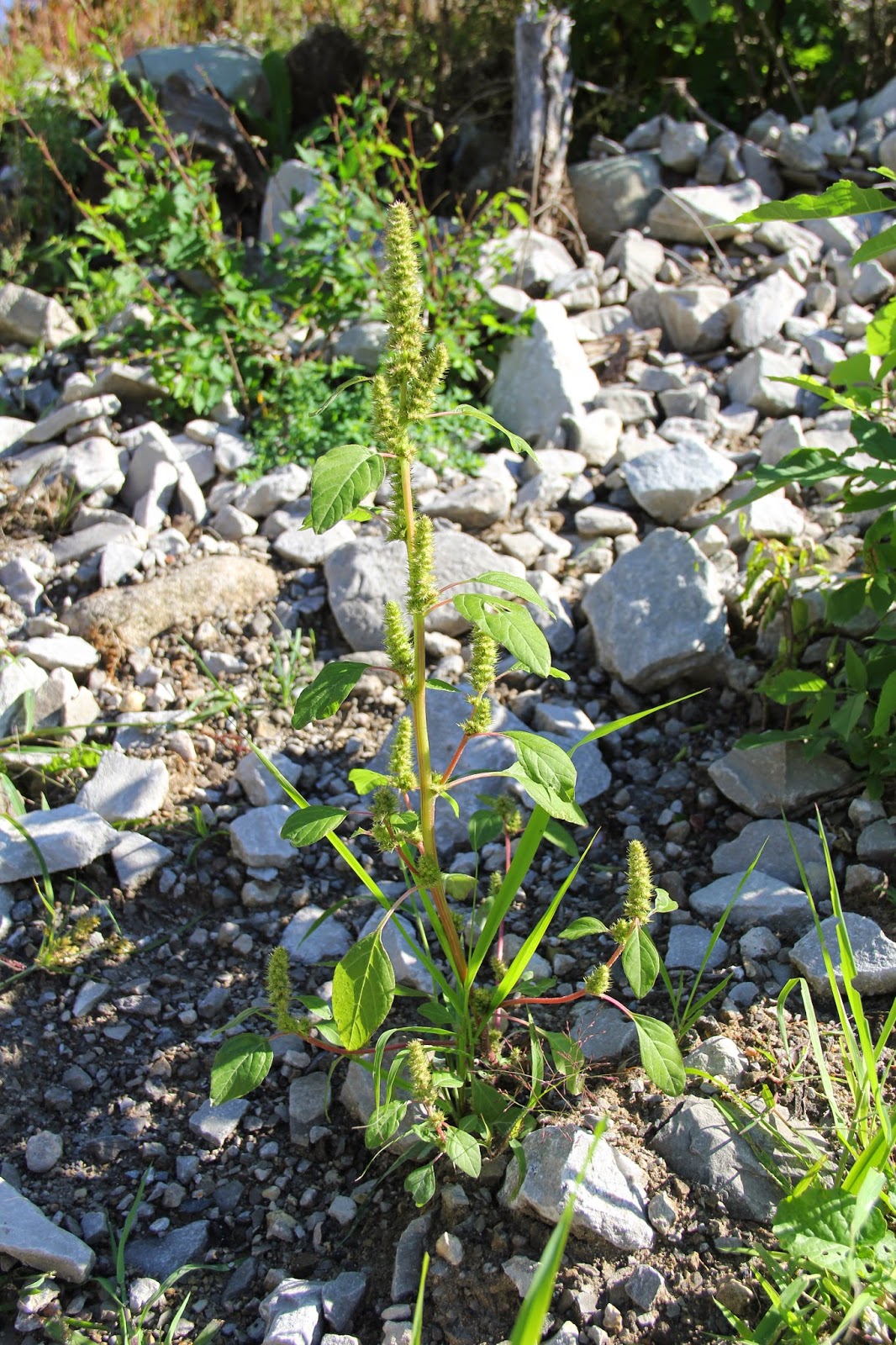
Wildflowers of 2014 - #237 Redroot Amaranth (Amaranthus retroflexus)

The final flower of the day was Redroot Amaranth (Amaranthus retrofexus).  This species is also known as Rough Amaranth or Rough Pigweed.  It is a common weed of disturded areas and agricultural field.  It is found across almost all of the United States and Canada.  There is some debate over its origin.  The USDA lists it as native to the Lower 48, but introduced in Canada and Alaska.  Michigan Flora says the plant is not native to Michigan, listing its origin as the eastern United States, but ackowledges that it was found in the state's first plant survey in 1838.

Redroot Amaranth grows well in disturbed areas

This species can grow to be quite large (up to 7 feet), but is typically much shorter.  It has oval shaped leaves.  The plant has spikes of small green flowers on both the main stem and branches.

Redroot Amaranth flower spikes

Thursday, September 18, 2014

Wildflowers of 2014 - #225 through #233

It's time to catch up on my 2014 Wildflower list.  I found the first six species (#225 - #229) at Mission Creek Woodland Park on Monday 08 September 2014.  

Wildflowers of 2014 - #225 Arrow-leaved Aster (Symphiotrichum urophyllum)

The first flower of the day was one of four Aster species that I found - Arrow-leaved Aster (Symphyotrichum urophyllum).  This species was formerly known as Aster sagittifolius.

Arrow-leafed Aster plants grow from 1 to 3 feet in height.  This plant is considered an "upland" species.  It grows in dry soils in meadows, savannas, open woodlands and along woodland edges.  It is found across the eastern half of the United States and into Ontario.  In Michigan, it is found in ost of the counties in the Lower Peninsula and in scattered locations in the Upper Peninsula.

Arrow-leaved Aster (Sympyhotrichus urophyllum)

As the plant's name suggests, its leaves are commonly shaped like arrowheads with a shallowly notched.  The leaves may also be lanceolate (shaped like a lance head) or oval in shape.  The margins of the leaves are lined with shallow serrations.  The leaf petioles (stems) feature prominent wings.

Arrow-leaved Aster - a closer view of the leaves

The flowers of the Arrow-leaved Aster are typical of Asters, with a yellow (turning purple with age) central disc surrounded by short 8 to 15 short rays.  The rays are typically white, but may on rare occasions be pale blue or lavender.  The flowers are arranged in a narrow pyramid (or diamond) shaped panicle with branched that grow upward from the central stalk.

Arrow-leaved Aster - note the small number of rays on each flower (8 to 15) and the diamond shape of the flower panicle


Wildflowers of 2014 - #226 Common Heart-leaved Aster (Symphyotrichum cordifolium)

The second wildflower of the day was Common Heart-leaved Aster (Syphyotrichum cordifolium).  Like Arrow-leaved Aster, this species is found in dry upland habitats throughout the eastern United States, but has a slightly wider distribution.


Common Heart-leaved Aster (Symphyotrichum cordifolium)

This species may be confused with Arrow-leaved Aster, but can be identified by its leaves and flowers.  The leaves of Common Heart-leaved Aster are more typically heart-shaped than those of Arrow-leaved Aster with a deeper notch (sinus) at the base of the leaf.  The margins of the leaves are more coarsely toothed than those of the above species.  Finally the leaf petiole (stem) either lacks wings or has narrow wings.

Common Heart-leaved Aster - note the deeply notched leaf bases, sharply toothed leaf margins, and wide flower panicle

The flower panicles of Common Heart-leaved Aster are typically more widely branching than those of Arrow-leaved Aster.  The flowers are also more likely to be blue than those of S. urophyllum - they may also be white.  Common Heart-leaved Aster is also sometimes known as Blue Wood Aster.

Common Heart-leaved Aster - acloser view of the flowers

Both the Arrow-leaved Aster and Common Heart-leaved Aster were found at Mission Creek Park along the trail that lead north from the parking lot.

Wildflowers of 2014 - #227 Storksbill (Erodium cicutarium)

The third flower of the day was found growing next to several Common Heart-leaved Asters.  Storksbill (Erodium cicutarium) is a common weed found throughout the United States and the lower half of Canada.  This species is native to Europe, but has naturalized across many areas of the world.
Storksbill (Erodium cicutarium)

This species is in the Geranium Family (Geraniaceae).  While Michigan's other representatives from this family have leaves that have palmate lobes (meaning the lobes radiate from a central point like the fingers of a hand), the leaves of Storksbill pinnately compound (fern-like).

The flowers of Storksbill are small, measuring 3/8 to 1/2 inch across.  The flowers have five petals and may be colored purple, pink, or white.  After the pollination, the ovary of each flower elongates until it resembles the long bill of a bird - other members of the Geranium Family are known as Cranesbills.

Wildflowers of 2014 - #228 Calico Aster (Symphyotrichum lateriflorum)

Calico Aster (Symphyotrichum lateriflorum)

The next flower of the day was another Aster - Calico Aster (Symphyotrichum lateriflorum).  This species is more adaptive than the previous two Aster species.  It can be found in both wet and dry soils throughout the eastern half of North America.  It typically grows in shaded habitats rather than open places.  Calico Aster plants can reach a height of 1 to 4 feet.


Calico Aster - a closer view of the horizontally-branching panicle

This flower is also known as the Side-flowering Aster - lateriflorum means "side-flowering".  The plant's flowers grow on short stems on widely branching panicles.  The panicle's branches are roughly perpendicular to the plant's main stalk.  Individual flowers of the Calico Aster are small, measuring about 1/3 inch across.  They consist of a central disc that starts out yellow and fades to shades of purple as it ages.  The disc is surrounded by 9 to 14 short white rays.  The small number of rays on each flowerhead is what distinguishes this species from similar species with small flowers such as Frost Aster (S. pilosum) and Heath Aster (S. ericoides).

Calico Aster - a closer view of the small flowers

Wildflowers of 2014 - #229 Swamp Aster (Symphyotrichum puniceum)

The fifth flower of the day was another Aster - Swamp Aster (Symphyotrichum puniceum).  This species, also known as Bristly Aster, is a more northern species than those already described.  While it can be found as far south as central Georgia it is also found as far north as Nunavut.  In Michigan, it has been recorded in counties throughout the state.  Swamp Aster is considered an obligate wetland species - meaning it is found almost entirely in wet habitats such as swamps, wet meadows, floodplains, and shorelines.  It rarely is found in dry upland locations.

Swamp Aster (Symphyotrichum puniceum) in the cedar swamp at Mission Creek

Swamp Aster plants reach heights of 1 to 8 feet tall.  The plant's leaves are arranged alternately along the stem.  The leaves are oval or elliptical, with shallowly tooted or smooth margins, and measure up to 6 inches long.  The main stalk of Swamp Aster plants is thick, usually reddish colored, and covered with bristly hairs.  A similar species lacks these hairs and is known as Smooth Swamp Aster (S. firmum).

Swamp Aster - note the bristly hairs along the plant's stalk

The flowers of Swamp Aster are arranged in a panicle (branched cluster) at the top of the plant.  Individual flowers are 1/2 to 1 inch across.  The flowers are composed of a central yellow disc surrounded by 30 to 60 rays (petals).  The rays are normally blue or purple, but may occasionally be white.

Bristly Aster - a closer view of the flowerheads

Wildflowers of 2014 - #230 Beech-drops (Epifagus virginiana)

The final flower of the day is something of an oddity.  It is one of a small group of plants that lacks chlorophyll - these means that it cannot use sunlight to manufacture its own food.  Instead, Beech-drops (Epifagus virginiana) is a parasite, stealing sugars from the roots of American Beech trees. If you find American Beech trees in a forest there are likely to be Beech-drops present also.  Conversely, if there are no Beech trees you not find any Beech-drops.  The plant has no other hosts.

Beech-drops - note the many branches, lack of leaves, and small flowers

Beech-drops plants lack leaves.  It's stalks grow up to 20 inches tall.  The stalks often branch near the base.  The plant's flowers are arranged in a raceme or unbranched spike at the end of each branch.   The flowers are 1/4 to 3/8 inches long and shaped like an elongated tube.  The flowers can be found in late summer and fall and vary in color from cream or ivory to brown or purplish-red.  The flowers are often striped.

Beech-drops - the small tubular flower is being visited by a bee-mimicing fly

The following three plants (#231 through #233) were found on Thursday 11 September 2014 along the banks of the Chippewa River in Mill Pond Park. 

Wildflowers of 2014 - #231 Purplestem Beggar-ticks (Bidens connata)

The next two flowers are closely related and share the same types of wetland habitats - shorelines, swamps, wet meadows, marshes, etc..  Purplestem Beggar-ticks (Bidens connata) can be found throughout much of the eastern United States and Canada as far south as Alabama and Georgia and as far west as central Nebraska.  It has been recorded in all but nine of Michigan's counties.

Purplestem Beggar-ticks(Bidens connata)

Purplestem Beggar-ticks can grow to heights of greater than 3 feet.  Their stems can be either purple (as the name suggests) or green.  Leaves are arranged  in opposite pairs along the stem.  The leaves are sharply pointed, have toothed margins, and can be as long as 8 inches.

Purplestem Beggar-ticks - note the purple stems, opposite pirs off lobed leaves, and ray-less flowers

The plant's flowers are arranged in groups of 1 to 3 at the ends of the stems.  The flowers are yellow-green and composed of a central disc that usually lacks rayss (petals).  If rays are present they are small and few in number.  These ray-less flower are 1/4 to 3/4 inches across.  After these flowers are pollinated, they will develop seeds with four spikes growing off of one end.  These spikes stick the fur or feathers of animals that come in contact with them, pulling the seeds free from the flowerhead and dispersing them away from the parent plant.

Purplestem Beggar-ticks - the flowerhead is composed simply of a circle of disc flowers, rays (petals) are usually absent

Wildflowers of 2014 - #232 Nodding Beggar-ticks (Bidens cernua)

The second plant in the Bidens genus is the Nodding Beggar-tick (Bidens cernua).  This plant is also known as Bur-marigold.  Nodding Beggar-ticks is found in the same habitats as Purplestem Beggar-ticks, but Nodding Beggar-ticks has a much wider distribution.  It is found in every state except Hawaii, Mississippi, South Carolina, and Florida.  I expect that the plant can be found in Mississippi and South Carolina, but so far has avoided collection.

Nodding Beggar-ticks (Bidens cernua) along the Chippewa River


The plant is very similar to the previous species.  It's leaves are also toothed and reach lengths of 8 inches.  Nodding Beggar-ticks can reach a height of seven feet, several feet taller than B. connata.  Another difference between the two plants can be seen in the flowerheads.  Nodding Beggar-tick flowers usually have 8 yellow rays (petals) surrounding a yellow central disc.  Occasionally these rays are absent.  Whether or not the rays are present, the flowerheads of this species nod or droop slightly.

Nodding Beggar-ticks - note the individual flower heads with their central disc surrounded by 8 rays (petals).   The flowerheads nod or droop.


Wildflowers of 2014 - #233 Pale-leaved Sunflower (Helianthus strumosus)

The final new species of the day was the Pale-leaved Sunflower (Helianthus strumosus), also known as the Rough-leaved Sunflower.  This species grows to a height of 3 to 8 feet.  It can be found in a variety of dry and wet habitats including forests, prairies, roadsides, and riverbanks.  Many Sunflower species closely resemble each other and can be difficult to identify.  There have been 15 species of Sunflowers recorded in Michigan, eleven native and four introduced.  After eliminating the species that most clearly did not fit, I was able to identify this species based on all of its characteristics.

Pale-leaved or Rough-leaved Sunflower and Spotted Joe-pye Weed

Pale-leaved Sunflower has leaves that are arranged in opposite pairs along the plant's stem.  The leaves may be up to 10 inches long, are oval or lance-head shaped, and have either smooth or shallowly toothed margins.  The leaves either lack stalks or have short (up to 1 1/2 inch long) stalks.  The upper surface of the leaves is rough to the touch.  The shape of the leaves can be quite variable from plant to plant.

Pale-leaved Sunflower - note the opposite pairs of rough-textured leaves

Pale-leaved Sunflower plants can have many flowers on each plant.  The flowers are 1 1/2 to 4 inches wide with a yellow-green central disc surrounded by 8 to 15 yellow rays (petals).

Pale-leaved Sunflower - a closer view of its multiple flowerheads

Pale-leaved Sunfower can be found across the eastern United States and Canada.