Showing posts with label classification. Show all posts

Thursday, September 27, 2018

It's classified...

At the start of the school year I give lots of classroom presentations about trees.  The students learn about the jobs that different parts of the tree do and about the process of photosynthesis.  The favorite parts of the presentation for the students (and me) are the hands-on activities involving dendrochronology (the study of tree growth rings) and leaf classification.  I've written about both subjects multiple times - look here and here for dendrochronology posts; leaf classification posts can be found here and here.

Today I thought I would share a little bit more about leaf classification.  The following few images are basically the same as the introduction to leaf classification/identification that I give in class.  


With this information you should now be able to classify the leaves of Michigan trees as well as any third grader!

Here are the leaves of forty Michigan species.  Where do you think they fi tin the classification system?  Needle-leaf or broadleaf?  If its a broadleaf, is it simple or compound?


Thursday, September 14, 2017

Tree ID

One of the first lessons that I teach third grade students is how to classify leaves.  They learn to differentiate between needle-leaf and broadleaf species; then they learn how to tell the difference between simple leaves and compound leaves.

If you are scratching your head right now.  It's easy.  A needle-leaf tree has leaves shaped like...wait for it... a needle!

In contrast, a broadleaf tree is any tree that is not a needle-leaf.  Instead a broadleaf tree has broad (or wide) leaves.

Broadleaf trees can be further divided into simple leaves and compound leaves.   

Simple leaves are those that have one leaf on one stem.  The shape and size of the leaf do not matter; if the leaf has only one part it is a simple leaf.  That leaf can have smooth edges, serrated (toothed) edges, or edges that are divided into lobes.  See, it's simple!

In contrast, compound leaves are not simple.  Instead of having one leaf on one stem, compound leaves have one stem with multiple leaflets.  These small leaflets are each distinct from one another - meaning that they are not connected to each other, but only to the stem that they share.

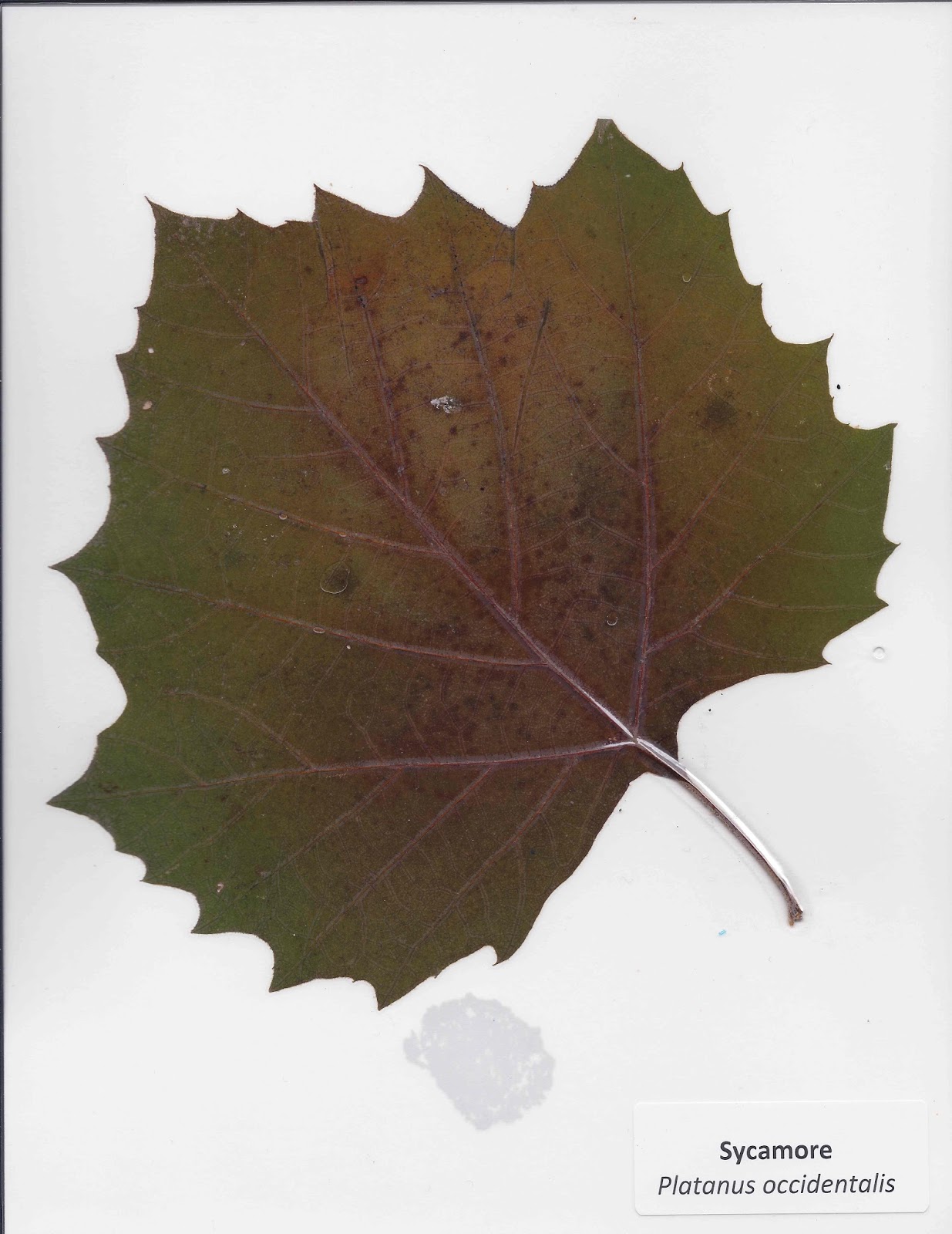
To make this leaf classification activity more memorable for students, I have collected dozens of real leaves.  These leaves have been pressed, allowed to dry and them laminated on a sheet of 8.5" x 11" cardstock.  Unfortunately, due to class sizes, I often need as many as ten different sets of leaves for student groups to work with.  This means that sometimes I do not have enough real leaves to go around.  So to fill out my leaf sets, I pick one real leaf of each species and create a color scan. 

Here are my scans of the leaves of forty different species that can be found here in Mid-Michigan.  Please feel free to save and print these images as needed.