Monday, December 5, 2016

Holiday field guide gift guide - 16 guides for 2016 (Part 1)

It's no secret that I have a "problem" with field guides.  My problem is that I feel the need to have them all.  This means that they occupy a lot of shelf space (and table space and sometimes floor space) at my home.  It also means that I have a bit of experience using different field guides.  When I do programs for adults, I frequently get asked about the field guides that I would recommend for use or purchase.

With Christmas coming soon, now is the perfect time to think about purchasing field guides as gifts or about which guides you want to add to your list.  Here are a few of my recommendations.

Field Guides to Plants

1.  Wildflowers in the Field and Forest:  A Field Guide to the Northeastern United States by Steven Clements and Carol Gracie (ISBN: 9780195150056).


Published by the Oxford University Press in 2006, this book is not cheap (new copies currently cost $55), but I believe it is totally worth the price.  This is my go-to book for wildflowers.  It is simply the most comprehensive book of wildflowers to the Northeast and Great Lakes.  While I have found flowers that were not listed in this book, I can count them on one hand.  I like this book so much that I own two copies - one is my everyday user and the second copy is for when I wear out the first copy.


In addition to the fact that this book is so comprehensive, I like how his book is laid out.  Flowers are divided first by color, then by leaf arrangement, and finally by flower arrangement/number of petals.  There are good descriptions of each species as well as clear photographs of the flowers and often close-up images of details that help with identification.  There are also range maps for the region.  I wish every wildflower book was laid out this sensibly.  The book is quite large 5 inches by 8 inches and somewhat heavy, but the weight is worth carrying around in a backpack or shoulder bag if you are going to be identifying wildflowers all day.

2.  Michigan Trees: A Field Guide to the Trees of the Great Lakes Region by Burton V. Barnes and Warren Wagner, Jr. (ISBN 9780472089215). 


Published by the University of Michigan Press, this is the best available reference guide to the trees of Michigan.  It has been published in one form or another since 1913.  The current (revised and updated edition) was published in 2004.  The softcover edition of this book sells for under $20 - a great value for such a comprehensive well-organized guide.
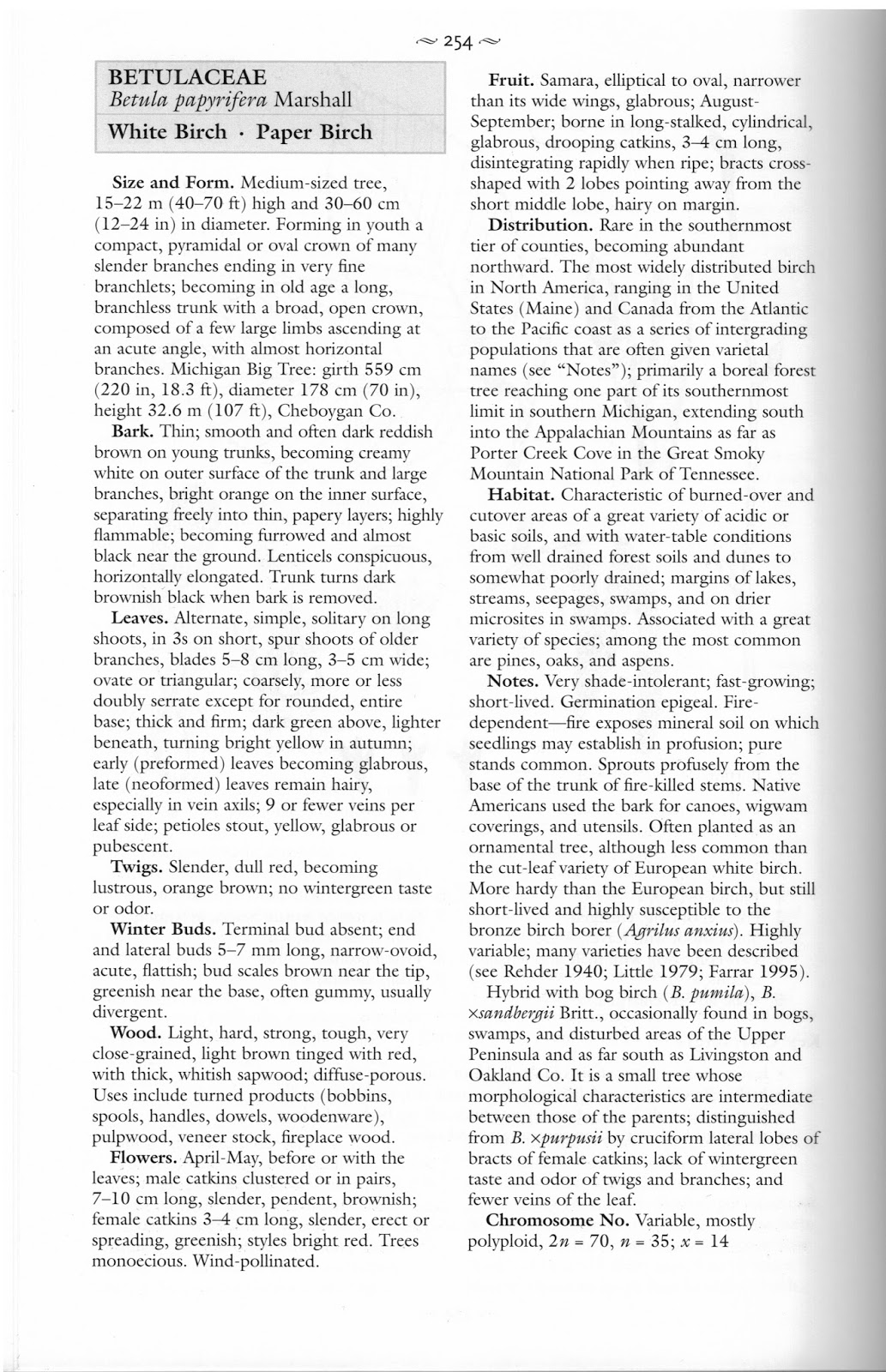
 
Each species in this guide has its own two page spread with a detailed description and illustrations.  At the back of the book there is a smaller section that details some common shrubs found in the state.  Again this is not a pocket-sized book, but if you are spending the day looking at trees this is the book you want to carry along.

3.  Wetland Plants of Michigan: A Complete Guide to the Wetland and Aquatic Plants of the Great Lakes State by Steve W. Chadde (ISBN 9781481194945)


This author-published book is on its second edition (2012).  The book retails online and in stores for under $30.  This book is not as easy to use by a beginner as the previous two books.  It is divided by family - if you don't know the family it is best to use a different book.  However, it is still a useful guide, especially for those interested in identification of wetland plant species.  Each section of the book includes a dichotomous key that is useful for distinguishing between similar species.  Each species entry includes a good description of the plant, the plant's wetland classification, and a map showing which Michigan counties the species has been found in.  This useful feature was not included in the first edition and is a welcome addition to the book.  The book includes both line drawing and photographs (black-and-white only) of the species.


This book is not intended to be the first guide that someone owns.If you already own a few books about wildflower and trees and want to delve deeper, then I would recommend this book.    This book has more than 680 pages and is not pocket friendly, but is a valuable addition to the bookshelf.

4.  A Field Guide to the Natural Communities of Michigan by Joshua G. Cohen, Michael A. Kost, Bradford S. Slaughter, and Dennis A. Albert (ISBN 9781611861341).


Published by the Michigan State University Press in 2015, this book retails for $34.95.  This book is not a guide to individual plants, but rather is a guide to plant communities or habitat types.  Developed by scientists at the Michigan Natural Features Inventory, this book highlights more than seventy distinct natural community types found in Michigan.   The book gives a description of each community which includes a map showing where the community can be found in the state, a list of characteristic plants, and a list of locations of specific sites.  The book also includes a key that can be used to identify the class of an observed habitat.


This a great book to consult before going out into the field or after coming back from a trip.  It is less useful as a "field" guide.  That being said, this is a valuable addition to the library of anyone wanting to learn how larger plant communities work and interact.

That's it for field guides to plants.  Look for Part 2 (Insect field guides!) tomorrow.

Saturday, December 3, 2016

2017 MAEOE Conference in Mt. Pleasant!


I am currently attending the annual board member retreat for the Michigan Alliance for Environmental and Outdoor Education.

The board just voted to have the 2017 Annual Conference in Mt. Pleasant on the campus of Central Michigan University.  The tentative conference dates are Friday Oct 6th through Sunday October 8th.

Stay tuned for more details!

Thursday, December 1, 2016

Native Species Profile - American Toad


Michigan is home to twenty-three species of amphibians (ten salamanders and thirteen toads/frogs).  Some species are extremely rare, others can be found throughout the state.  One of the most common species is the American Toad (Anaxyrus americanus).  Not only is the American Toad common in Michigan, it is common across the eastern United States and Canada.  It ranges from the Atlantic Coast west to a line running from Manitoba through the eastern edge of the Dakotas south to northeast Texas.  It is found as far north as Hudson Bay and as far south as northern Mississippi, Alabama, and Georgia.

American Toad in a lawn

The American Toad has such a broad range because unlike most amphibian it often ranges far from water.  The American Toad does need water for breeding, but during the rest of the year it is found in a variety of habitats ranging from woodlands to prairies, lawns, and fields.  In the winter it hibernates below ground.

Male American Toads calling for mates - note the inflated throats

The American Toad is generally colored in shades of brown or tan, although red or green individuals are sometimes found.  Their bodies are covered with a variety of bumps or "warts" - the largest warts are located behind the eyes.  These are actually a pair of glands (parotid glands) that secrete a toxic liquid if the toad is attacked.  This poison ensures that very few animals will eat toads.  The Eastern Hognose Snake does not seem to be affected by the venom and common preys on toads.  I have also seen an American Robin eating tiny toads just as they emerged from a pond after metamorphosis.


American Toad - note squat body, short legs, and numerous warts

The American Toad generally reaches a length of 2 to 4 inches as an adult.  Unlike frogs, it is a weak hopper with (relatively) short hind legs and a stout body.  When traveling short distances it often walks instead of hopping.


As an adult, the American Toad is a carnivore.  It eats a diet consisting of insects, spiders, worms, slugs, and other invertebrates.  The small black toad tadpoles are herbivores; they scrape algae from the surface of plants and other objects in the water.

American Toad eggs are deposited in strings and covered with a thick mucous to deter predators

This species was recently reclassified based on genetic information.  It was formerly known by the scientific name Bufo americanus.  Most field guides and other books will list the species under this old name.

Basic Information

American Toad
Anaxyrus americanus (formerly known as Bufo americanus)

Size:  2-4" long

Habitat:  woodlands, prairies, wetlands, lawns, fields

Eats:  insects, worms, spiders, slugs

Wednesday, November 30, 2016

Why my garden is a mess...

Here is a picture of my home garden from yesterday afternoon.


You probably notice that it looks messy.  Many gardeners could not stand to leave a garden looking like this through the winter.  I am not one of them.  For years I cleaned my garden beds each fall and removed all of the dead material.  I stopped doing this about the time I started planting mostly native plants in the garden.

Why do I leave the garden looking like this?

To sum it up in one word - habitat.

Monarch Waystation #6591


I want the garden to be a year round habitat for native species.  The garden is certified as a Monarch Waystation, but it also provides habitat to dozens of other invertebrate species including native bees.

Bee hotel at almost full capacity - all the capped holes are full of larval bees

Many of the bees inhabit the native bee nesting blocks.  Others will spend the winter hidden in the hollow stems of dead plants - a great reason to leave plants standing over the winter.  Other insect species spend the winter hidden in the carpet of dead leaves and other debris that I leave in the garden.

Look at all the potential hibernation locations!

Seeds are another major reason that I leaves the garden alone in the fall.  I want as little open space in the garden as possible - open spaces allow weeds to pop up, full spaces have no room for weeds.  I want the garden to be full of native plants, but fully grown plants can be expensive to purchase.  If I leave all the old flower stalks in place through the winter, the garden replants itself.

Showy Goldenrod seeds ready to deploy into the garden

Some of the seeds also end up becoming food for songbirds.  Every year American Goldfinches eat most of the seeds from the various coneflower species, Cup Plant, Rosinweed, and sunflowers.  Other birds take advantage of the hibernating insects to fill their stomachs during the late fall and winter.

Cup Plant seeds are on the menu for many birds

While I don't pretend that my garden is a complete habitat, it does help.  That's all that I can ask it do do in the limited amount of space that I have available.  By treating the garden as habitat I see more species of animals (especially insects) than I would if I treated the garden as an outdoor extension of the home that needs to be kept neat and clean.  In the long run, I think the garden is healthier than it would be if I constantly felt the need to tame it.

The garden gives back with a series of delights throughout the year.

American Highbush Cranberry fruit


It also provides surprises.

A Wild Strawberry bloom in late November!  I found several of them.

In the spring, before the plants begin to grow, I can remove all of the old stems and add them to the top of my compost pile. (Don't worry any bee larvae will have the opportunity to emerge from the stems.)  The leaves and other debris will decompose naturally on the ground, acting as a natural mulch and helping to rebuild the soil.  New plants will pop up from the seeds that spread throughout the garden.  Some will be allowed to grow in place; others will be transplanted within the garden or planted in other gardens. 


I like my messy fall garden.  I think I'll keep it.

Monday, November 28, 2016

Clouds over Lake Michigan (26 November 2016)

Stormy skies and waves are among my favorite subjects to photograph - It's almost impossible to take a bad picture.  We spent this past weekend visiting northwest Michigan and I got plenty of photographic opportunities on Saturday (26 November).

The first set of photos was taken at the Empire municipal beach.  Despite years of visiting this part of the state.  This was the first time that we have ever stopped at this beach.


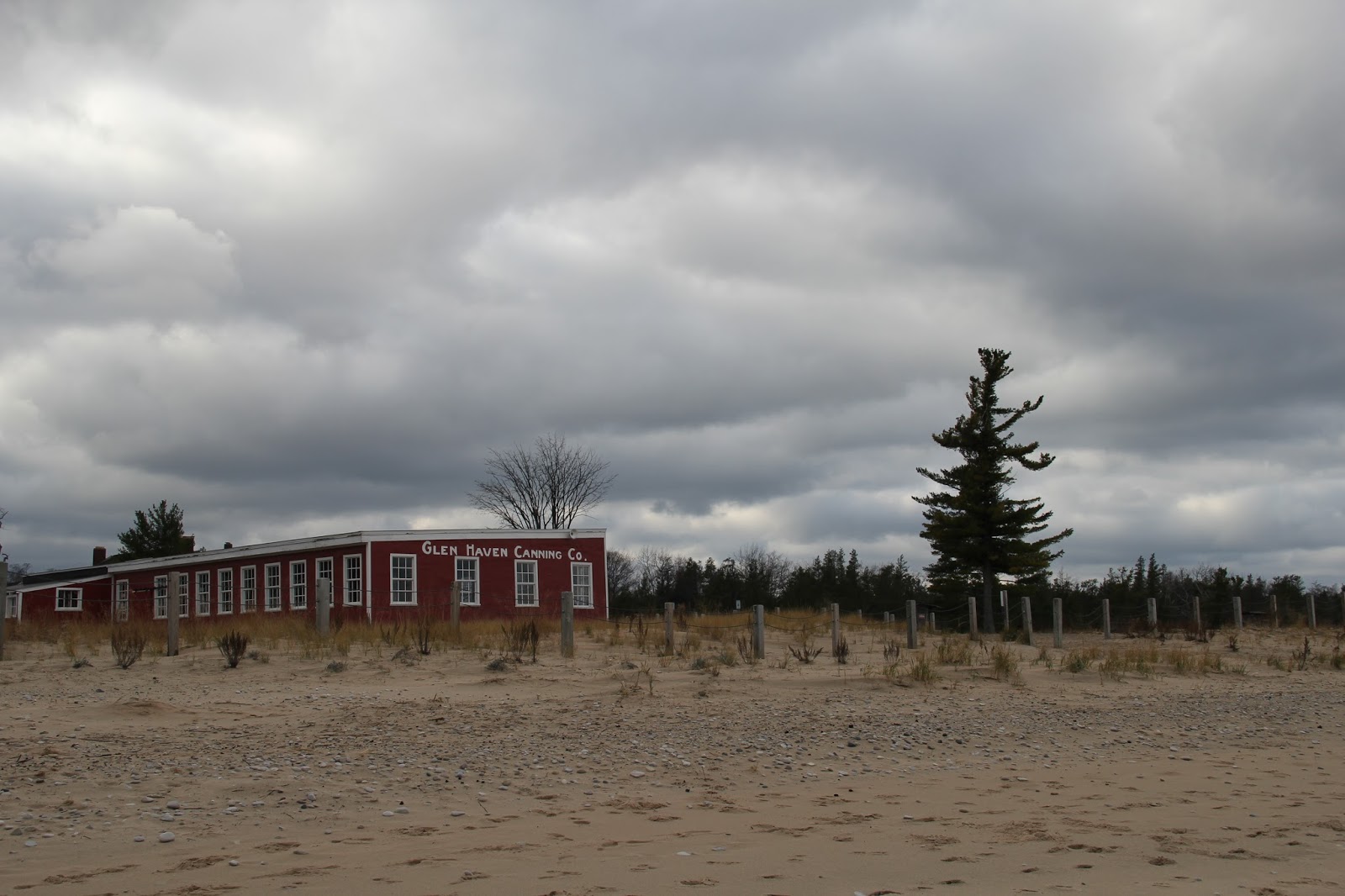
After leaving Empire, we next made a stop at Glen Haven.  Glen Haven is a restored fishing village located within Sleeping Bear Dunes National Lakeshore.


Our final shoreline stop of the day was the Mission Point Lighthouse located at the tip of the Old Mission Peninsula that divides the East Arm and West Arm of Grand Traverse Bay.  This is one of my favorite places to photograph.


Wednesday, November 23, 2016

Ice, leaves, and more at Mill Pond Park (22 November 2016)

A light week of programming means that I get to spend time outside!

Yesterday, on my way back to the office, I stopped at Mill Pond Park for a short walk through the woods.  The night had been quite cold (my thermometer in my truck read 21 degrees this morning when I left home) and even by 11:00 there was still ice on the pond and lots of frost in the woods.  I love cold autumn days like this.

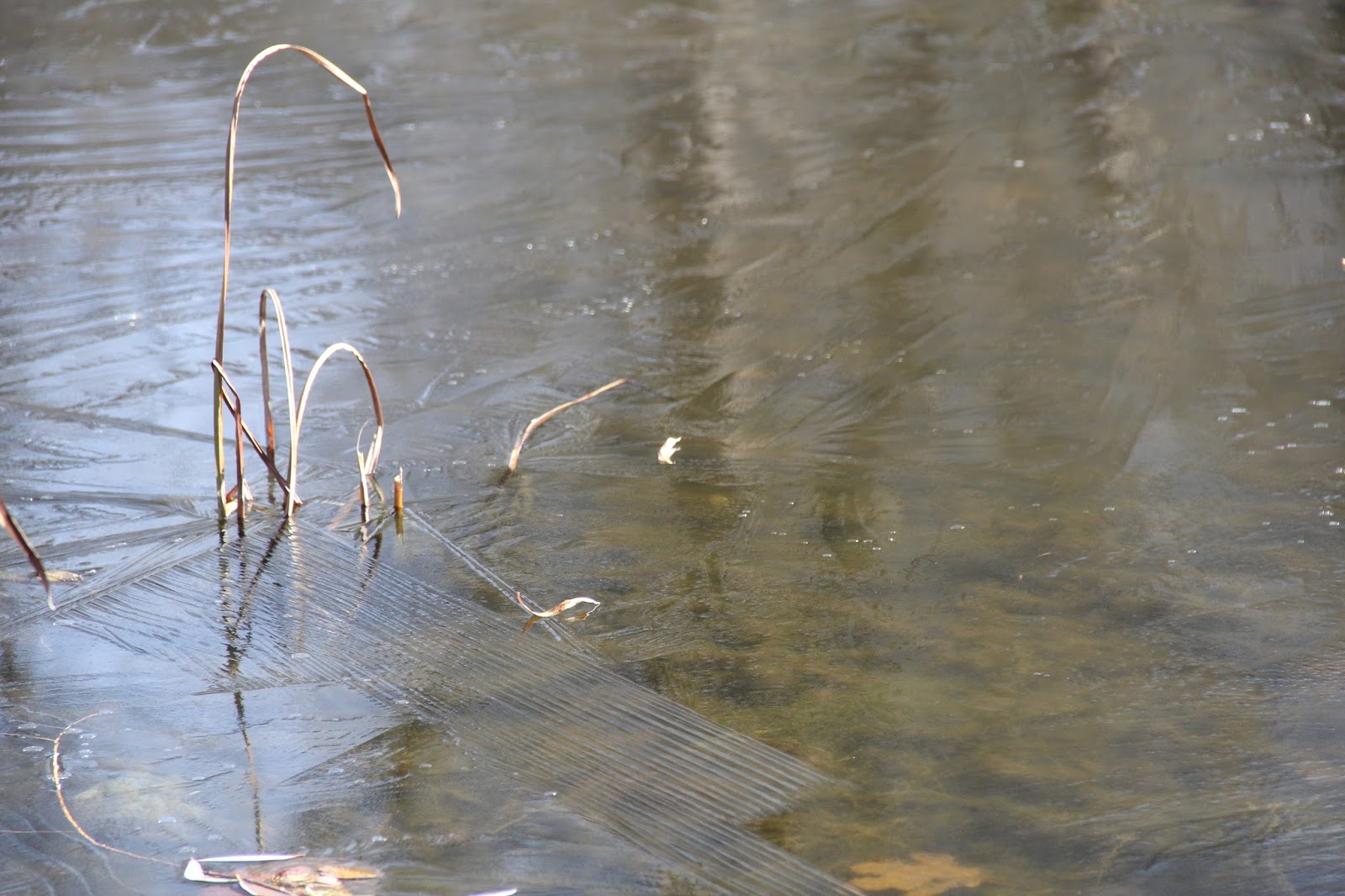
The semi-frozen surface of the mill pond
 
Maple leaves under the ice - Sedges above the ice
 
Empty Swamp Milkweed seed pods

The long lines are needle-like ice crystals forming on the surface of the mill pond

Willow leaves frozen on the ice

Mulberry and other leaves frozen in the pond

Boxelder seeds and leaves on top of Mulberry leaves

Fall sedges and rushes

Burdock burs

Boxelder seeds


A large area of windfall - most of these trees are Green Ash trees killed by the Emerald Ash Borer

Barberry - an invasive species

Virgin's Bower (also known as Old Man's Beard)

An old dying tree in the woods
  
A male Northern Cardinal

Silhouetted Mallard pair