Showing posts with label museums. Show all posts

Thursday, July 20, 2017

Native Pollinator Garden Updates (19 & 20 July 2017)

Since 2011, the Isabella Conservation District has helped design, plant, and maintain four native pollinator gardens.  These gardens are located at the Saginaw Chippewa Academy, Winn Elementary, the Mt. Pleasant Discovery Museum, and the Morey Public School Academy.  On June 19th, a decision was made to close the Morey PSA, effective immediately.

What does that mean for the garden at the school?

Once the school announced it closure, we made the decision to rescue and transplant as many of the plants from the garden as possible.  This means that for the past four days I have been digging up plants from that garden, placing them into totes, and transporting them elsewhere for replanting.

Here is what the Morey PSA pollinator garden looked like on Monday (17 July) morning.

Morey native pollinator garden (17 July 2017)

This is what the garden looked like as of this morning.  You can see a lot of plants have been removed, but many still remain.

Morey native pollinator garden (20 July 2017)


Here a view from the opposite side of the garden. This photo was taken yesterday - the grasses on the left are now gone, as are many of the plants in the background.

There should be a 3 ft wide walkway running from this point through the tree all the way to the other side - some milkweed and coreopsis have grown up in the walkway this year.  Both sides of the walkway were full of plants.

It may not seem like much has been removed, but so far I have dug up four full pick-up truck loads of plants and removed them from the site.

The second of three truck loads removed so far.
So what is happening to all the plants that I remove from the Morey native pollinator garden?

Some of them went to Winn Elementary.  The garden at Winn was planted in 2012 and is full of mature plants at this stage.  However there are some areas of the garden where plants have failed to thrive or even died out completely.  This garden is on a challenging site - compacted clay soil, full morning shade and full afternoon sun, lots of roof runoff but most of the water draining away from the site.

I have already added more than a truck load of plants to the Winn Elementary garden, but you would hardly know it unless you know what to look for - these plants are just being used to fill in the blanks.  I will be visiting this garden daily for about a week to make sure the new plants are well watered as they establish roots in their new soil; then they are on their own.

Winn Elementary native pollinator garden (19 July 2017)

A second view of the Winn Elementary Garden

More of the Winn Elementary garden - lots of weeding was done in this section to remove Canada Tick-trefoil

Could you tell where plants have been added to the garden at Winn Elementary?

No?  That's sort of the point.  Remember this is just filling in the blanks, not starting from scratch.

Obviously, not all of the plants from the Morey PSA garden have gone to Winn Elementary.  The rest of them are going the Mt. Pleasant Discovery Museum.  The Discovery Museum already has a native pollinator garden.  It was planted in 2013, with plants left over from planting the Morey garden.  The garden itself doesn't need a lot more plants.


Mt. Pleasant Discovery Museum native pollinator garden

Mt. Pleasant Discovery Museum native pollinator garden - not Rattlesnake Master, Black-eyed Susan, and Hoary Vervain

There are blank spaces in this garden, but the plants are doing a good job of filling in those spaces on their own.  Barring a die-off, in just a couple more years, I expect this garden to be almost completely filled with plants.

So instead of using the plants in the garden, they are going to be used here...

The new home for most of the plants from the Morey Pollinator Garden

The west side of the Discovery Museum property is bordered by a series of retention ponds.  These ponds hold water that drains from the museum's parking lot.  The ponds are home to a surprising variety of wildlife species - frogs, dragonflies and other aquatic insects, Red-winged Blackbirds, and (as of this spring) a muskrat.  The ponds support a number of aquatic plant species including cattails, rushes, sedges, willows, and a many wildflower species.

The museum is committed to using more of its outdoor space.  Last fall I helped them design a series of interpretive signs (seen in the picture above) so visitors can learn more about the wetlands.  The museum director also expressed a desire to create a more natural border along the wetlands.  Previously the lawn was mowed all the way to the edge of the wetland - the first step to creating a natural border was simply to stop mowing.  Second, the museum scattered wildflower seed in the unmown area - unfortunately I don't see a lot of evidence that this was successful.

To speed the process of naturalization along, many of the plants from the Morey PSA garden are going to end up here. 

Awaiting trnsplant

While it is disappointing to have to dig up a garden just as it was maturing, I am glad that we have a ready home for the plants.


Monday, June 12, 2017

Native Pollinator Garden at the Mt. Pleasant Discovery Museum (08 June 2017)

Last week I shared some photos of the Native Pollinator Garden at the Saginaw Chippewa Academy.  This is one of four gardens that we have helped establish and maintain since 2011.  I also stopped at the Mt. Pleasant Discovery Museum garden last week.  This is the youngest of the four gardens.  It was planted in July 2013 so this will be its fourth full growing season.  As a relatively young garden  it is still maturing and changing every year.

Here is a photo from last week.


Just for comparison here are pair of pictures from June 2014 and June 2015 taken from roughly the same vantage point.

Mt Pleasant Discovery Museum native pollinator garden - June 2014

Mt. Pleasant Discovery Museum native pollinator garden - June 2015

Here's another picture from last week and the same view from 2014 and 2015.

08 June 2017

June 2014
 
June 2015
It's pretty amazing to see how much the garden has filled in in the past few years.  There is still a lot of open space, but it is rapidly filling up with self-seeded plants.  The ultimate goal is that the entire surface of the garden will be filled with live plants.  Once that happens, the garden will no longer need to be mulched and it will naturally exclude almost almost all weeds due to a lack of space.

That's enough comparison with the past.  The remaining few photos were all taken last week.  Enjoy!


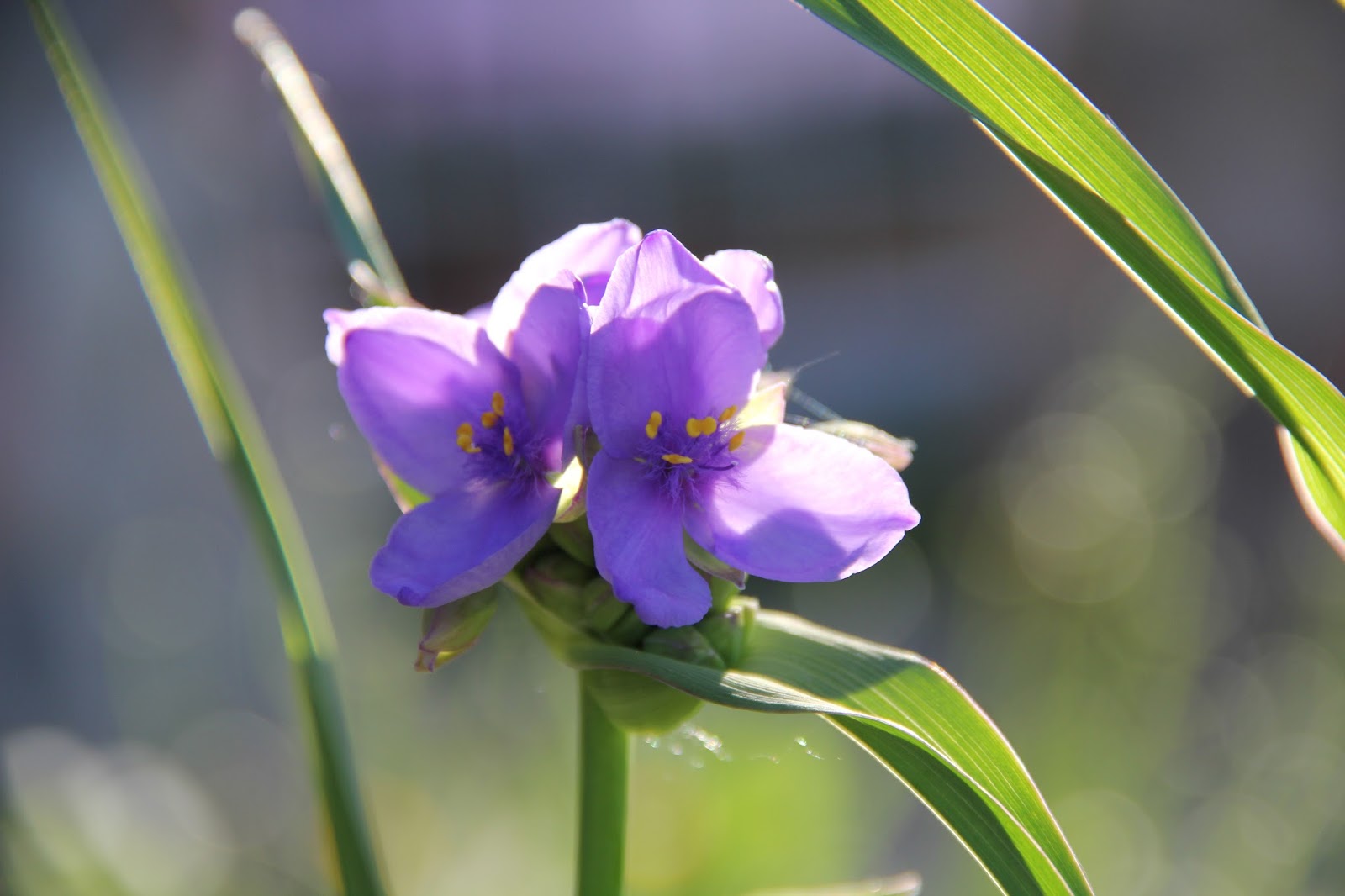
Ohio Spiderwort

Coreopsis shadow on a Prairie Dock leaf


Lanceleaf Coreopsis


Thursday, September 15, 2016

Native Pollinator Garden Update (14 and 15 SEP 2016)

Yesterday afternoon I photographed the Native Pollinator Garden at the Saginaw Chippewa Academy.  This year was a transition year for this garden.  The portable classroom that bordered it on the west was removed this spring.  This meant that the garden no longer gets water running off the roof and it is exposed to full sun for the entire day.  I was not sure how it would react to the changes.

Native plants are tough.  Most of them took the changes in stride, with no obvious ill effects. A few plants were noticeably shorter than in previous years, but everything survived.  Here are some pictures.

Looking north into the garden - the portable classroom used to be on the left

Honey bees were very abundant
 
Looking east toward the school - the bright yellow flower is Cup Plant

Butterflyweed explodes into seeds


Blue Vervain flowers

A wasp with a millipede it has captured
 

Culver's Root leaves

Cup Plant leaves

This morning (15 September), I stopped at the Mt. Pleasant Discovery Museum to take a few photographs of their Native Pollinator Garden.  This garden is wild looking right now!  I love seeing how these gardens evolve from year to year.

Native Pollinator Garden at the Mt. Pleasant Discovery Museum
Stiff Goldenrod is in bloom


Native grasses sprawl into the walkway


Prairie Dock silhouetted against the sky

A few Prairie Dock flowers remain in bloom
 
Horsemint


The tall plants to the right are Evening Primrose which is threatening to take over the garden

Asters are just beginning to bloom

Thursday, September 1, 2016

Upcoming Event - Monarch Butterfly Celebration (Saturday 17 September 2016)


Join me on Saturday September 17th from 1:00PM to 4:00PM for the annual Monarch Butterfly Celebration at the Ziibiwing Center of Anishinabe Culture & Lifeways.  The Ziibiwing Center is located at 6650 E. Broadway, Mt. Pleasant.


As always, I will  have information about ways to help Monarchs (and other pollinators) and free posters at this event.  I hope to have butterflies to tag and release at the event - unfortunately I am not having much luck finding caterpillars this year.

Tuesday, July 19, 2016

Civilian Conservation Corps Museum at North Higgins Lake State Park


One final photograph from the DNR Academy of Natural Resources.

Civilian Conservation Corps (CCC) worker statue at North Higgins Lake State Park

North Higgins Lake State Park is home to the Michigan Civilian Conservation Corps (CCC) Museum.  During the 1930s and '40s, this was the site of Michigan first tree nursery - trees grown at this site were used to replant forests across northern Michigan.  CCC workers in Michigan also built roads and dams, constructed state and national park buildings, fought fires, and more.  The museum is open daily from now through Labor Day (September 5th).  For more information, visit the Michigan History Center website.

Thursday, June 30, 2016

A New Damselfly

On Saturday (25 June 2016) I spent part of the day at the Mt. Pleasant Discovery Museum looking collecting and identifying aquatic invertebrates as part of their Backyard Summer Series.  I found a lot of different organisms; I think the final number ended up being seventeen different types.  My favorite moment though was having this damselfly emerge from its final larval exoskeleton as a brand new adult.


Welcome to a great, big, brand-new world.