Tuesday, October 22, 2013

Geology Photographs

Yesterday I posted about the upcoming 2013 Mid-Michigan Rock Club Annual Show.  Today I thought I would share some geology photographs.  The first ten photographs were take in Michigan between 2007 and 2012 (mostly in the Upper Peninsula).

Lake Superior beach rocks - Muskallonge Lake State Park near Newberry, MI

Sandstone formation at Munising Falls - Pictured Rocks National Lakeshore, Munising, MI

"Sea" caves and sandstone formations at Pictured Rocks National Lakeshore - Munising, MI

A lone kayaker in front of the sandstone cliffs at Pictured Rocks National Lakeshore - Munising, MI

Iron and other minerals stain the sandstone at Pictured Rocks National Lakeshore - Munising, MI

Cross-bedding in the sandstone at Pictured Rocks National Lakeshore - Munising, MI

Sturgeon River Canyon - Houghton County, MI

Dolomite cliff at Fayette State Park - Garden, MI

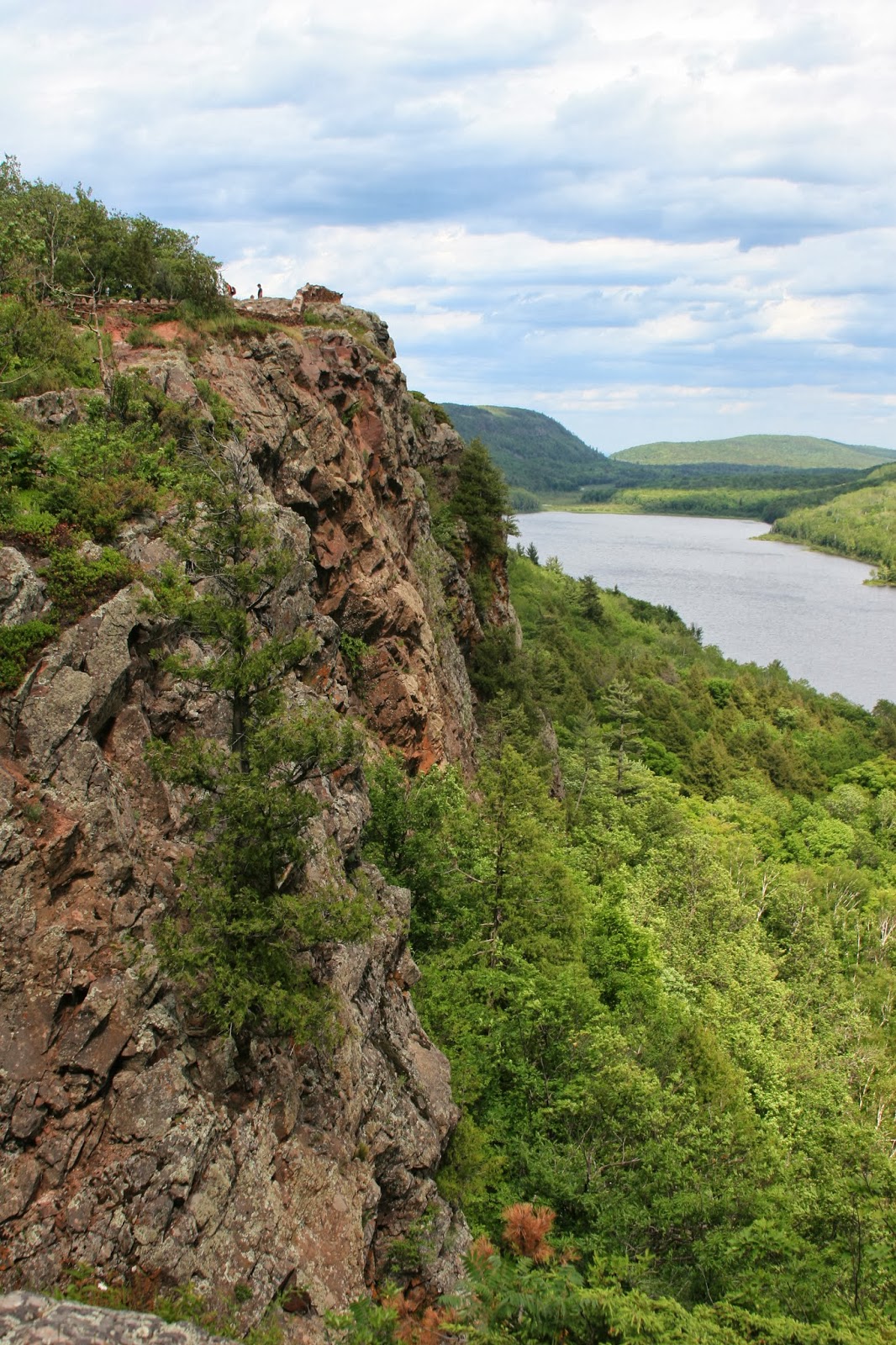
Basalt and conglomerate escarpment at Lake of the Clouds - Porcupine Mountains State Park, Ontonogan County, MI

Lake Michigan beach rocks - Leelanau County, MI

The remaining nine photographs were taken on a trip to Acadia National Park in Maine in July 2013.  For more information on the bedrock of Acadia National Park look here.

Ellsworth shale - Ellsworth, ME

Surface of a large boulder at Lamoine State Park - Lamoine, ME

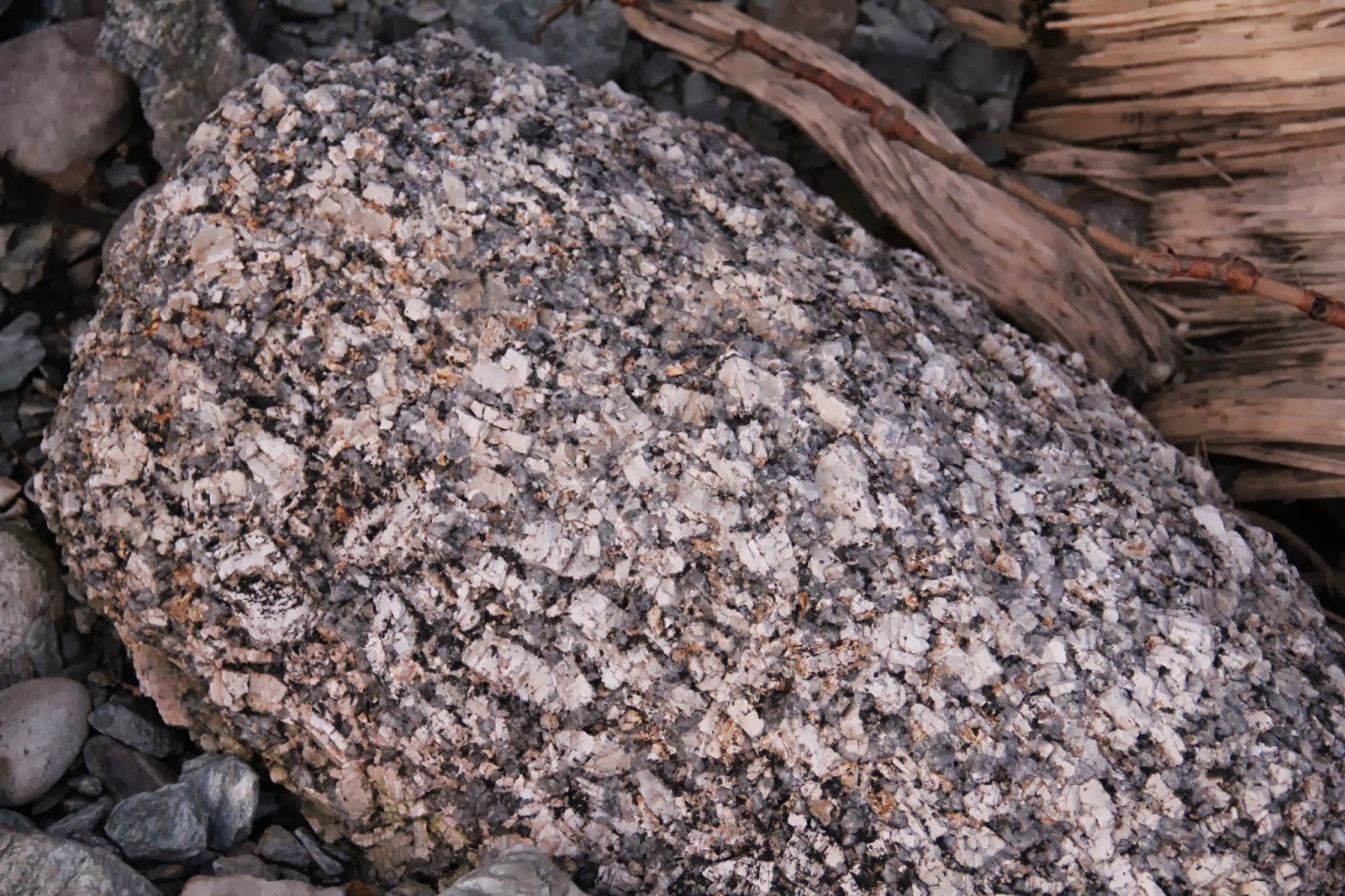
Coarse granite boulder - Lamoine State Park near Lamoine, ME

Boulder with inclusions - Lamoine State Park near Lamoine, ME

Boulder - Lamoine State Park near Lamoine, ME

Devonian rock formations and rock beach - Mt. Desert Island, Acadia National Park near Seal Harbor, ME

Cadillac Mountain Granite - Cadillac Mountain, Acadia National Park near Bar Harbor, ME

Coarse granite boulder - Acadia National Park, ME

Granite cliffs at Bass Harbor Head - Bass Harbor, ME

Mid-Michigan Rock Club Annual Rock Show - 02 November & 03 November 2013

On Saturday November 2nd and Sunday November 3rd, the Mid-Michigan Rock Club will be hosting its annual rock show at the midland Resort Hotel & Convention Center.  Adult admission is only one dollar and children under twelve are admitted free.  This is a great place for any rock hound or aspiring rock hound to add to their collection.  Visit the Mid-Michigan Rock Club website for more information at http://www.midlandrockclub.com/


Sunday, October 20, 2013

Monarch Final Numbers for 2013

It is probably safe to say that Monarch Butterfly season is officially over in Mid-Michigan.  Back on August 23rd, I wrote about finding our first three Monarch caterpillars for the year.  Little did I know that those would be the only three caterpillars we would find this year.  I would only see six adults this year.  Compare those numbers to these photos from 2010.


Please visit Monarch Watch to learn what you can do to help Monarch populations recover.

Thursday, October 17, 2013

Cider!

If life gives you apples, make cider.

This Monday we did just that with 2nd grade students from the Saginaw Chippewa Academy.

Some of the apples came from my parents' orchard.  Other apples came from the parking lot of a fast food restaurant.  Finally a bucket of apples came from two tree planted alongside the parking lot of a university building.  The apples from these two trees were going to waste.  They were just dropping into the parking lots and being run over by cars or rotting under the tree.  The same was happening to the apples at the fast food restaurant.  Why would anyone plant a fruit tree that is never going to be harvested?

I decided to rescue some of this fruit and put it to use.

Apples cut in half to show the star inside


Five gallons of apples makes about 1 gallon of cider
 
Apple pulp waiting to be pressed
 
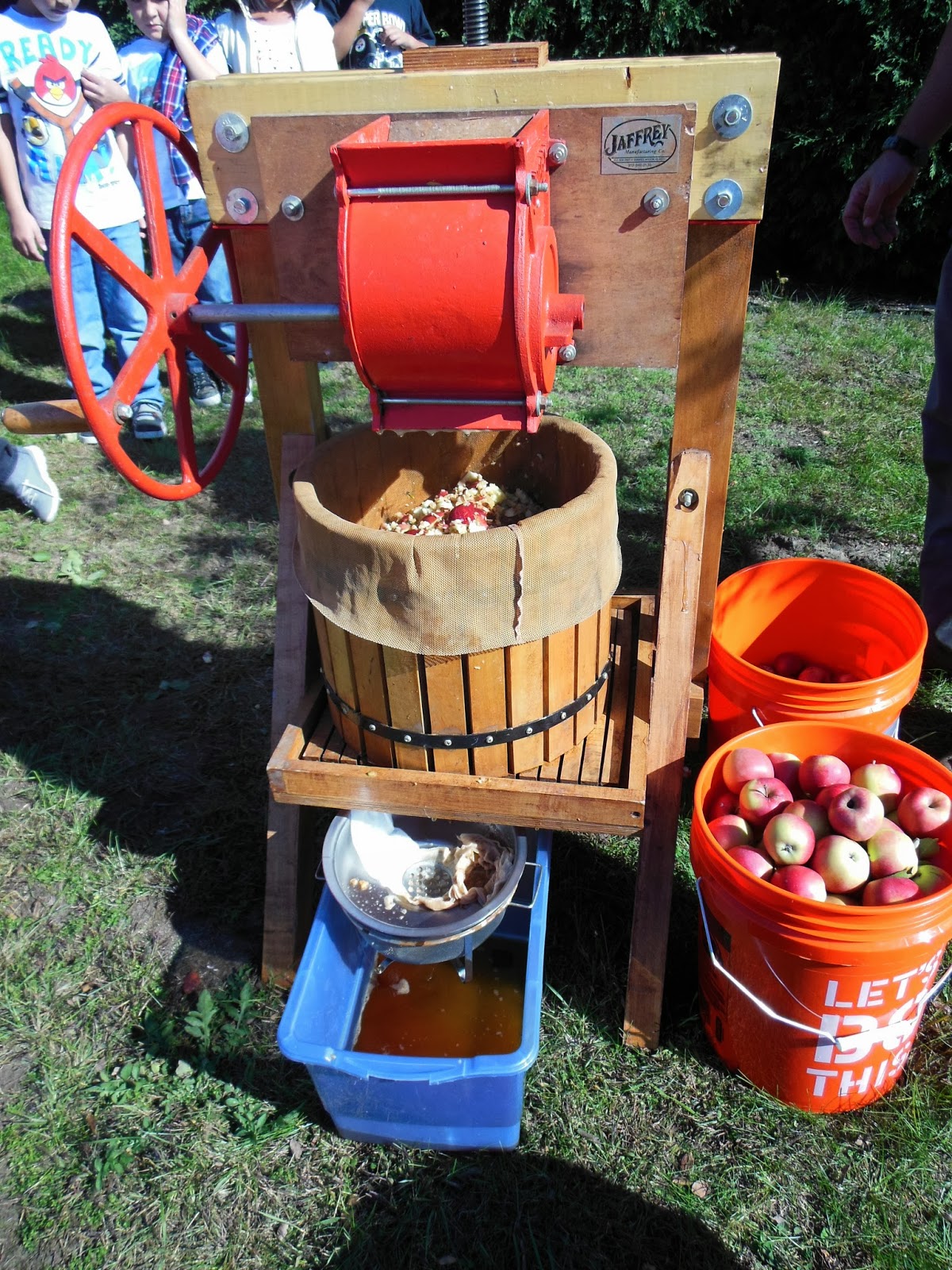
One student cranks, another feed the grinder

The press is almost full

Cranking the grinder - this is hard work!

Pressing the pulp - you can see the fresh cider running out of the press
 
One of three gallons that we made


Wednesday, October 16, 2013

The trees have no tongues...

I am the Lorax. I speak for the trees.
I speak for the trees, for the trees have no tongues.

                    - Dr. Seuss 
                       The Lorax


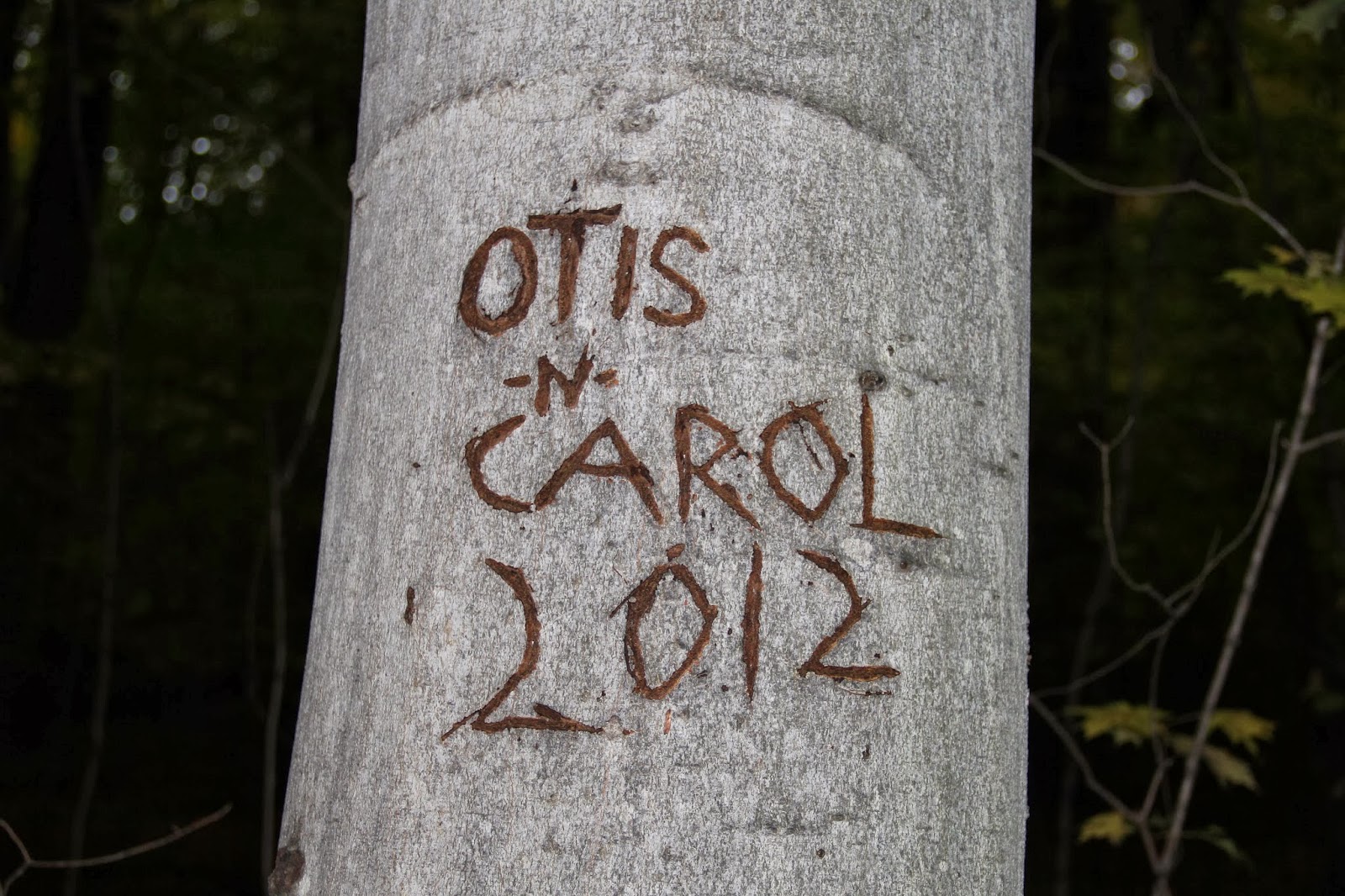
Please, do not carve on trees!  (Don't paint on them either!)  The trees do not carve their names on you!  You shouldn't carve on them.

We need trees.  They provide us with food, with homes, with tools, with heat, with paper to write upon, with beauty, with oxygen.  The trees do not need us.  In fact, they usually do better without us.


Trees were around millions of years before we were.  They survived when dinosaurs became extinct.  They survived Ice Ages.  They have survived everything we can throw at them.


Most of them live much longer than we do.  There are 2000 year old trees alive today.  The American Beech (Fagus grandifolia) shown in these pictures commonly live 150 - 200 years.

Respect the trees.  Don't carve on them.


Tuesday, October 15, 2013

Poison Ivy in Fall

Since starting this blog in January, I have posted nearly 200 times.  Out of all of those posts, the one that has been viewed the most times is one about poison ivy "Leaves of three, let it be... What about leaves of five?".  There were so many people searching for information about poison ivy that I wrote a second post in June -
"Leaves of Three... Revisited". There are still people searching for information on poison ivy nearly every day.

Today I was at Chipp-A-Waters Park in Mt Pleasant to look for fall leaves and fruits.  Less than 25 foot from the trail I found these berries hanging from a tree.


Those white-green berries belong to Eastern Poison Ivy (Toxicodendron radicans).  Several of these plants were using their hairy clinging vines to climb an Eastern Cottonwood (Populus deltoides).  Branches that were over 3 foot long were jutting out from the vines, giving the Poison Ivy the appearance of a tree rather than a vine.  With branches like this, it can be hard to tell the Poison Ivy from the tree it is climbing.

Eastern Poison Ivy (Toxicodendron radicans) vines climbing a Cottonwood Tree

Branches sprouting from Eastern Posion Ivy (Toxicodendron radicans) vines


Eastern Poison Ivy (Toxicodendron radicans)- note the green-white berries and "leaves of three"


The green-white berries and "hairy" vines can be used to identify Eastern Poison Ivy even when no leaves are present


Fall Colors from 2012


This past weekend I took a trip to the northeast part of the state to look at fall leaves.  Overall they were very disappointing.  There is more color on the trees in Mid-Michigan than there was near Alpena.  I didn't take a single photo on our drive.  So instead, I thought I would share some photos from this week last year.

The first two photos were taken one year ago yesterday (14 OCT 2012) at my home in Alma.


The remaining photos were take one year ago tomorrow (16 OCT 2012) at Mission Creek Woodland Park in Mt. Pleasant.