Tuesday, June 21, 2016

Native Pollinator Garden Updates (20 June 2016)

Yesterday being the first day of Summer, I decided to take a little time to drive around to the various Native Pollinator Gardens.

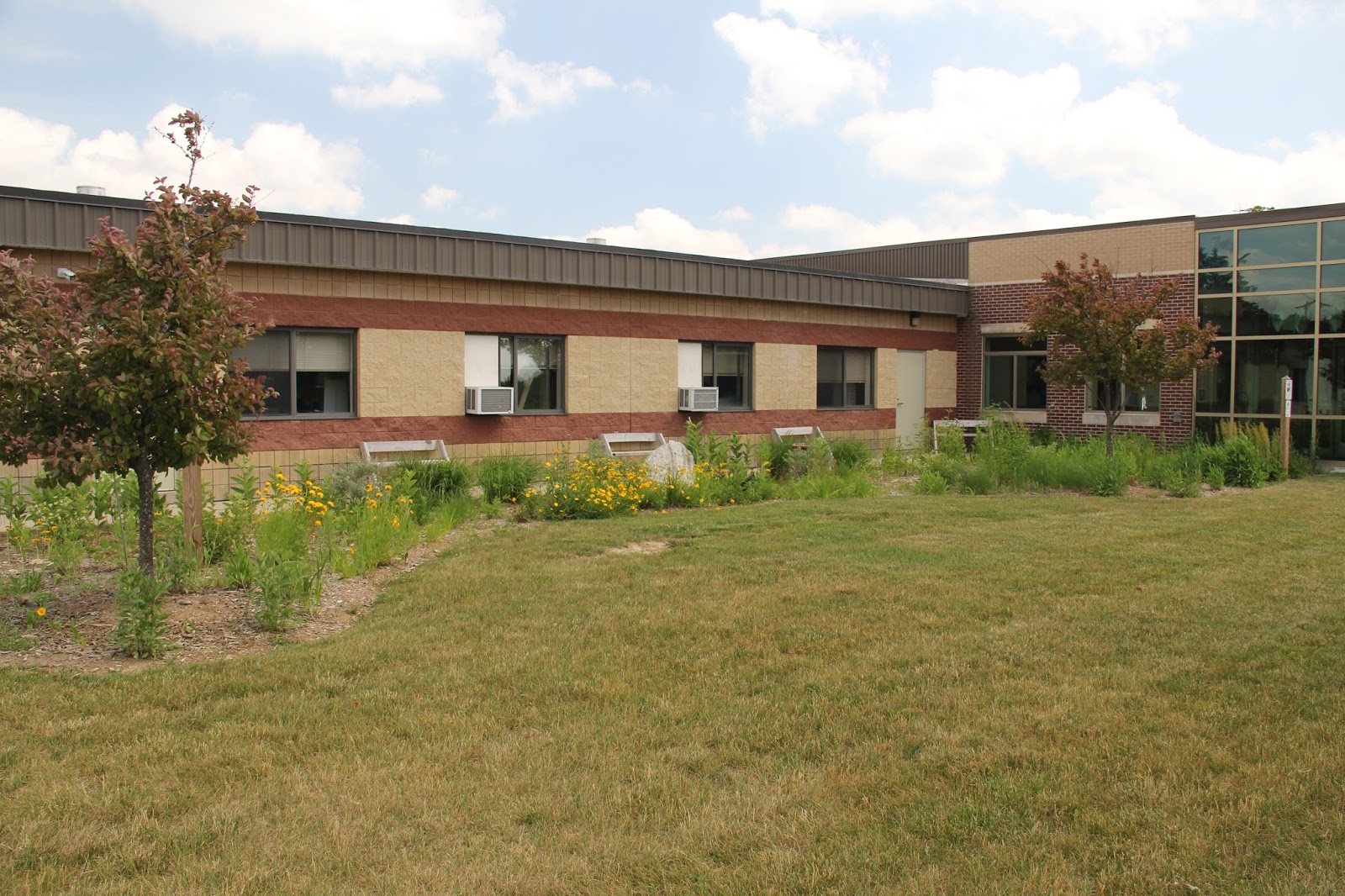
Saginaw Chippewa Academy

The garden at the Saginaw Chippewa Academy underwent a major transition this year.  The portable classroom that previously bordered the west side of the garden was removed this spring.  This means that the garden is no longer receiving lots of runoff from the building's roof.  It is also nor getting full sun all day long.  These two factors mean that it should be much drier this year than in the past.  What the long term impact will be remains to be seen.

SCA Native Pollinator Garden

Lance-leaf Coreopsis is almost done blooming

Lance-leaf Coreopsis

Harebell with a bee nesting tower in the background

Harebell

Cup Plant leaves


Mt. Pleasant Discovery Museum

This is the first site that people see a the enter the Mt. Pleasant Discovery Museum.  It gets lots of foot traffic on its path.  It also gets a lot of runoff from the roof - enough that erosion can be a problem.  The plants here are expanding to fill empty space, but they still have a long way to go.   Coreopsis is threatening to overgrow the path on the west end - other plants are spreading more slowly.  I did see lots of the Museum's honey bee visiting the garden while I was there.  Overall, I am pleased with the progress this garden has made.

Mt. Pleasant Discovery Museum Native Pollinator Garden

Black-eyed Susan will eventually give way to other plants

Common Milkweed

This garden is certified as a Monarch Waystation (as are the other three)

Hoary Vervain

Prairie Dock leaves

Winn Elementary

This garden has two distinct zones.  The part tucked back in the corner of the school is partially shaded and gets lots of runoff from the roof.  The north end of the garden doesn't get as much water and receives more sunlight.  As a result, the plants on this end have never really taken off as I had hoped.  In the long run I will need to add more plants here to fill in the empty spaces.

Winn Elementary Native Pollinator Garden

The north end of the garden

New Jersy Tea

Coreopsis along the sweeping edge of the garden
 
The south part of the garden
 
Coreopsis

Morey Public School Academy

This garden is one of the younger gardens (created in 2013 along with the Discovery Museum garden).  It gets full sun and a small amount of runoff.  The most striking feature of this garden is the Prairie Dock.  There are a couple dozen of these large plants.  By late summer, their leaves may be two feet long and the flower stalks may be eight feet tall.  Despite being rooted in clay, the plants that survived here are generally thriving.  I need to transplant a number of plants that have self-sown in the walkways.

Common Milkweed and the Monarch Waystation sign

Common Milkweed

Runaway Lance-leaf Coreopsis

Prairie Dock (left) and Lance-leaf Coreopsis (right)

Prairie Dock leaves

Monday, June 20, 2016

Ode' imin Giizis and the Summer Solstice

Today, at 6:34 PM EST,  Spring ends and Summer begins in the Northern Hemisphere.  The moment this happens is known as the Summer Solstice.  The word Solstice comes from the Latin words sol (sun) and sistere (to stand still).  Today the sun has reached its highest position in the northern Sky, giving us our longest day of the year. 

The Earth rotates around its axis approximately once every 24 hours.  However this axis is tilted at 23.5 degrees from the vertical.  The points on the globe that the axis revolves around are referred to as the North and South Poles.  The axis is always pointed toward the same location in the sky.  The North Pole points toward the "North Star" - Polaris.

As the earth revolves around the sun, sometimes the North Pole is closer to the sun, sometimes the South Pole is closer to the sun.  When the North Pole is at its closest, we experience Summer in Mid-Michigan and the Southern Hemisphere experiences Winter.  When the North Pole is at its furthest, we experience Winter and the Southern Hemisphere experiences Summer. 

If you were to arise at dawn every day of the year and record at which point on the horizon the sun rises from you would be able to track the progression from the Summer solstice (in which the sun rises furthest North) to the Winter Solstice (in which the sun rises furthest South) and back again.  Tracking the postion of the rising sun was one of the earliest astronomical observations.  Many ancient monuments were constructed to act as solar observatories, recording the longest and shortest days of the year.


This year the solstice falls on the same date as the full moon.  This is a rare occurrence - the last such pairing occurred in 1948.  The full moon and solstice occurring within 24 hours of each other is less rare, but still uncommon.  The last time that happened was 1986.

You might hear people referring to this full moon as the "Strawberry Moon".  To Anishinaabe people in Michigan the Strawberry is known as ode' imin (heartberry) and the month of June is known as Ode' imin Giizis (Strawberry Moon).

In honor of the Solstice...

Friday, June 17, 2016

Upcoming Event(s) - Play on the Way (15 June to 26 August 2016)

This summer the Isabella County Parks are hosting events by Central Michigan University's Mobile Recreation program: Play on the Way.

Play on the Way is a new program that aims to get kids active by providing sports and physical activities, art and cultural activities, outdoor education, games, and water activities.

These events are free to participants, but people are asked to register ahead of time.


Wednesday, June 15, 2016

Wildflowers of 2015 - #111 through #119

This is part two of the wildflowers that I found on 01 June 2016.  Numbers 100 through 110 were photographed at Chipp-A-Waters Park.  The following nine species were photographed at Mill Pond Park and Island Park.

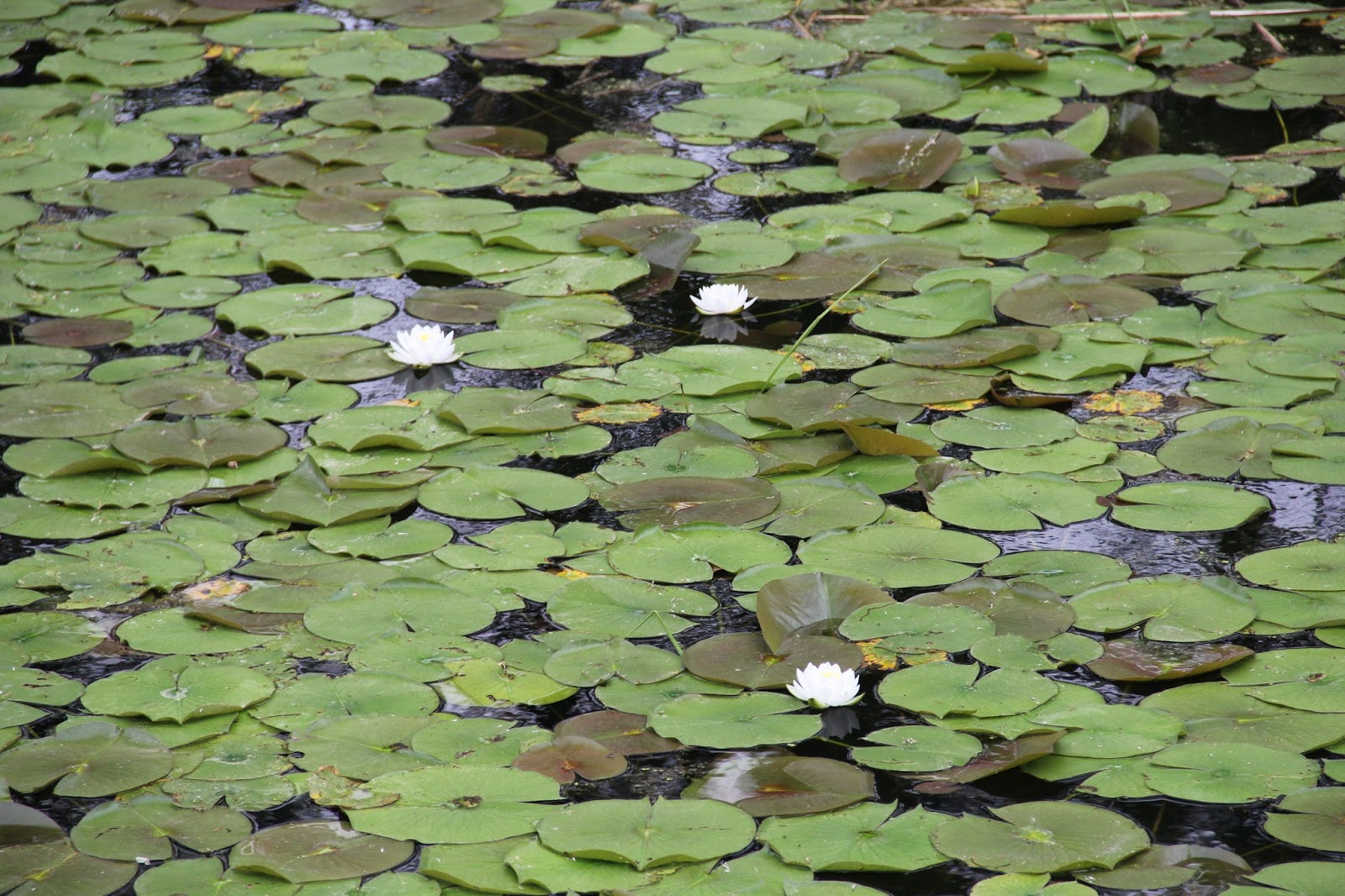
Wildflowers of 2016 - #111 White Water Lily (Nymphaea odorata)

White Water Lily can can be mistaken for no other plant in Michigan

My first flower at Mill Pond Park was the White Water Lily (Nymphaea odorata).  Also know as Sweet-scented Water Lily or Fragrant Water Lily, this plant is found growing in shallow water (down to 7 feet deep) throughout most of North America.  White Water Lily is usually found in the open water areas of marshes, in ponds and lakes, and occasionally in backwaters and slow-moving areas of rivers.

White Water Lily (Nymphaea odorata)

The floating round leaves and white flowers with yellow centers make this plant easy to identify.  It can be mistaken for no other plant in Mid-Michigan.  At night and on cloudy days the flowers will close up and sink beneath the surface of the water.  The leaves and flowers are attached by hollow stems to a tuberous root system.  The roots, leaves, and stems are consumed by a variety of herbivores ranging in size from Muskrats to Moose.  The flowers measure 3 to six inches across and the leaves measure 4 to 12 inches.

Wildflowers of 2016 - #112 Garden Columbine (Aquilegia vulgaris)

My next flower was found growing next to a bridge foundation at Mill Pond Park and slightly under the bridge itself.  I initially found Garden Columbine (Aquilegia vulgaris) growing in this location in 2014, but did not include it in my 2014 list.  There was no indication that it was planted there, but I wanted to make sure it was truly a wild population.  The plant has now bloomed for three consecutive years so I feel confident in including it in my 2016 list.

Garden Columbine growing at Mill Pond Park

Because this is a common garden flower it is not unexpected that there would be escaped populations.  However, these populations seem to be fairly small across most of the United States and Canada.  It has been collected in twenty-one mostly eastern states and six provinces.  In Michigan, it has only been collected in 16 counties (not including Isabella).

Garden Columbine - a closer view of the flower

Wildflowers of 2016 - #113 Honewort (Cryptotaenia canadensis)

Honewort - note small white flowers and deeply lobed leaves

Also known as Wild Chervil, Honewort (Cryptotaenia canadensis) is found in moist to dry shaded habitats across eastern North America.  The plant can be identified by its small white flowers and leaves with three deeply divided lobes and serrated margins.  The flowers measure only about 1/8 inch across and have five petals.  The individual flowers grow as part of a larger flat-topped structure called an umbel.  The umbels can measure up to 3 inches across.

Wildflowers of 2016 - #114 Feathery False Solomon's Seal (Maianthemum racemosum)

Earlier in the year, I photographed two Maianthemum species: #53 Starry False Solomon's Seal (Maianthemum stellatum) and #56 Canada Mayflower (M. canadense).  Number One-hundred Fourteen for the year is a third local species: Feathery False Solomon's Seal (Maianthemum racemosum).

Feathery False Solomon's Seal (Maianthemum racemosum)

Information on the Feathery False Solomon's Seal can be found in a January 2014 Species Profile.

Wildflowers of 2016 - #115 Forget-me-not (Myosotis scorpoides)

The next species that I found was the non-native Forget-me-not (Myosotis scorpioides).  This garden escapee is frequently found in wetlands throughout Michigan.  Because Forget-me-not spreads so easily it is considered an invasive species by several states.  There are two native Forget-me-not species in Michigan - both species have a limited range in the state.

Forget-me-not (Myosotis scorpoides) - note pale blue flowers with yellow centers

Most Forget-me-nots can be identified by its pale blue flowers with yellow centers.  In this species the flowers are about 1/4 to 1/3 inch across.  The flowers grow in a raceme that can measure 2 to 10 inches long.  Myosotis scorpoides is an obligate wetland plant - meaning it is almost always found in wetlands.  Small Forget-me-not (M. laxa) is also an obligate wetland species, but its flowers are smaller (less than 1/4 inch).

Wildflowers of 2016 - #116 Hairy vetch (Vicia villosa)

My final flower from Mill Pond Park was another non-native species - Hairy Vetch (Vicia villosa). This plant was probably introduced  to North America as a forage crop. Hairy Vetch usually has purple flowers, but is occasionally found with white or pink blooms.  All parts of this plant (stems, leaves, flowers) are covered with long dense hairs.  This plant grows as either an annual or biennial vine and may grow up to 3 foot in length.  It is usually found in open dry habitats.  It has been recorded in all but six Michigan counties.  It has also been recorded in every single state.

Hairy Vetch (Vicia villosa)

The final three species for the day were photographed along the Chippewa River at Island Park.


Wildflowers of 2016 - #117 Common Goat's Beard (Tragopogon pratensis)


Common Goat's Beard (Tragopogon pratense)


On May 27th, I recorded species #96 for the year - Fistulous Goat's Beard (Tragopogon dubius).  My next species is the closely related Common Goat's Beard (Tragopogon pratensis).  This species can be differentiated from T. dubius by the lack of extended bracts and a stem that does not expand below the flower head.  Common Goat's Beard plant grow 0.5 to 2.5 feet tall.  The plant's leaves are grass-like and can be up to 12 inches long, but upper stem leaves are shorter.  The flower is yellow and composed of a central disc surrounded by rays.  Flowers may be as big as 2.5 inches across.


Common Goat's Beard - note how bracts do not extend past ray flowers

Common Goat's Beard is usually found in dry disturbed locations such as fields and roadsides.  A native of Europe, it has naturalized across most of the United States, with the exception of the Southeast.  In Michigan, it has been recorded across the Upper Peninsula and in 2/3 of Lower Peninsula counties.


Wildflowers of 2016 - #118 Purple Meadow Rue (Thalictrum dasycarpum)


Purple Meadow Rue (Thalictrum dasycarpum) is the second Thalictrum species that I have found this year.  Early Meadow Rue (T. dioicum) was #25 - found on April 25th.  The two species can be distinguished by size: Early Meadow Rue grows to a height of only 1-2 feet while Purple Meadow Rue can grow to a height of 3-6 feet.


Purple Meadow Rue (Thalictrum dasycarpum)

Another feature that can be used to identify them is the shape of their leaves.  Both species have lobed leaved.  Those of Early Meadow Rue have five to nine rounded lobes; the leaves of Purple Meadow Rue are more pointed and have three (sometimes five) lobes.  Despite the name, the stems of Purple Meadow Rue are not always purple.  Many local plants have green stems.


Purple Meadow Rue - female (pistillate) flowers

Like other Meadow Rue Species, male and female flowers are found on separate plants.  Male plants have dangling flowers on widely branching pyramidal clusters (panicles).  Male flowers are whitish with a purple or brown tint.  Female flowers are also located on panicles, but the flowers are erect instead of dangling.

Wildflowers of 2016 - #119 Silvery Cinquefoil (Potentilla argentea) 

My final flower of the day is one of nine non-native Potentilla species found in Michigan - there are also six native species.


Silvery Cinquefoil - not yellow flowers with five petals
 
Silvery Cinquefoil (Potentilla argentea) is a low-growing plant found in dry fields, roadsides, and other weedy places.  It reaches a height of only 4-18 inches.  The plant's yellow flowers have five petals and grow in clusters at the ends of branched stems.


Silvery Cinquefoil - note palmate leaves with five lobes

The leaves of Silvery Cinquefoil have five lobed leaflets arranged in a palmate fashion (lobes that radiate outward from a central point).  The underside of the leaves are covered with a dense coating of hairs giving it a silvery appearance.

Tuesday, June 14, 2016

Wildflowers of 2016 - #100 through #110

On Wednesday June 1st, I found my 100th wildflower species of 2016.  I then went on to find a further nineteen species that day.  Here are numbers 100 through 110.  These eleven species were all photographed at Chipp-A-Waters Park.


Wildflowers of 2016 - #100 Black Locust (Robinia pseudoacacia)

Species #100 for the year was the Black Locust (Robinia pseudoacacia).  Native to North America, but not native to Michigan, this species has been extensively planted as a landscape tree.  It has since spread into natural areas and may be considered invasive in some areas for this spreading tendency.  It frequently grows to a height of 30 to 50 feet, but occasionally tops out at 70 feet.  It is currently found in all US states except Hawaii and Alaska and six Canadian provinces.

Black Locust flowers can be seen from some distance away

Black Locust can be identified by its large compound leaves, thorns, white pea-like flowers, and flat seed pods.  The flower shape identifies this plant as a member of the Legume Family (Fabaceae).  Like other legumes, Black Locust forms a symbiotic relationship with certain nitrogen-fixing soil bacteria.

Close-up of Black Locust blooms - note standard, wings, and keel on each flower

Wildflowers of 2016 - #101 Riverbank Grape (Vitis riparia)

The second species of the day was Riverbank Grape (Vitis riparia).  This is the most common species of wild grape in Michigan.  As its name suggests this sun-loving species commonly grows along riverbanks, but is also found in other forest openings, along forest edges, and in fields.  It can be distinguished from the other three other Michigan grape species by the shape of its leaves - lobes that point toward the tip and coarsely serrated margins.  The flowers grow in elongated clusters that when pollinated will grow into the typical grape bunches.  The small purple fruit of Riverbank Grape are sour and contain a large seed.

Riverbank Grape

Riverbank Grape flowers

Riverbank Grape has been recorded in sixty-eight of Michigan's eighty-three counties.  The species has been recorded in thirty-seven states, but the core of its range is in the Northeast and upper Midwest states. 

Wildflowers of 2016 - #102 Bittersweet Nightshade (Solanum dulcamara)

Bittersweet Nightshade  (Solanum dulcamara) was originally native to Eurasia but is naturalized across most of North America.  The plant grows as a vine that either trails along the ground or twines its way upward using other plants as supports.  It can grow in a variety of soil types, but prefers wet soils and is often found along stream and in wetlands.

A patch of Bittersweet Nightshade (Solanum dulcamara)

Bittersweet Nightshade can be identified by its lobed leaves, purple flowers that resemble shooting stars, and later by its bright red berries.  These berries are consumed by birds (which spread the seeds in their droppings), but are considered toxic to humans.

Bittersweet Nightshade - note "shooting star" flower shape


Wildflowers of 2016 - #103 Yellow Sweet Clover (Melilotus officinalis)

Yellow Sweet Clover
 
The next species is one that was originally introduced from Europe as a forage plant - Yellow Sweet Clover (Melilotus officinalis).  This large species may grow up to 8 feet tall.  It has compound leaves divided into three lobes and elongated clusters (racemes) of yellow flowers.  The racemes may measure up to six inches long, but individual flowers are small (about 1/3 inch).  This species is  member of the Legume Family (Fabaceae) sow each flower consists of five parts: a standard, two wings, and two petals fused into a keel.  A closely related species White Sweet Clover (Melilotus albus) has white flowers.


Wildflowers of 2016 - #104 Red Clover (Trifolium pratense)

The fifth species of the day was Red Clover (Trifolium pratense).  A native of Eurasia and northwest Africa, this species is also commonly planted as a forage crop and has naturalized across most of North America.  It has been recorded in every US state and every Canadian province/territory with the exception of Nunavut.  Amazingly, there are ten counties in Michigan where this species has not been noted.  I expect that it is probably present in those counties, but just has not been collected as an herbarium specimen.

Red Clover - note variegated leaves with three leaflets

The flowers of Red Clover grow in a globe-shaped cluster.This is another member of the Fabaceae, but instead of having the typical flower shape of that family the flowers are more tubular.    Despite the name, flowers of Red Clover are not red.  Instead they are pink to purplish-pink.  This is a favorite nectar plant of many bees (especially bumble bees) and is also visited by many butterfly species.

A closer view of Red Clover - note overall hairiness of plant


Wildflowers of 2016 - #105 Hoary Alyssum (Berteroa incana)

The fifth non-native plant (and sixth plant overall) for the day was Hoary Alyssum (Berteroa incana).  The word hoary comes from an Old English word that means "gray or white with age".  Hoary Alyssum is densely covered with fine hairs giving it a grey-green appearance. Michigan has several species of plants with Hoary in their name (Hoary Alyssum, Hoary Vervain, Hoary Puccoon, etc.); all of which are covered with dense hair.


Hoary Alyssum is a member of the Mustard Family (Brassicaceae).  As such, its flowers have four petals.  The flowers are small (1/8 inch) and white.  They grow on a raceme (elongated cluster) with individual flowers on the raceme flowering in succession from the bottom to the top.

Hoary Alyssum - note deeply notched petals and hairy appearance of plant

This species is naturalized across much of the United States and Canada, but is absent across most of the Southeast west through Texas to California.

Wildflowers of 2016 - #106 Ox-eye Daisy (Leucanthemum vulgare)

The next flower is another introduced species - Ox-eye Daisy (Leucanthemum vulgare).  This native of Eurasia can be found in every American state and all Canadian provinces and territories (with the exception of Nunavut).  Ox-eye Daisy can be found throughout most of Michigan growing in dry soils such as roadsides, fields, shorelines, and forest edges and clearings.  It rarely grows in wetlands.  The species is considered a noxious weed by several states.

Ox-eye Daisy

Ox-eye Daisy has the classic Daisy look with a yellow disc surrounded by 15 to 40 rays.  Each flower may be up to 2 inches across.  Plants may grow up to three foot tall.

Wildflowers of 2016 - #107 Bitter Dock (Rumex obtusifolius)

The next flower is another introduced species from Europe - Bitter Dock (Rumex obtusifolius).  Like many non-native species it prefers disturbed sites such as fields and roadsides where it is able to grow with less competition from native plants.

Bitter Dock along a woodland trail

Bitter Dock initially grows as a basal cluster of leaves.  The leaves may be up to six inches wide.  Later in the season one or more flowering stalks arise from this basal rosette.  The flowers are small and greenish-red.  They grow directly along the branching stalks.  Smaller leaves may also grow along the stalks.

Bitter Dock flowers are small and greenish-red

Wildflowers of 2016 - #108 Yellow Pond Lily (Nuphar variegata)

Yellow Pond Lily (Nuphar variegata)

To photograph the next three species I had to use waders and explore the old river oxbow at the back of Chipp-A-Waters Park.  My first wetland species was Yellow Pond Lily (Nuphar variegata).  To my knowledge, this oxbow pond is the only location in Mt. Pleasant where this species can be found.  It grows only in shallow still (or very slowly moving) water.  It's leaves typically float on the water or rise slightly above the surface.  The yellow flowers also emerge from the water.

Yellow Pond Lily - note heart-shaped leaves

For more information please see my species profile from December 2013.

Yellow Pond Lily flowers are globe-shaped and rise slightly above the water

Wildflowers of 2016 - #109 Giant Bur-reed (Sparganium eurycarpum)

Also growing in the oxbow pond was Giant Bur-reed (Sparganium eurycarpum).  This species is an emergent plant and requires shallower water than the Yellow Pond Lily.  This is another species that I have profiled in the past.

Giant Bur-reed - note both the greenish male (staminate) flowers and whitish female (pistillate) flowers

Giant Bur-reed grows long sedge-like leaves that emerge from the water.  These leaves are narrow (up to 3/4 inch wide) but can be up to 4 feet long.  The flowers of Giant Bur-read grow on branched stalks that also rise above the water.  Male and female flowers are separate, but appear on the same plant.  Both male and female flowers grow in globe-like clusters.

Giant Bur-reed - closeup of female (pistillate) flower

Wildflowers of 2016 - #110 Water Dock (Rumex verticillatus)

Water Dock growing in shallow (>2 ft.) water

My final flower from Chipp-A-Waters Park was another emergent wetland species.  Water Dock (Rumex verticillatus) is a relative of Bitter Dock (#107).  Unlike Bitter Dock, this species is native to Michigan where it is found only in the southern half of the state.  Water Dock has an interesting population distribution.  It is found in coastal marshes all down the East Coast, along the Gulf of Mexico, up the Mississippi to the Great Lakes and down the St. Lawrence valley, but it is absent from the interior of many of these states.

Water Dock - a closer view of the small dangling flowers

Water Dock leaves are arranged alternately on the plant's stalk.  The lower leaves may be 2.5 inches across and 12 inches long.  Upper leaves are smaller.  The small greenish flowers are arranged on spike-like racemes.  The racemes might measure as much as 12 inches tall.  Individual flowers are only about 1/8 inch across and have three petals and three sepals - the sepals and petals are basically indistinguishable.