I've been writing this blog since January 2013. In that time I have created more than eleven hundred individual posts. It's often a challenge thinking of something new to write about...
Today I thought I'd sit down and write something about windchill - a measure of how wind changes the perception of air temperature and its impact on exposed skin..
Many of the schools in Michigan were closed four or five days last week. Two cancellations were due to snow and two more were because of extremely low windchill - on Friday some schools closed because of a combination of windchill and road conditions.
Surely I haven't already written anything about windchill!
Have I?
It appears that I have... in February 2015
Wind Chill - What is it and why is it important?
Showing posts with label wind. Show all posts
Sunday, February 3, 2019
Wednesday, November 23, 2016
Ice, leaves, and more at Mill Pond Park (22 November 2016)
A light week of programming means that I get to spend time outside!
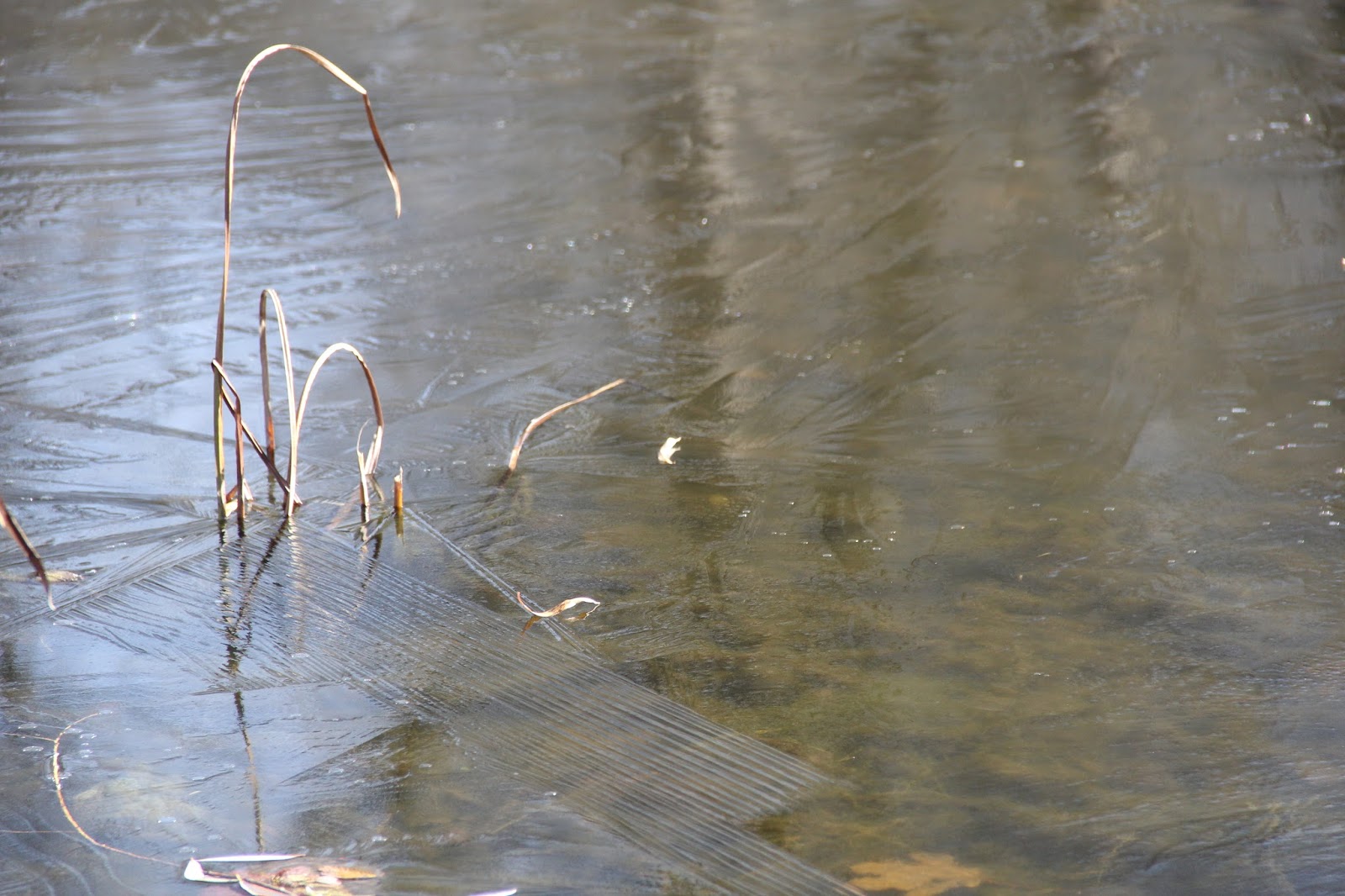
Yesterday, on my way back to the office, I stopped at Mill Pond Park for a short walk through the woods. The night had been quite cold (my thermometer in my truck read 21 degrees this morning when I left home) and even by 11:00 there was still ice on the pond and lots of frost in the woods. I love cold autumn days like this.
| The semi-frozen surface of the mill pond |
| Maple leaves under the ice - Sedges above the ice |
| Empty Swamp Milkweed seed pods |
| The long lines are needle-like ice crystals forming on the surface of the mill pond |
| Willow leaves frozen on the ice |
| Mulberry and other leaves frozen in the pond |
| Boxelder seeds and leaves on top of Mulberry leaves |
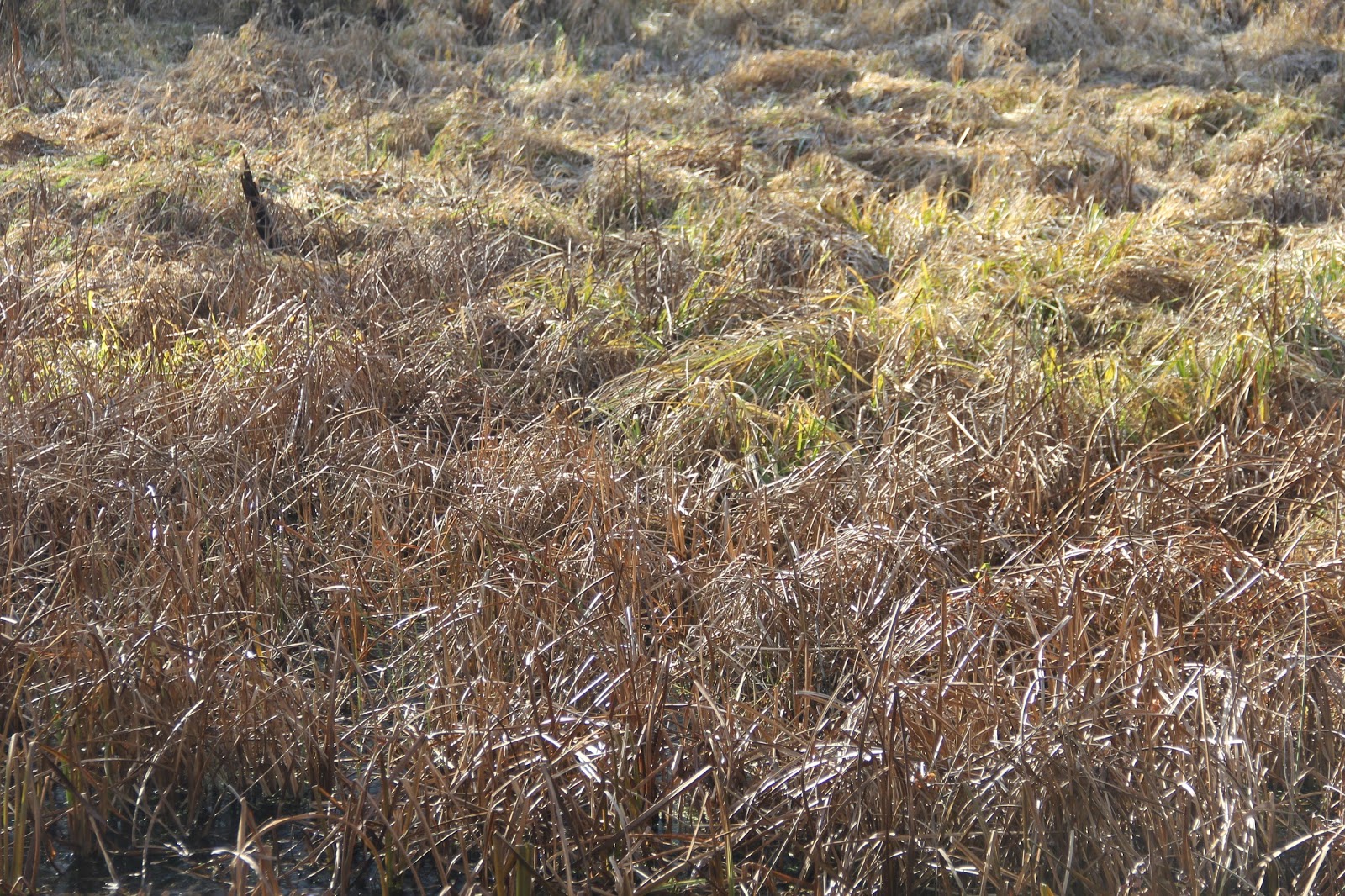
| Fall sedges and rushes |
| Burdock burs |
| Boxelder seeds |
| A large area of windfall - most of these trees are Green Ash trees killed by the Emerald Ash Borer |
| Barberry - an invasive species |
| Virgin's Bower (also known as Old Man's Beard) |
| An old dying tree in the woods |
| A male Northern Cardinal |
| Silhouetted Mallard pair |
Labels:
birds,
fall,
ice,
leaves,
native plants,
non-native plants,
seasons,
seeds,
trees,
water,
wind
Monday, February 16, 2015
Wind Chill - What is it and why is it important?
Over the weekend, temperatures in Mid-Michigan dropped to a low of approximately -14 degrees Fahrenheit, but windchill temperatures were much lower dropping down to -31 degrees.
What is windchill?
Windchill is a measure of what air temperature feels like. This measure is based on the principle of convection. A solid surface loses heat in three ways: radiation, conduction, and convection. The human body loses heat primarily through conduction and convection.
Conduction
Conduction is the direct transfer of heat from one object to another. When you touch an object that is colder than your body, some of your body's heat transfers to that object in an attempt to equalize the temperature of your body with that of the object you are touching. This is why when you hold an ice cube, the ice melts and your hand gets cold. Conduction also takes place between you and the air - your body warms up the molecules in the air that contact your body and your body cools slightly.
Convection
What happens if the air around your body is not still? If the air is moving, it pushes the warm air away from the surface of your body and constantly replaces it with new air. The process of conduction is repeated with this new air - this transfer of heat to moving air is known as convection. Because the air is moving and your body is trying to equalize temperatures, heat is lost at a higher rate than it would be to still air. This means that the air feels colder than it actually is - this difference in feel is measured as windchill.
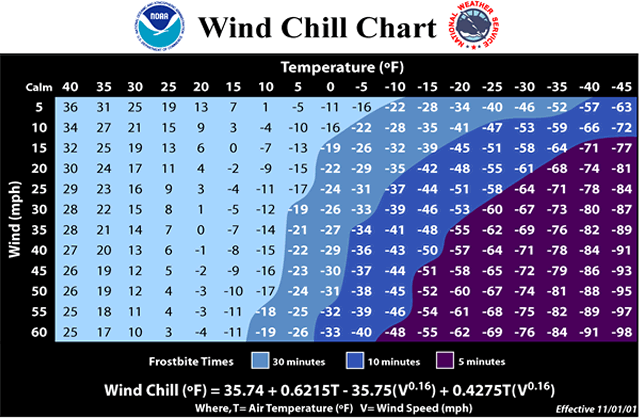
Windchill is calculated using one of several formulas. This data has been collected in tables such as the one below from the National Weather Service.
Why is windchill important?
If skin is exposed to temperatures that are too cold, it will begin to freeze. This condition is known as frostbite. Because convection causes the skin to lose heat much more rapidly than it would in still air, low windchill temperatures indicate a greater danger of frostbite. The chart above shows the time it takes for frostbite to set in at various windchill temperatures.
Many schools do not allow students outside for recess if windchill (or actual) temperatures drop below a certain level. Some schools may even cancel school when temperatures drop below a certain threshold. If yesterday (15 FEB 2015) had been a school day, most of the schools in the area would have probably cancelled classes due to the windchill.
Friday, May 23, 2014
Wildflowers of 2014 - #56 through #62
On Wednesday (21 May 2014), I took a very short trip to look for more plants to add to my list of the Wildflowers of 2014. In less than an hour, and trips to three city parks I was able to find and photograph seven more species to add to the list, bringing the year total to sixty-two species.
Wildflowers of 2014 - #56 Horse-gentian (Triosteum aurantiacum)
Number 56 is a flower that I have been watching for about two weeks, waiting for it to bloom. I first found Horse-Gentian (Triosteum aurantiacum) in Chipp-A-Waters Park several years ago. The first time I saw it was in the Fall and I was able to identify it by its fruit - I had never seen the plant but recognized it from books. Also known as Orange-fruited Horse-gentian, this plant produces orange berries that grow at the leaf axils. The fruit is easy to notice because of the bright orange color, but the flowers are small and nondescript.
Would you walk past this plant if you saw it in the woods? It doesn't look like much...
But if you stoop down to ground level, you will find small (3/8 -1/2 inch long), red, tubular flowers growing from the upper part of each leaf axil (leaf/stem joint).
There are a total of two clumps of Horse-gentian that I know of in Mt. Pleasant's entire parks system - growing within about a dozen feet of each other at Chipp-A-Waters Park. It was just luck on my part to have stumbled across them when they are at their easiest to identify. Now I look forward to seeing them every year.
Wildflowers of 2014 - #57 Lily-of-the-valley (Convallaria majalis)
Within yards of the Horse-gentian was the next flower on my list. While Lily-of-the-valley (Convallaria majalis) is a lovely plant in the garden, it is a horrible plant to have in the woods. A very large colony of this non-native flower is slowly overtaking my favorite wildflower are in Mt. Pleasant. Once escaped from cultivation, this plant can outcompete many native species.
A word of caution about this plant - ALL parts of the plant are highly toxic. Ingestion of even small amounts of this plant can cause abdominal pain, vomiting, lowered heart rate, or even death.
Why is this important? When first emerging from the ground and up until this plant starts to develop its flowering stalk, this plant can be confused with several other species, including edible Wild Leeks or Ramps (Allium tricoccum). However, once Lily-of-the-Valley begins to bloom, its (normally) white bell shaped flowers make it easy to distinguish from other species.
Wildflowers of 2014 - #58 Choke Cherry (Prunus virginiana)
The third flower of the day was found in a group of shrubs/small trees. A quick look at this shrub shows it as a Cherry species with its reddish bark and elongated clusters of small white flowers. To determine which species requires a closer look. Of the native and introduced species of cherries that can be found in Michigan, only Wild Black Cherry (Prunus serotina) and Choke Cherry (Prunus virginiana) have elongated flower clusters. The easiest way to identify small members of the two species is to look at the leaves. Both Wild Black Cherry and Choke Cherry have leaves with serrated margins. The teeth on the Wild Black Cherry leaves are rounded and curl inward like a wave breaking; the teeth on the Choke Cherry leaves come to a distinct point with no curl. The leaves on this plant have teeth that come to a point with no inward curl, identifying it as a Choke Cherry (Prunus virginiana).
Wildflowers of 2014 - #59 Redbud (Cercis canadensis)
The next flower was one I did not expect to find. Redbud (Cercis canadensis) is a small tree the reaches the northern edge of its native range in Michigan. Michigan Flora does not list this plant for Isabella County. Redbud is widely grown as an ornamental tree because of its pinkish flowers. This example, which is growing right along the shore of the Chippewa River, is likely from a seed that washed downstream and was deposited.
A closer look at the flowers of this plant show that the flowers look like those of a pea or bean. They should. Like peas and beans, this tree belongs to the Legume Family (Fabaceae).
Wildflowers of 2014 - #60 Morrow's Honeysuckle (Lonicera morrowii)
Continuing on with shrubs and small trees, the next flower is from a species of shrub that is very common in Mt. Pleasant's parks. Unfortunately Morrow's Honeysuckle (Lonicera morrowii) is an invasive species. It escapes from cultivation when birds consume the red or orange berries and deposit them in their dropping in nearby wild areas. When a plant grows from these seeds and reaches maturity, birds will eat its seeds, and continue the process of distribution. Eventually whole forests can have understories that are completely composed of this and other non-native shrubs which crowd out native shrubs and wildflowers.
Morrow's Honeysuckle can be distinguished from other non-native Honeysuckle species by its pairs of flowers which start out white and then fade to yellow, and its leaves which are are pubescent (covered with downy hairs). Morrow's Honeysuckle can hybridize with several other species of Honeysuckle, making identification more difficult.
Wildflowers of 2014 - #61 White Oak (Quercus alba)
The next flowers are those of a large White Oak (Quercus alba). White Oaks, like many other trees, are wind pollinated. Because they do not rely on insects for pollination they produce large numbers of small drab flowers hanging in 2-4 inch catkins. White Oak trees can be identified by the rounded lobes of their leaves.
Wildflowers of 2014 - #62 Bur Oak (Quercus macrocarpa)
The final flower of the day was another species of Oak - Bur Oak (Quercus macrocarpa). Like the White Oak, Bur Oak is wind-pollinated and has small drab flowers arranged in hanging catkins. Also like White Oak, Bur Oak has leaves with rounded lobes. But in this case a large terminal lobe is further divided into several small lobes. This gives the end of the leaf a much "chunkier" appearance than the White Oak.
Wildflowers of 2014 - #56 Horse-gentian (Triosteum aurantiacum)
Number 56 is a flower that I have been watching for about two weeks, waiting for it to bloom. I first found Horse-Gentian (Triosteum aurantiacum) in Chipp-A-Waters Park several years ago. The first time I saw it was in the Fall and I was able to identify it by its fruit - I had never seen the plant but recognized it from books. Also known as Orange-fruited Horse-gentian, this plant produces orange berries that grow at the leaf axils. The fruit is easy to notice because of the bright orange color, but the flowers are small and nondescript.
Would you walk past this plant if you saw it in the woods? It doesn't look like much...
| A clump of Horse-gentian doesn't look very exciting. |
But if you stoop down to ground level, you will find small (3/8 -1/2 inch long), red, tubular flowers growing from the upper part of each leaf axil (leaf/stem joint).
| A closer view of the Horse-gentian - note the red flowers growing from the leaf axils. |
There are a total of two clumps of Horse-gentian that I know of in Mt. Pleasant's entire parks system - growing within about a dozen feet of each other at Chipp-A-Waters Park. It was just luck on my part to have stumbled across them when they are at their easiest to identify. Now I look forward to seeing them every year.
Wildflowers of 2014 - #57 Lily-of-the-valley (Convallaria majalis)
Within yards of the Horse-gentian was the next flower on my list. While Lily-of-the-valley (Convallaria majalis) is a lovely plant in the garden, it is a horrible plant to have in the woods. A very large colony of this non-native flower is slowly overtaking my favorite wildflower are in Mt. Pleasant. Once escaped from cultivation, this plant can outcompete many native species.
A word of caution about this plant - ALL parts of the plant are highly toxic. Ingestion of even small amounts of this plant can cause abdominal pain, vomiting, lowered heart rate, or even death.
Why is this important? When first emerging from the ground and up until this plant starts to develop its flowering stalk, this plant can be confused with several other species, including edible Wild Leeks or Ramps (Allium tricoccum). However, once Lily-of-the-Valley begins to bloom, its (normally) white bell shaped flowers make it easy to distinguish from other species.
| Part of a large colony of Lily-of-the-valley |
| Lily-of-the-valley is highly toxic and can be mistaken for some edible plants |
| The dangling bell-shaped flowers identify this plant as Lily-of-the-valley |
Wildflowers of 2014 - #58 Choke Cherry (Prunus virginiana)
The third flower of the day was found in a group of shrubs/small trees. A quick look at this shrub shows it as a Cherry species with its reddish bark and elongated clusters of small white flowers. To determine which species requires a closer look. Of the native and introduced species of cherries that can be found in Michigan, only Wild Black Cherry (Prunus serotina) and Choke Cherry (Prunus virginiana) have elongated flower clusters. The easiest way to identify small members of the two species is to look at the leaves. Both Wild Black Cherry and Choke Cherry have leaves with serrated margins. The teeth on the Wild Black Cherry leaves are rounded and curl inward like a wave breaking; the teeth on the Choke Cherry leaves come to a distinct point with no curl. The leaves on this plant have teeth that come to a point with no inward curl, identifying it as a Choke Cherry (Prunus virginiana).
| Choke Cherry - may grow as a small tree or a shrub |
| Choke Cherry - note the elongated cluster of flowers and the serrated leaves with sharply pointed teeth |
Wildflowers of 2014 - #59 Redbud (Cercis canadensis)
The next flower was one I did not expect to find. Redbud (Cercis canadensis) is a small tree the reaches the northern edge of its native range in Michigan. Michigan Flora does not list this plant for Isabella County. Redbud is widely grown as an ornamental tree because of its pinkish flowers. This example, which is growing right along the shore of the Chippewa River, is likely from a seed that washed downstream and was deposited.
| A Redbud tree growing along the banks of the Chippewa River in Mt. Pleasant |
A closer look at the flowers of this plant show that the flowers look like those of a pea or bean. They should. Like peas and beans, this tree belongs to the Legume Family (Fabaceae).
| Unlike most trees, the flowers of Redbud may grow directly from old branches or even the trunk. |
| Pea-like flowers of Redbud |
Wildflowers of 2014 - #60 Morrow's Honeysuckle (Lonicera morrowii)
Continuing on with shrubs and small trees, the next flower is from a species of shrub that is very common in Mt. Pleasant's parks. Unfortunately Morrow's Honeysuckle (Lonicera morrowii) is an invasive species. It escapes from cultivation when birds consume the red or orange berries and deposit them in their dropping in nearby wild areas. When a plant grows from these seeds and reaches maturity, birds will eat its seeds, and continue the process of distribution. Eventually whole forests can have understories that are completely composed of this and other non-native shrubs which crowd out native shrubs and wildflowers.
Morrow's Honeysuckle can be distinguished from other non-native Honeysuckle species by its pairs of flowers which start out white and then fade to yellow, and its leaves which are are pubescent (covered with downy hairs). Morrow's Honeysuckle can hybridize with several other species of Honeysuckle, making identification more difficult.
| Morrow's Honeysuckle - white flowers arranged in pairs |
| Morrow's Honeysuckle flowers - note how flowers have faded from white to yellow |
Wildflowers of 2014 - #61 White Oak (Quercus alba)
The next flowers are those of a large White Oak (Quercus alba). White Oaks, like many other trees, are wind pollinated. Because they do not rely on insects for pollination they produce large numbers of small drab flowers hanging in 2-4 inch catkins. White Oak trees can be identified by the rounded lobes of their leaves.
| Like many wind pollinated trees, White Oak flowers appear before the tree has fully leafed out. |
| White Oak leaves and flowers |
Wildflowers of 2014 - #62 Bur Oak (Quercus macrocarpa)
The final flower of the day was another species of Oak - Bur Oak (Quercus macrocarpa). Like the White Oak, Bur Oak is wind-pollinated and has small drab flowers arranged in hanging catkins. Also like White Oak, Bur Oak has leaves with rounded lobes. But in this case a large terminal lobe is further divided into several small lobes. This gives the end of the leaf a much "chunkier" appearance than the White Oak.
| Bur Oak leaves and flowers |
Thursday, January 30, 2014
Snow Dunes
Many of the schools in the area are closed again today due to blowing and drifting snow. As I was driving to work earlier this week I noticed how the snow was acting like sand and forming the same types of dunes that would be found in sand. Under the right conditions, snow can act very much like sand - cold (well below freezing) temperatures that do not allow the snow to melt , fine "dry" snow crystals that do not easily stick together, and of course wind.
I went out into the open field behind the Conservation District office and photographed these small snow "dunes". None of these features was more than a few inches in height, but they display the classic features of certain types of dunes.
The first feature is a barchan dune. Barchan dunes form in open areas where there are no obstructions. A barchan dune is shaped like an arch with the curve of the arch pointing into the wind and arms extending downwind. In this first picture, there are two barchan dunes on the right half of the image.
Here is the same image with the wind direction indicated with an arrow and the dunes highlighted with curved lines. The dunes slowly move downwind an particles are picked up from the face of the dune and deposited on the arms or in the lee space created behind the peak of the dune.
Over time, the arms of barchan dunes will intersect with those of adjacent dunes. The resulting undulating line of dunes in now known as a barchanoid dune.
Here is the same image with wind direction and dune indicated. The barchan dunes from image 1 and 2 are to the right of this picture.
Eventually, barchoid dunes will begin to lose their undulating curves and become straight or nearly straight lines. This type of dune is known as a transverse dune. Often many transverse dunes will be found together in rows of ridges and valleys.
This image shows the transition between barchanoid and transverse dune forms. The closest formation still shows the undulating character of a barchanoid dune, but the dunes doing off into the distance have straightened out forming a series of ridges perpendicular to the wind.
Another copy of the same image with wind direction and dunes indicated. the nearest line is a barchoid dune and the further lines have evolved into straighter transverse dunes.
For more information on these and other dune types visit the Great Sand Dunes National Park website.
I went out into the open field behind the Conservation District office and photographed these small snow "dunes". None of these features was more than a few inches in height, but they display the classic features of certain types of dunes.
The first feature is a barchan dune. Barchan dunes form in open areas where there are no obstructions. A barchan dune is shaped like an arch with the curve of the arch pointing into the wind and arms extending downwind. In this first picture, there are two barchan dunes on the right half of the image.
| Snow "dune" features - Barchan dunes to the right of the image |
![]() |
| Snow "dune" features - note wind direction (arrow) and barchan dunes (arcs) |
| Snow "dune" features - barchanoid dune in center of image |
![]() |
| Snow "dune" features - note wind direction (arrow) and barchanoid dune (curving line) |
This image shows the transition between barchanoid and transverse dune forms. The closest formation still shows the undulating character of a barchanoid dune, but the dunes doing off into the distance have straightened out forming a series of ridges perpendicular to the wind.
| Snow "dune" features - transverse and barchanoid dunes |
![]() |
| Snow "dune" features - note the wind direction (arrow), barchanoid dune (closest line), and transverse dunes (furthest three lines) |
Subscribe to:
Posts (Atom)