Monday, April 10, 2017

The sounds of Spring - Wood Frogs

Last week I posted a short video from a local wetland area.  The video itself wasn't anything special; I was mainly trying to record the sounds of a local wetland.  The star of that video was a group of Western Chorus Frogs (Pseudacris triseriata), but in the background of the video you could hear the breeding calls of Wood Frogs (Lithobates sylvaticus).

Yesterday, Shara and I went out to Forest Hill Nature Area to walk the trails.  As we approached the North Woods we could hear Wood Frogs calling from several of the vernal pond scattered throughout the woods.  I took the opportunity to record another video.  Again this video should really be treated as a sound recording, the picture is definitely secondary.

The primary sound in this video is the "quacking" sound from the Wood Frogs.  There are also periodic bird calls and the sound of wind blowing over the microphone on my camera.

Enjoy.


Wednesday, April 5, 2017

Tuesday, April 4, 2017

A walk through Mission Creek Woodland Park (01 April 2017)

On Saturday (01 April) I spent a little time tromping around the wetlands at Mission Creek Woodland Park.   I had no particular objective in mind.  I just wanted to be out in the nice weather.  Here is some of what I saw.

Birch wood tends to decay quite rapidly.  Birch bark on the other hand is extremely resistant to rot.  It is not uncommon to find birch logs lying on the ground in which the bark is still intact, but the wood inside has rotted away to mush.  The waterproof bark hold moisture in the log, creating a perfect environment for fungi and bacteria to work on the wood.  Here's a little tip: if you want to use birch as a firewood, it has to be split to allow the moisture to escape.


More tussocks!


I do love the Skunk Cabbage.


No matter how many times I see them, I just can't get enough.


Perhaps its just the craving for something blooming,


But this time of year I am drawn again and again back into the swamp to see the Skunk Cabbage.


I didn't spend all of my time looking down at the ground.  I did manage to see a flock of Wild Turkeys sneaking through the woods ahead of me.  There were at least six birds in the flock and probably more that I couldn't see because of the trees.


After the turkeys passed through, I managed to find some "evidence" of their passing.  Yes, that is a pile of turkey scat.


Maybe I do spend a lot of time looking at the ground.  FYI this is not the first photo of animal scat to appear on this blog.  A quick search for "scat" in the search box to the right will reveal at least six other photos.

But life is not all Skunk Cabbage and turkey scat...

It is also full of Downy Woodpeckers.


And mosses...


Life is especially full of mosses.


On a side note, I am currently reading the book Gathering Moss by Robin Wall Kimmerer.  It is a thoroughly enjoyable book about science written for the average reader.  I highly recommend it to anyone interested in learning more about natural history.  I also heartily recommend her more recent book Braiding Sweetgrass: Indigenous Wisdom, Scientific Knowledge and the Teachings of Plants.


Sunday, April 2, 2017

The sounds of Spring

My camera has a video function that I rarely use, but yesterday I could not resist.  Nevermind the video itself (I was standing in a thicket surrounded willows and Indian Hemp).  What I really wanted to record was the sound.  The overlying sound is the call of Western Chorus Frogs (Pseudacris triseriata).  Periodically you hear a male Red-winged Blackbird (Agelaius phoeniceus) add his voice.  Deep in the background are the duck-like calls of Wood Frogs (Lithobates sylvaticus).

Enjoy.


Monday, March 27, 2017

A long way from the tundra

I spent Friday and Saturday (24 & 25 March) at the Michigan Science Teachers Association (MSTA) annual conference in Novi, MI.  On Friday I presented two programs titled "Michigan Mammals" and "Michigan Trees".  On Saturday I spent several hours manning a booth for the Michigan Alliance for Environmental and Outdoor Education (MAEOE).

Yesterday (26 March) I decided to drive into Mt. Pleasant to drop off the materials that I had taken to Novi to use in my presentations.  On the way to Mt. Pleasant I noticed a flock of large birds flying over the road and landing in a field of corn stubble.  I was expecting Canada Geese (Branta canadensis); it is common to find them in fields, feeding on waste corn.

I was not expecting to see Tundra Swans (Cygnus columbianus).

I was especially not expecting to see hundreds of Tundra Swans!

Unfortunately, I did not have my camera with me - violating the First Rule of Photography.  I though for a minute about returning home, but decided to continue on to Mt. Pleasant.  When I returned home, about an hour later, there were even more swans in the field.   I rushed home to retrieve my camera and drove back to the site.

I parked along the side of the road and began to photograph from inside my truck.  Small flocks continued to arrive while I sat there.


By the time I left, there were approximately four to five hundred swans on the ground, feeding on corn and posturing to impress mates or intimidate rivals.  I made this estimate by counting the number of swans in a section of the field and multiplying that by the approximate length of entire flock.  Most of the swans had the pure white plumage of adults, but some still had the grey tint of immature birds (especially on the neck and head).  In addition to the swans, there were also approximately one hundred Canada Geese in the field.


Usually I only see flocks this size at the Maple River State Game Area near US-127.  Usually they are far out in the water away from the highway, with no way to see them up close.

When I drove by the field again this morning all of the swans were gone - but we did see a few in another field closer to Mt. Pleasant.  It was really exciting to have the opportunity to see and photograph these birds. 

UPDATE:  Right now (27 MAR at 9:00 AM) there is a flock (approximately 100 swans) in the field west of the Soaring Eagle Casino. 

Thursday, March 23, 2017

Butterflies in Bloom 2017

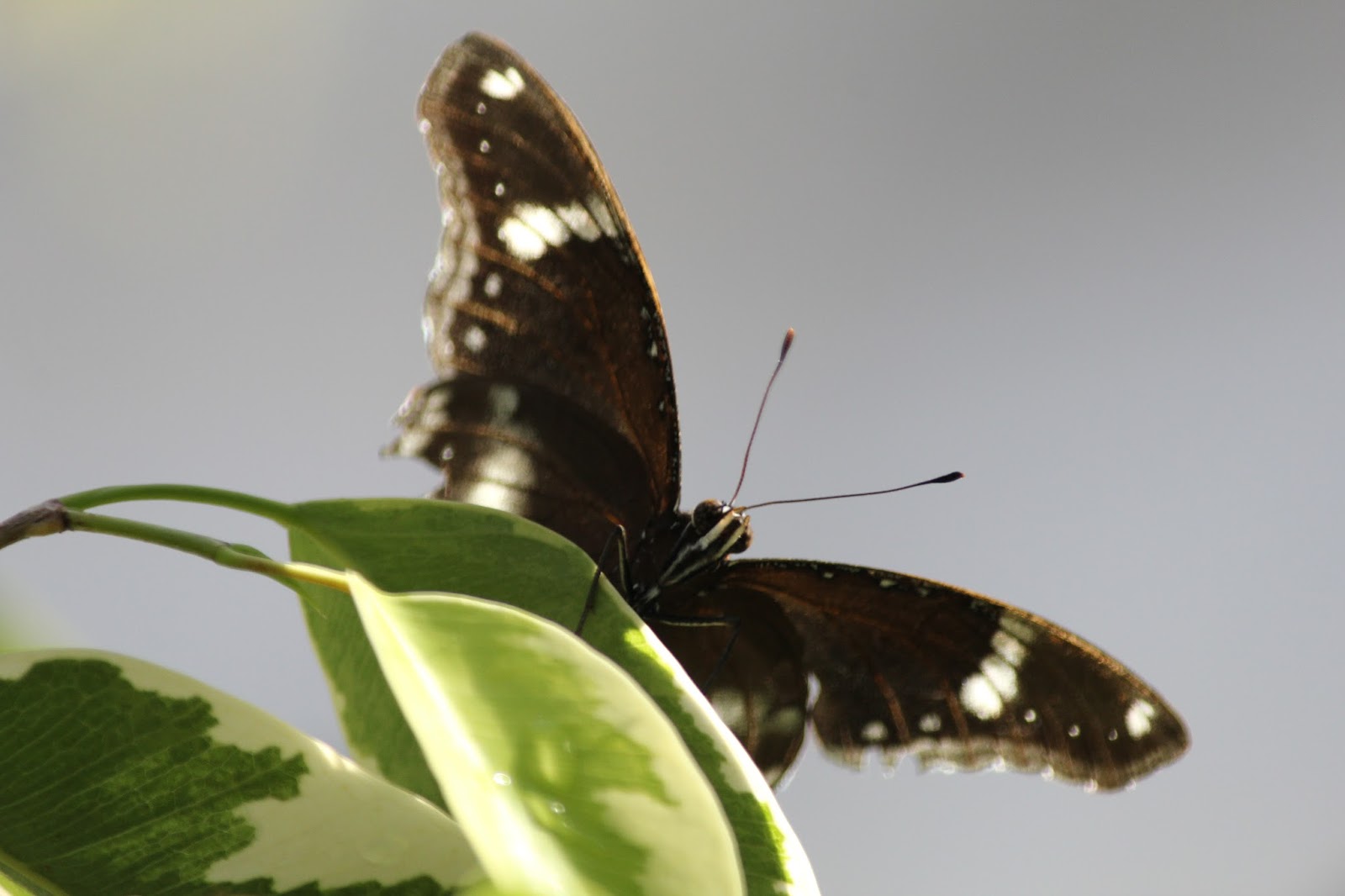
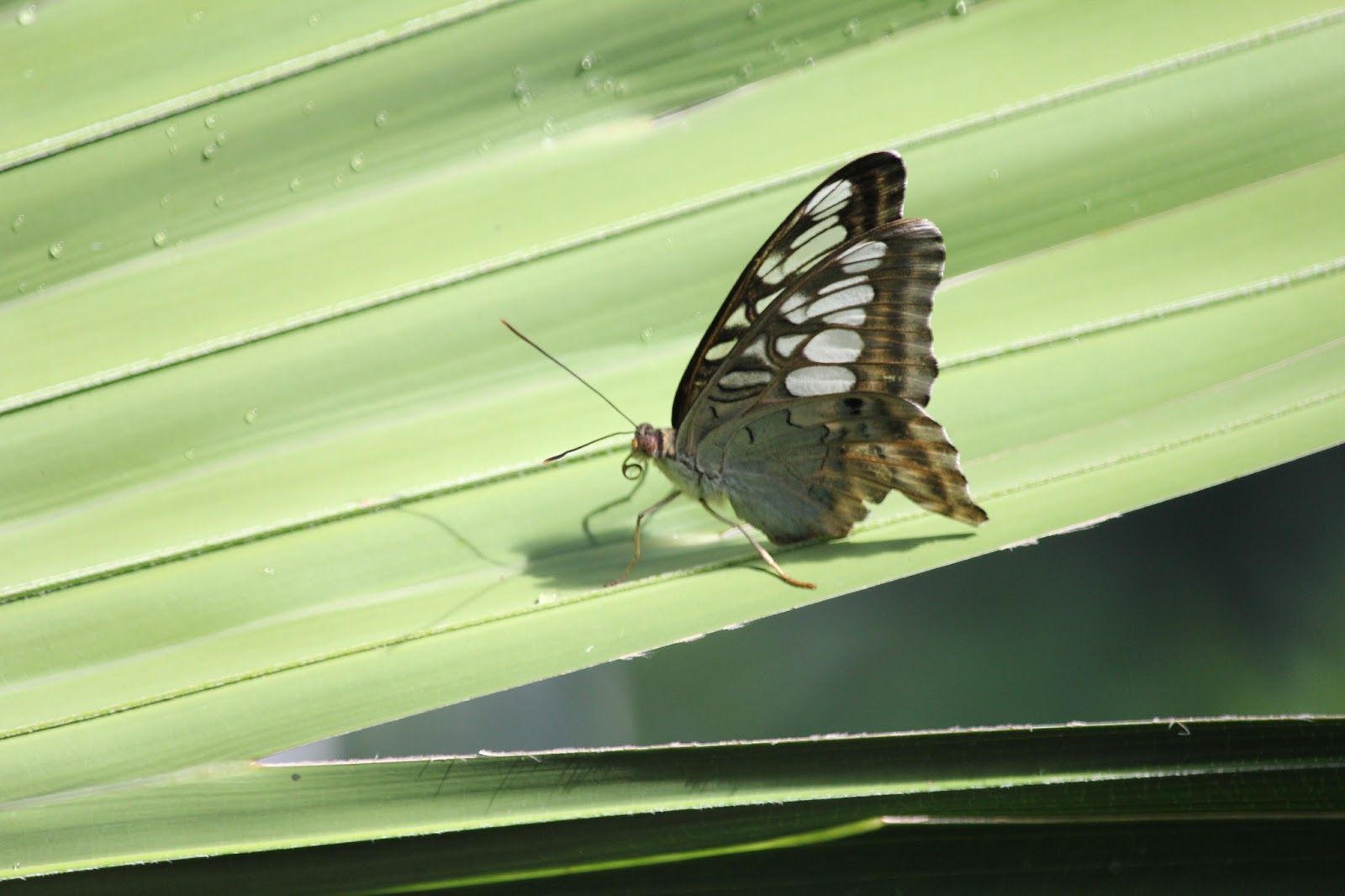
On Sunday (19 March) we went to the 2017 Butterflies in Bloom exhibit in Midland.  This exhibit is held in the conservatory at Dow Gardens and runs until April 17th.  The exhibit features hundreds of (mostly tropical) butterflies and moths.  Visitors are encouraged to interact with the butterflies - meaning it is okay to touch them.  This means that many of the butterflies look a little ragged because they have been handled by so many people.  They can also be very skittish. 

Butterflies in Bloom continues until Sunday April 16th.  The exhibit is open from 10:00AM to 4:00PM daily, with extended hours on Wednesday beginning March 16th.

Admission to Butterflies in Bloom is included with the admission cost to  Dow Gardens.  A daily admission costs $5.00 for adults, $1.00 for children ages 6-17, and and is free for children age 5 and under.  I recommend purchasing the annual pass at only $10.00!

If you go, be prepared for crowds (especially on weekends).  The butterflies are most active on warm sunny days, but they sit still for photographs best on overcast days. 
 
Here are just a few photographs from the exhibit.


Tuesday, March 21, 2017

Sedges are habitat forming...

In the lowland area at Mission Creek Woodland Park there is an area of northern hardwood swamp with a canopy of mostly Red Maple (Acer rubrum) trees.  The floor of this swamp is dominated in part by tussocks of sedge (Carex spp.).

I love photographing these tussocks- they are just so photogenic.


Besides their obvious photographic value, they do serve other functions.  Once these tussocks are established, they serve as a habitat for other plants.  If you look in the picture below, you should notice stalks projecting from many of the tussocks.  Most of these stalks belong to Rough-leaved Goldenrod plants.  The goldenrod plants would probably drown if they tried to grow directly in the water of the swamp, but the sedges have provided little micro-habitats that elevate the goldenrod above the water and allow them to grow.


Many of the Red Maple trees in this swamp also started their life on the tussocks.  Seeds that were lucky enough to land on a tussock found conditions just right for growth - rich soil, just enough moisture, and warmth (the green tussocks warm up in the sunlight and are warmer than the surrounding soil and water).  Eventually some of these trees may grow to adulthood.