Showing posts with label astronomy. Show all posts

Monday, January 21, 2019

Lunar Eclipse (20 January 2019)

A lunar eclipse occurs any time the earth's shadow passes across the moon's surface.  This can only happen during a full moon, when the sun and moon are on opposite sides of the sky.  A full moon occurs approximately every 27 days - so you might think that a lunar eclipse would happen every month. 

That is not the case. 

The moon's orbit around the earth does not line up exactly with the plane of the earth's orbit around the sun.  The moon's orbit is offset by about 5 degrees so a lunar eclipse is a rarer occurrence than a full moon.  The next total lunar eclipse will not happen until May 2021, but it will not be visible in Mid-Michigan.  The next total lunar eclipse that we will be able to see in its entirety will be on the night of 15-16 May 2022.

Last night's eclipse was special for another reason.  The path that the moon takes around the earth is not a perfect circle - it's more of an ellipse.  Sometime the moon is closer to the earth than it is at other times.  The closest approach to the earth is approximately 221,000 miles and the furthest is more than 252,000 miles!  The closest approach to the earth is known as the perigee; the furthest distance from the earth is known as the apogee.  Last night's full moon occurred when the moon was near perigee.  These mean that the moon appeared larger than normal (about 14% larger than it would during apogee).  Although not an astronomical term, a full moon at perigee is commonly called a "supermoon".

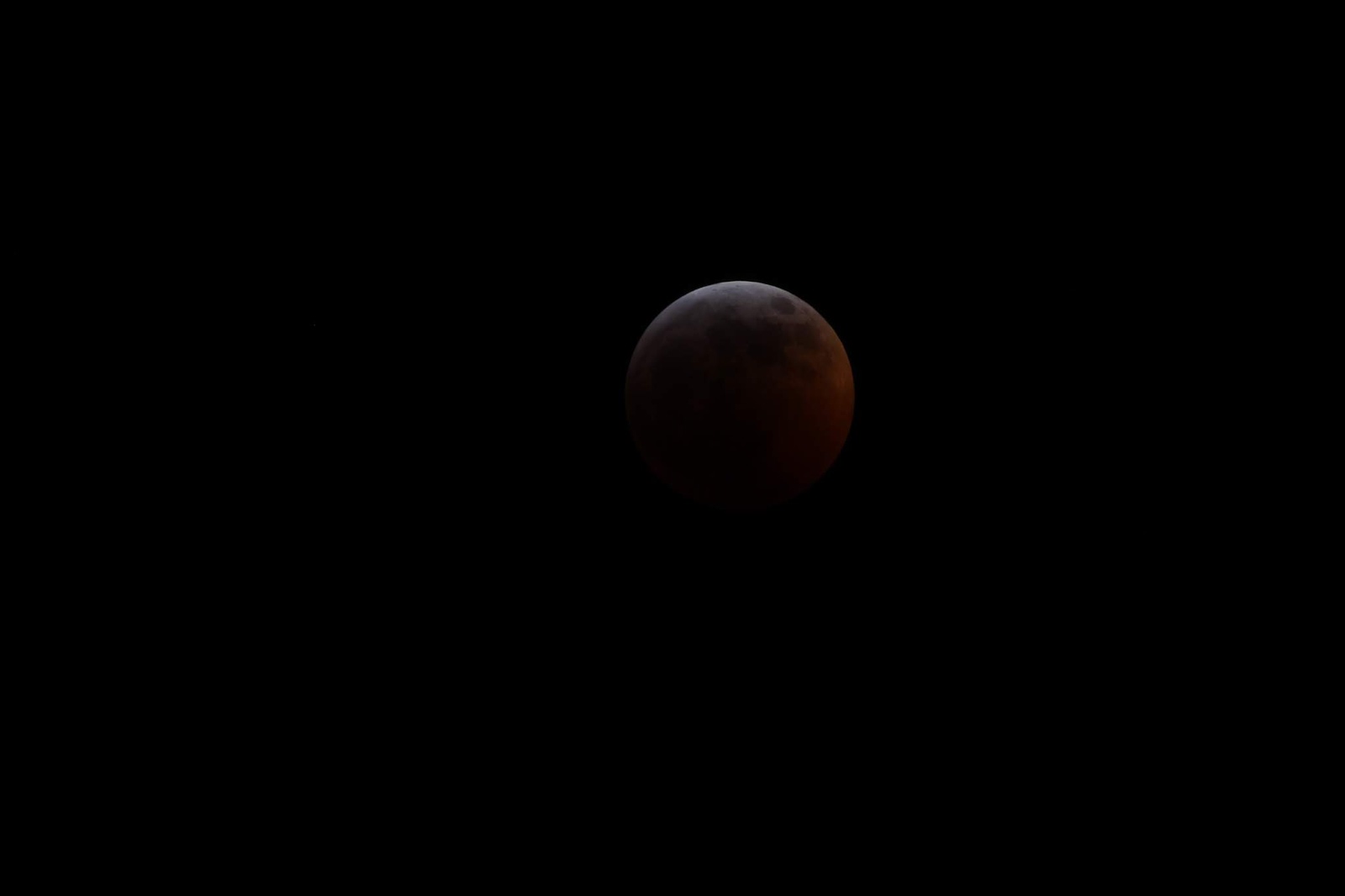
Luckily for me, I didn't have to go far to see and photograph last nights eclipse.  I took the following sequence of photographs from my driveway.  In the first image the eclipse has not yet started.  The second two pictures show a partial eclipse as the earth's shadow begins to pass over the moon.  


The final photograph shows the moon at full eclipse.  Even at full eclipse some light does leak around the earth and reflect from the moon's surface.  The earth's atmosphere scatters the shorter wavelengths of visible light (blue and violet) with only the longest wavelengths (orange and red) passing through unchanged - this is the same reason sunsets and sunrises appear red.  Because the red light is the most likely to pass through the atmosphere, the moon appears red during a full lunar eclipse. 


Tuesday, December 18, 2018

Celebrating a (Solar) New Year


On January 1st, much of the world will be celebrating the new year, but this Friday might be a more appropriate day to celebrate (at least from an astronomical viewpoint).

This Friday (22 December 2018) marks the Winter Solstice, the date on which the calendar changes seasons from Fall to Winter here in Mid-Michigan (and the rest of the Northern Hemisphere).  Winter will officially begin at 5:23 PM EST.

The word solstice comes from two Latin root words sol (sun) and sistere (to stand still).  On the solstice, the path of the sun appears to stand still! 

Assume that you were to awaken every morning before dawn and mark the location that the sun rises on the eastern horizon.  You would notice that the sun does not in fact arise from the same place every day.  Instead it wanders north and south along the horizon, moving north during the Winter and Spring and back south again during the Summer and Fall.  On the Summer Solstice (June 21st) and Winter Solstice (December 21st), the sun ceases to move further along the horizon, appearing to "stand still" before reversing its course the next day.

You have probably already noticed in addition to the location of the rising sun, the length of day and night vary throughout the year.  As the sun progresses south, the day shortens and the night lengthens.  The Winter Solstice marks the shortest day (and longest night) of the year in the Northern Hemisphere.  Here in Mid-Michigan we will mark the date with approximately 8 hours 57 minutes of daylight.  As the sunrise moves back north along the horizon our days will slowly get longer until on the Summer Solstice we will experience nearly 15 hours 25 minutes of daylight.

Why does the sun move and the length of day vary?

It all has to do with a tilt in the Earth's axis.  The Earth rotates on its axis approximately once every 24 hours - giving us the length of our day.  It also revolves around the sun approximately once every 365 days - the length of our year.  If the Earth's axis was perpendicular the plane on which it revolves around the sun, our days would be the same length throughout the year (approximately 12 hours), but the axis is not perpendicular to this plane.  Instead the Earth's axis tilts 23.5 degrees from the vertical.

The points on the globe that the axis revolves around are referred to as the North and South Poles.  The axis is always pointed toward the same location in the sky.  The North Pole points toward the "North Star" - Polaris.  As the earth revolves around the sun, sometimes the North Pole is closer to the sun, sometimes the South Pole is closer to the sun.  When the North Pole is at its closest, we experience Summer in Mid-Michigan and the Southern Hemisphere experiences Winter.  When the North Pole is at its furthest, we experience Winter and the Southern Hemisphere experiences Summer.

On two days of the year, the Earth's axis is perpendicular to the plane of its revolution.  On those two days we do experience equal periods of day and night because the sun rises due east and sets due west.  During the rest of the year our hours of daylight vary depending on where the axis is pointed.  During our summer months, the tilt in the axis means that the northern hemisphere is closer to the sun and receives more hours of sunlight.  During the winter months, the reverse is true.  On the Winter Solstice, the North Pole is tilted at its furthest angle from the sun resulting in the shortest day (and longest night) of the year for those of us in the Northern Hemisphere.

Why did I say that the Winter Solstice would be a better day to celebrate the new year?

Tracking the position of the rising sun was among the first astronomical observations.  Many ancient monuments seem to have been constructed as solar observatories, aligned with the locations of sunrise and sunset on the longest and shortest day of the year.  To early agricultural societies especially, tracking the seasons accurately could mean the difference between a bountiful harvest and failure of a year's crops.  The day that the sun "stood still" in its southward journey and then began to return north, bringing more hours of daylight and eventually warmer weather seems such an obvious point to mark the beginning of a new year!

Join me on a hike to celebrate the Solstice!

To celebrate the Winter Solstice, I am leading a nighttime hike at the Chippewa Watershed Conservancy's Sylvan Solace Preserve.  This hike will begin at 7:00PM.  Sylvan Solace Preserve is located on Pickard Road, between Gilmore Road and Littlefield Road, approximately 8 miles west of downtown Mt. Pleasant.


We are doing a nighttime hike because another celestial event lines up with the solstice this year - a full moon.  (Technically the full moon will be on December 22nd, but it will be more than 97% illuminated on the night of the 21st.)  We are expecting light snowfall early in the day - this should brighten up the woods.  Hopefully the moon will peek through the expected clouds and illuminate our hike.  The trails at Sylvan Solace are flat and well-defined making this a great first night hiking experience!  I hope to do the hike without any artificial lights.  Wear warm clothes and bring a headlamp or flashlight just to be safe.

Sunday, October 14, 2018

What is earth science?

Happy Earth Science Week 2018!

Sponsored by the American Geosciences Institute, Earth Science Week is a week-long celebration of everything related to the earth sciences.  In honor of Earth Science Week, I will be posting something relevant to earth science every single day.

You might be wondering, what is earth science?

Earth science is simply the study of the earth.  It is generally broken down into four disciplines: geology, meteorology, oceanography, and astronomy.

Geology is the study of the earth itself, the substances that make up the earth, the processes that shape it, and how those processes and materials have changes (or stayed the same) over time.  Of the four earth science disciplines, this one is my favorite (but don't tell the other- they get jealous). 

Badlands NP, South Dakota

Meteorology is the study of the earth's atmosphere and how processes and patterns in the atmosphere affect the earth's weather and climate.
 
Isabella County, Michigan

Oceanography is the study of the earth's oceans (and seas) including their patterns, composition, currents, and the organisms that reside in them.

Acadia NP, Maine

Lastly, astronomy is the study of the universe and earth's place in it.  Objects and forces outside the earth's atmosphere can and do have a profound impact on this planet.  This includes everyday actions such as the tides (caused by the moon's gravity) and solar storms to less common events such as asteroid strikes.

Photographed from Alma, Michigan

Although earth science is divided into these four disciplines, they are completely intertwined and cannot not readily be separated.  Other subjects are also inseparable from the study of the earth sciences.  I have a degree in history.  History is in many ways a function of physical geography.  Geography is dependent on geology (and oceanography and meteorology).  Without understanding these larger connections, it is almost impossible to truly understand our place in the world.

Over the next week I'll be sharing an earth science post every single day.  I hope to cover some new ground that I haven't discussed before.

Wednesday, May 2, 2018

Wildflower Walks - One Completed (29 April 2018) and One Upcoming (06 May 2018)

On Sunday (29 April 2018) I led a wildflower identification walk for a small group from the Michigan Alliance for Environmental and Outdoor Education (MAEOE) at Sleepy Hollow State Park.  The bloom for most species has been delayed by the cold spring, but we were still able to find and identify around ten different species.


Bloodroot


Mayapple

Yellow Trout Lily

The highlight of the day (at least for me) was finding a pile of bear scat.  Why is this exciting?  It's exciting to me because Sleepy Hollow State Park is outside the main range of Black Bear in Michigan.  I already knew that bear lived in the area - my parents live a few miles away and have seen a bear on their property.

A pile of bear scat

Did you miss this hike?  There is another wildflower hike scheduled for this Sunday (06 May 2018) at the Chippewa Watershed Conservancy's Williams-Blackburn Preserve.  The walk is scheduled for 1:00PM to 3:00PM.  For directions click on the previous link.  The warm weather and rain should really rev up the wildflower bloom.

Monday, January 29, 2018

Waxing gibbous moon (27 January 2018)

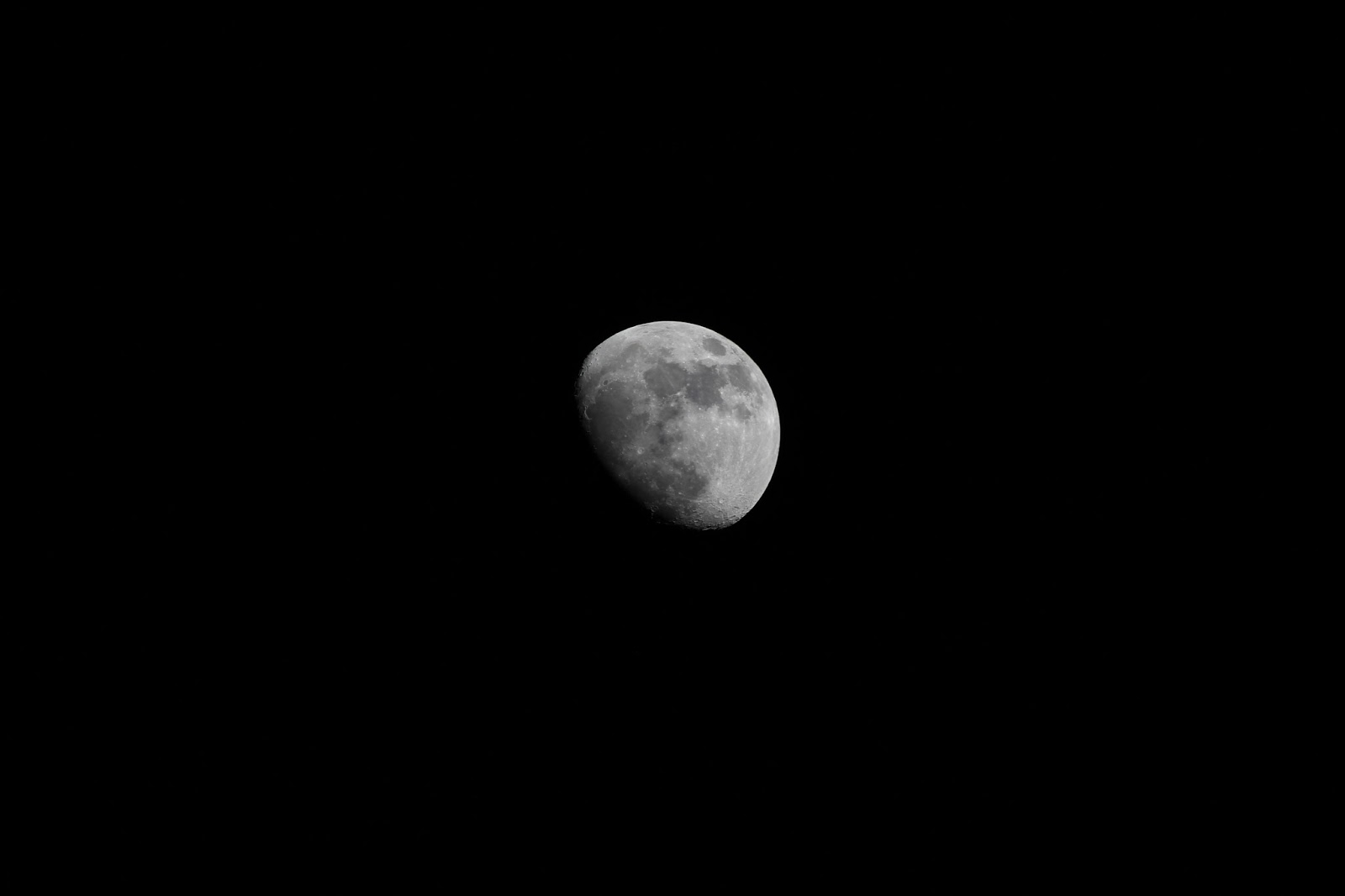
On Saturday (27 JAN) shortly after sunset I went outside and noticed a gorgeous waxing gibbous moon.  To say that a moon is waxing means that the illuminated portion of the moon is growing - the moon is getting closer to being full.  The opposite of waxing is waning.  A waning moon is a moon that is past full and its illuminated percentage is decreasing.  Gibbous means that a moon is more than 50% full - the moon last night was at 83%.

I took about 30 images of the moon in all.  Here is one of the original images.


For the photo geeks out there - this image was shot on a Canon 60D with a Canon 100-400 lens (at 400mm), shot at f/11, using an ISO of 100 and exposed for 1/100 second.


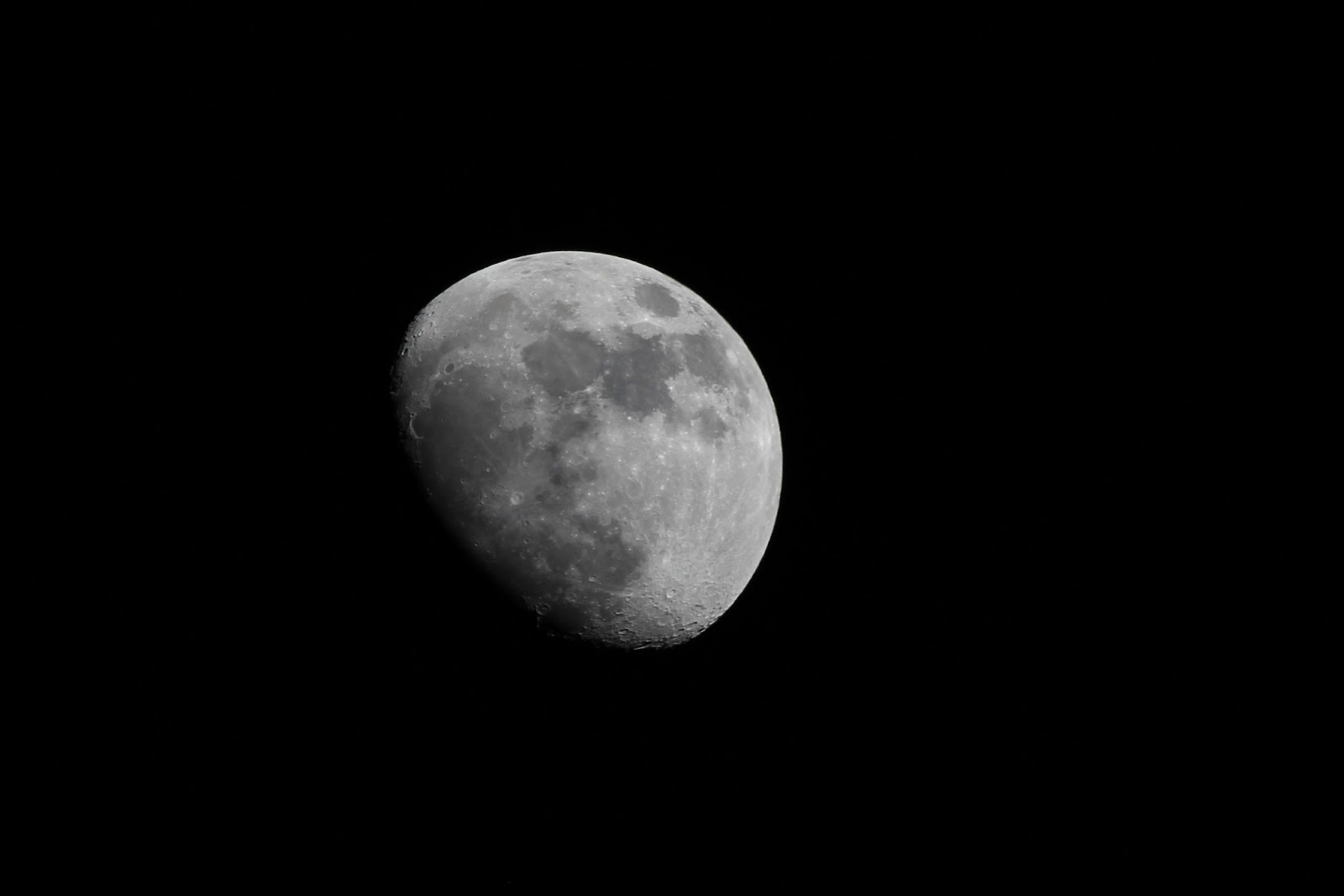
I decided to crop this image in a couple of different ways.  First as a horizontal image...


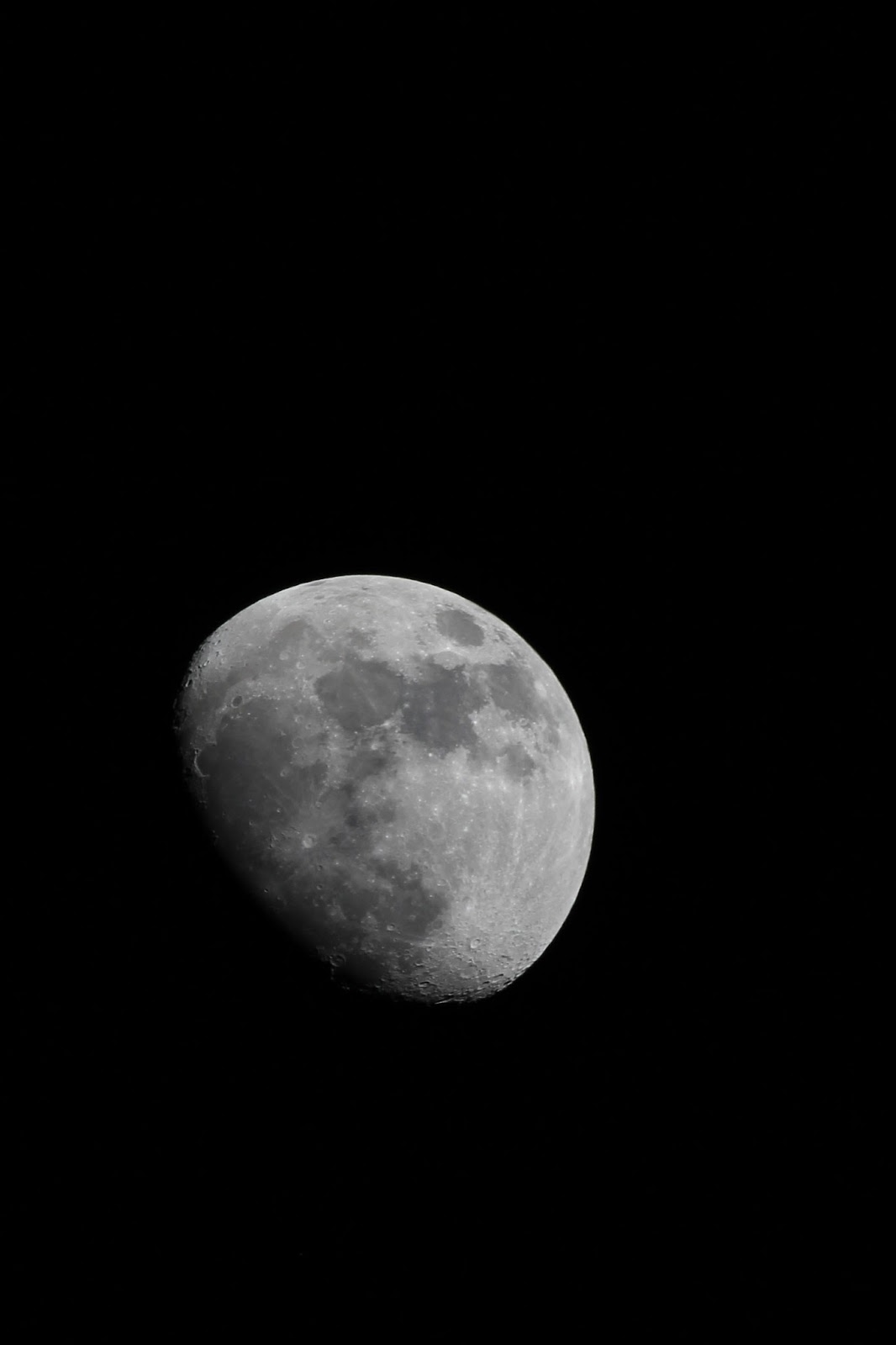
Then as a vertical image...


I'm not sure which of these crops I like better.  In both I intentionally placed the moon slightly off-center.  I like the expanse of black extending further from the lit face of the moon.  This is the same technique used in portraits to give the subject somewhere to look or in photos of animals to give them space within the frame of the photo to look or move.

Monday, October 9, 2017

Earth Science Week 2017 - Monday

Happy Earth Science Week 2017!
 
Eroded rock/sediment formations at Theodore Roosevelt National Park (Medora, ND)


What is Earth Science?  The short answer is that Earth Science is the study of the Earth and its neighbors in space.  Generally, Earth Science is divided into four disciplines: geology, meteorology, astronomy, and oceanography.


Geology is a science that deals with the study of the Earth's materials, structures, and processes.  The word geology comes from the Greek words geo (Earth) and logia (study of).


Meteorology is a science that deals with the study of atmosphere and how processes in the atmosphere affect weather and climate (long term weather patterns).  The word meteorology comes from the Greek words meteōron meaning roughly "thing high up" and logia meaning "study or discussion of".

The word astronomy means "arrangement of the stars" and comes from the Greek root words astron (star) and nomos (arranging).   In current terms, Astronomy is the study of the universe.  It includes the study of how nearby celestial bodies influence the Earth.

Oceanography is a science that involves the study of Earth's oceans and seas and their composition, patterns, and processes.  This science also includes the study of the organisms that inhabit the oceans.  The word oceanography was coined in the 1850s as a partner to the word geography - it comes from the Greek root words Ōkeanós (god of the sea) and gráphō (writing).

Wednesday, June 21, 2017

Happy Summer Solstice 2017!

Wheat ripening on the Summer Solstice

If you were to arise at dawn every day of the year and record the point on the horizon where the sun rises you would be able to track the progression from the Summer Solstice (in which the sun rises furthest North) to the Winter Solstice (in which the sun rises furthest South) and back again.  Tracking the position of the rising sun was one of the earliest astronomical observations.  Many ancient monuments were constructed to act as solar observatories, recording the longest and shortest days of the year.  These observations were used to plan planting dates for various agricultural crops.

Today the sun reached its northernmost point on the horizon.  Officially, at 12:24 AM EST Spring ended and Summer began in the Northern Hemisphere.  This moment of change is known as the Summer Solstice.  At the same time, the Southern Hemisphere was experiencing its Winter Solstice as their Fall ended and Winter began. The word Solstice comes from the Latin words sol (sun) and sistere (to stand still).  Today the sun has reached its highest position in the northern Sky, giving us our longest day of the year.  With the sunrise at 5:58 AM and sunset at 9:24 PM, mid-Michigan will experience approximately 15 hours 26 minutes of daylight today.  By comparison, Christchurch, New Zealand (which is approximately the same latitude south of the equator as Mid-Michigan is north of the equator), will have only 8 hours 56 minutes of sunlight today.
 
Field Corn (Zea mays) requires long summer days to grow and ripen

Why does the length of daylight vary?  The Earth rotates around its axis approximately once every 24 hours.  However this axis is tilted at 23.5 degrees from the vertical.  The points on the globe that the axis revolves around are referred to as the North and South Poles.  The axis is always pointed toward the same location in the sky.  The North Pole points toward the "North Star" - Polaris.

At any given time, fifty percent of the earth is in sunlight (Day) and the other fifty percent is in darkness (Night).  However, because the Earth is tilted on its axis sunlight does not always strike the Earth at the same angle.  This means that during different seasons different parts of the Earth will receive varying amounts of sunlight and darkness.
 
As the earth revolves around the sun, sometimes the North Pole is closer to the sun, sometimes the South Pole is closer to the sun.  When the North Pole is at its closest, the sun lights a larger portion of the Northern Hemisphere than it does the Southern Hemisphere.  When this happens, we experience Summer in Mid-Michigan and the Southern Hemisphere experiences Winter.  During our Northern Summer, not only does the sun light more of the Northern Hemisphere, but the sun also lights every Northern Hemisphere location for a higher percentage of the day than a comparable Southern Hemisphere location. 

When the North Pole is at its furthest from the sun, we experience Winter and the Southern Hemisphere experiences Summer.  During our Northern Winter, the sun is striking a a larger portion of the Southern Hemisphere than it is the Northern Hemisphere, and consequently the sun lights every Southern Hemisphere location for a higher percentage of the day than a comparable Northern Hemisphere location.  On two days of the year, the Spring and Fall Equinoxes, the sun lights the Northern and Southern Hemispheres equally and the length of day for will be the same for both.

Tuesday, February 14, 2017

Luna obscura


Last Friday (10 February) was supposed to be a big night for astronomy.  There was a full moon.  There was also a partial lunar eclipse.  Finally, a comet was supposed to be visible in the eastern sky during the night!

Unfortunately, it was cloudy across Mid-Michigan.  Here was my view of the full moon seen through the trees by our house.  It was pretty, but not nearly as amazing as some of the full moons in recent months

Full moon through clouds and maple trees (10 FEB 2017)

Friday, January 6, 2017

Sunset (05 January 2017)

Last night's sunset was quite dramatic.  Shara snapped a few photos with my camera while we were driving home from work.  Here is my favorite one of the bunch.

Sunset - 05 January 2017 (photo by Shara LeValley)

To learn why we see the colors that we do at sunset (and sunrise) please check out this post on Roy G. Biv and the wavelengths of light

Monday, November 14, 2016

Full Moon


The full moon last night was absolutely beautiful. 

Full moon (13 November 2016)

I took about two dozen photographs over the course of 15 minutes, trying out different apertures (the size of the opening in the lens) on my camera.  For the photo geeks, this picture was show with a Canon EOS 60D camera and a Canon 100-400mm lens (at 400mm).  The cameras was set at f/25 and the length of the shot was 3/10th second.  It was then cropped down to this size.

I rarely take pictures of the moon.  Until recently, I did not have a camera lens really capable of taking good images of it.  My best efforts in the past have been okay, but lacked a lot of detail.

To me the best part of this picture is being able to see all of the impact craters on the moon's surface.  The craters are named after famous astronomers throughout history.  For instance the large crater Tycho in the bottom right quarter is named after the Danish astronomer Tycho Brahe (1546 - 1601)

Some major craters of the moon

Monday, October 10, 2016

Earth Science Week 2016 - Monday

Happy Earth Science Week 2016!

What is Earth Science?  The short answer is that Earth Science is the study of the Earth and its neighbors in space.

Earth Science is generally divided into four disciplines:

Geology (the study of the earth) is a science that deals with the study of the Earth's materials, structures, and processes.

Lake of the Clouds - Ontonogan County, MI


Meteorology is a science that deals with the study of atmosphere and how processes in the atmosphere affect weather and climate (long term weather patterns).

Morning clouds near Shepherd, MI


Oceanography is a science that involves the study of Earth's oceans and seas and their composition, patterns, and processes.  This science also includes the study of the organisms that inhabit the oceans.

Atlantic Ocean - Acadia National Park, ME

Astronomy is the study of the universe.  It includes the study of how nearby celestial bodies influence the Earth.


Northern lights and stars - Munising, MI


To learn more about Earth Science please check out this series of videos produced by the American Geosciences Institute.

Monday, June 20, 2016

Ode' imin Giizis and the Summer Solstice

Today, at 6:34 PM EST,  Spring ends and Summer begins in the Northern Hemisphere.  The moment this happens is known as the Summer Solstice.  The word Solstice comes from the Latin words sol (sun) and sistere (to stand still).  Today the sun has reached its highest position in the northern Sky, giving us our longest day of the year. 

The Earth rotates around its axis approximately once every 24 hours.  However this axis is tilted at 23.5 degrees from the vertical.  The points on the globe that the axis revolves around are referred to as the North and South Poles.  The axis is always pointed toward the same location in the sky.  The North Pole points toward the "North Star" - Polaris.

As the earth revolves around the sun, sometimes the North Pole is closer to the sun, sometimes the South Pole is closer to the sun.  When the North Pole is at its closest, we experience Summer in Mid-Michigan and the Southern Hemisphere experiences Winter.  When the North Pole is at its furthest, we experience Winter and the Southern Hemisphere experiences Summer. 

If you were to arise at dawn every day of the year and record at which point on the horizon the sun rises from you would be able to track the progression from the Summer solstice (in which the sun rises furthest North) to the Winter Solstice (in which the sun rises furthest South) and back again.  Tracking the postion of the rising sun was one of the earliest astronomical observations.  Many ancient monuments were constructed to act as solar observatories, recording the longest and shortest days of the year.


This year the solstice falls on the same date as the full moon.  This is a rare occurrence - the last such pairing occurred in 1948.  The full moon and solstice occurring within 24 hours of each other is less rare, but still uncommon.  The last time that happened was 1986.

You might hear people referring to this full moon as the "Strawberry Moon".  To Anishinaabe people in Michigan the Strawberry is known as ode' imin (heartberry) and the month of June is known as Ode' imin Giizis (Strawberry Moon).

In honor of the Solstice...

Tuesday, September 1, 2015

Who is Roy G. Biv and how does he control the color of the sunrise?

Red sun over Gratiot County


Have you ever wondered why the sun looks red or orange when it is near the horizon?  This morning on my drive to work I stopped to photograph the reddish-sun just a few degrees over the horizon.


The sun looks like this because of the properties of light.  The visible light spectrum (the light we can see) that comes from the sun is divided into seven colors red, orange, yellow, green, blue, indigo, and violet - ROYGBIV.  In order to remember the colors of the visible spectrum, just remember the acronym Roy G. Biv.

The colors that make up Roy's name are made of different wavelengths of light.  Red light has the longest wavelengths and violet has the shortest; the colors in-between have wavelengths in-between.

When light from the sun enters our atmosphere it is refracted (bent) and scattered by particles found in the atmosphere.  When the sun is overhead it has very little atmosphere to travel through so little of the light is scattered.  However when the sun is at a low angle such as near sunrise or sunset the light has to travel through more of the atmosphere before it reaches a viewer.  When it takes this longer path there is more opportunity for the light to be bent and scattered.

Colors that have the shortest wavelengths (indigo and violet) are scattered the most.  Colors that have the longest wavelengths (red and orange) are scattered the least, causing the sun to appear red or orange at sunrise and sunset.

Roy G. Biv watches the sunrise

To learn more about Roy G. Biv and the visible spectrum of light check out this post about rainbows from September 2014.