Showing posts with label pollinators. Show all posts

Tuesday, July 17, 2018

Native Species Profile - Wild Bergamot

Wild Bergamot (Monarda fistulosa), also known as Bee Balm, is the most widespread of four Monarda species found in Michigan.  Nationally it has been recorded in all but four states (AK, HI, CA, FL) and across most of the temperate provinces of Canada.  It can grow in a variety of habitats including open woodlands, savannas, prairies, fields, dunes, etc.  It normally grows in dry habitats but is occasionally found in wetlands.

Bumble bee and Silver-spotted Skipper on Wild Bergamot

Wild Bergamot is a member of the Mint Family (Lamiaceae).  Like all other mints, it has stems with a square cross-section and opposite pairs of leaves.  The plants can grow to a height of 4 feet and are topped with a single rounded flower head.  This flower head measures 1 - 3 inches across.  Flowers begin blooming near the center of the head first and continue outward to the margins.  Flowers are typically pink or lavender colored.  Individual flowers on the head are tubular and may be up to an inch long.  Near the tip, each tubular flower splits into several protruding lips.  The lower lips serve as a landing place for pollinators.

Wild Bergamot - note tubular flowers and opposite pairs of leaves

Wild Bergamot has a distinctive strong scent that reminds some people of mint and others of oregano.  Anyone who drinks Earl Grey tea will recognize this smell, although in Earl Grey tea the smell comes from the peal of the Bergamot Orange.

A Snowberry Clearwing Moth (a bumble bee mimic) prepares to nectar on Wild Bergamot

Wild Bergamot is an important nectar source for many insects including bumble bees, bee flies, hummingbird and bumblebee moths, sphinx moths, skippers, and butterflies.  It is also visited by hummingbirds.  This plant spread by rhizomes and seeds so it often forms large colonies.  Large colonies can easily attract hundreds of pollinators at a time.


Basic Information

Wild Bergamot 
Monarda fistulosa

Height:  2.5 - 4’ tall
Habitat:  dry areas; fields, open woods, prairies, fields, sand dunes, savannas

Flower Color:  lavender to pink

Bloom Time:  July – August

Tuesday, September 26, 2017

Native Species Profile - Witch Hazel


While most wildflowers in Mid-Michigan are either done blooming or close to the end, one species has just begun to bloom and will continue to do so for another four to six weeks.  Witch Hazel (Hamamelis virginiana) is an understory shrub that reaches heights of 10 to 20 feet.  This species is found in deciduous and evergreen forests and savannas throughout the eastern United States and Canada.  In Michigan it is found throughout the Lower Peninsula, but is less common in the UP.

Witch Hazel flowers - note long, narrow petals

Witch Hazel flowers are yellow and have four narrow petals, four short sepals, four stamen, and a pair of pistils.  The petals measure about 3/4 inch long and are typically curved or twisted.  These flowers are one of the last nectar sources of the year and are pollinated by a number of insect species including moths, bees, flies, and wasps.  After pollination, the tree develops small brown seed pods that measure roughly 2/3 to 3/4 inch long.  These pods are roughly shaped like acorns and are divided into four sections.  These seed pods often remain on a tree for a year or more.

A wasp-mimic fly pollinating Witch Hazel flowers

Witch Hazel flowers - note four-part seed capsule at lower right of image

Witch hazel leaves are roughly oval, ovate (egg-shaped with a wider base than tip), or obovate (egg-shaped with a wider tip than base) in shape with wavy margins.  The leaves can measure up to five inches long and three inches wide.  They are arranged alternately on the plant's branches.

Oval-shaped leaves of Witch Hazel - note wavy margins of leaf.

Yellow fall leaves and flowers of Witch Hazel appear at approximately the same time.
Witch Hazel leaf - note obovate shape and wavy margins

While Witch Hazel can have a single trunk, it typically branches out right at ground level.  The branches are rarely straight.  Instead they undulate back and forth giving the Witch Hazel a wavy appearance.
A stand of Witch Hazel can be mistaken for no other species.

Undulating branches of Witch Hazel

Witch Hazel is a host plant for approximately twenty species of moths.  Most of the caterpillars are small and inconspicuous.  Exceptions to this are the caterpillars of the Pyreferra genus - these caterpillars are usually lemon yellow and white striped.

Pyreferra caterpillar on Witch Hazel leaf


Basic Information

Witch Hazel
Hamamelis virginiana 

Height:  10-20'
Habitat:  deciduous and evergreen forests, oak and pine savannas
Flower Color:  yellow
Bloom Time:  late September - November

Tuesday, September 19, 2017

30-Minute Nature Fix (Mill Pond Park - 18 SEP 2017)

Going outside is good for you.  Studies show that even as little as 30 minutes of outdoor activity a week has been proven to have health benefits such as reducing stress and lowering the risk of heart disease.  During the school year, I spend my days teaching kids about science and nature.  Unfortunately, out of necessity, most of this teaching takes place in the classroom.  My job teaching about nature means that I have less time to enjoy nature.  (This is what is known as a paradox: a statement or proposition that seems self-contradictory or absurd but in reality expresses a possible truth.)

I try to find time every day to get out and enjoy nature.  Sometimes this means spending time in the garden watching the bees feeding on nectar.  Yesterday I was able to stop at Mill Pond Park after giving a presentation to the local garden club.  I only had 30 minutes.  How much can you see in 30 minutes?

Quite a bit, if you are inclined to look!


Mill Pond Park - my path is highlighted in red


Painted Turtles taking advantage of the late summer sun to bask.

Reeds growing in the remnants of the old mill pond.

Swamp Milkweed seeds are ripe and ready to fly away.

So are the seeds of cattails!

White Water Lily leaves are changing color as they use up their chlorophyll.

Wood Nettle - llok close and you can see the needle-like hairs that give the plant its sting.

The fluffy seedheads of Virgin's Bower cause the plant to also be known as also known as Old Man's Beard.

This Virgin's Bower is not quite as far along as the previous photo.

A few Spotted Joe-pye Weed flowers are still in bloom.

Most Goldenrod species are in full bloom, attracting pollinators like this wasp.

Purple Loosestrife is an invasive species, but pollinators love it.
 
Sun shining through White Oak leaves.

This patch of Common Goldenrod was attracting the attention of dozens of wasps and Locust Borer beetles.

That's it.  My walk through the park is over.  Not bad for 30 minutes!

Monday, September 18, 2017

Late summer pollinator bonanza

With the first day of fall occurring this Friday (22 SEP), insects that feed on pollen and nectar have limited food sources available.  Those plants that are still in bloom are covered with bees, wasps, flies, beetles, moths, ants, and more. 

Here is a short video of some of the Showy Goldenrod growing in our yard.   This is just one plant, every goldenrod in our garden was seeing this level of pollinator activity.


Thursday, September 7, 2017

What's this bug? - Locust Borer

One of the common features of my job is that people are always asking me to identify things they have found in the wild.  If someone walks into the office carrying a jar, I can be assured that I am going to be asked to identify an insect.  I am not an professional entomologist (someone who studies insects), but I try to help if I can.  With that in mind, I am going to start a semi-regular feature of this blog on insect identification.

So... What's this bug?

Locust Borers exhibit a type of mimicry known as Batesian mimicry.  This means that they are harmless, but look like something dangerous (such as a wasp)

First of all, the animal pictured is a beetle not a "bug".  Both beetles and bugs are insects - animals with an exoskeleton, three body segments (head/thorax/abdomen), and six legs.  Bugs are a certain type of insect (shield shaped body, wings that cross over to form an x-shaped pattern while at rest, and a piercing mouth used for sucking juices), but the word "bug" is often used to mean any insect regardless of species.  Unlike bugs, beetles have a mouth designed for chewing.  Beetles have two pairs of wings, but the outer pair of wings have hardened into a protective covering for the soft inner pair.  This hard outer pair of wings is known as elytra (singular is elytron).

So we have established that this insect is a beetle, but which one?

Specifically, it is a Locust Borer (Megacyllene robiniae).

Locust Borer feeding on goldenrod pollen.

Locust Borers are named because their larvae bore (tunnel) into and through the wood of Black Locust (Robinia pseudoacacia) trees.  In small Black Locust trees this tunneling may actually kill the tree.  The adult can be found in the fall feeding on pollen, especially goldenrod pollen.

The tree and beetle are probably not native to Michigan.  The tree was introduced in the 1800s and often grown for use as fence posts due to its natural rot resistance.  The beetle was likely introduced at the same time.

With its yellow and black color scheme, the Locust Borer is easy to see.  This might seem like it would be a bad thing.  It's easy to see so birds and other predators should be able to pick it off.  Instead these colors act as a form of protection.  By mimicking the color pattern of bees and wasps, this harmless beetle is protected from animals that would be wary of a wasp's sting.  This type of mimicry is known as Batesian mimicry.

Monday, August 28, 2017

Native Pollinator Garden Update - Winn Elementary (25 August 2017)

Winn Elementary Native Pollinator Garden
 
School starts this week for students at Winn Elementary (and several other local school districts).  With that in mind, I went out to the school last week to do a little bit of maintenance on the garden.  This garden was originally planted in June 2012.  With five full growing seasons behind it, it is really starting to come into its own.  

I don't like to fuss too much in the garden.  Plants will move around in the garden, seeking the best growing conditions.  Surprises will pop up - this garden now has Wild Columbine and two species of Goldenrod that were not planted here.  Most of the maintenance on this garden consists of pulling plants that have grown up in the walkways and preventing invasive species from becoming established.  In addition to a little weeding, I mulched the pathways through the garden just to get it ready for students walking through. 

Here are a few photos.

This garden is a certified butterfly habitat.

Freshly mulched pathways make it easy to walk through the garden.

Grey-headed Coneflower (Ratibida pinnata)

Missouri Ironweed (Vernonia missurica)

Big Bluestem (Andropogon gerardii)

Nodding Wild Onion (Allium cernuum)

Silver-spotted Skipper (Epargyreus clarus)on Rough Blazing Star (Liatris aspera)

A Leopold bench provides a spot for students to sit and work
 
Bee nesting tubes are mostly full
 
In a few weeks, asters and goldenrod will color the garden shades of purple and gold.
This Wednesday (30 August), we will be visiting this garden as part of an education series hosted by the Isabella Conservation District.  Unfortunately, registration for this program is closed, but we  have a class on the identification and control of native species scheduled for 20 September.  When more information on that class becomes available I will publish it here.

Tuesday, June 20, 2017

A caterpillar at breakfast

Earlier this morning, Shara sent me a photograph from the Saginaw Chippewa Academy's native pollinator garden.

Monarch caterpillar on Common Milkweed (photo by Shara LeValley)

Woohoo!

That's a Monarch (Danaus plexippus) caterpillar munching on a Common Milkweed (Asclepias syriaca) flower.  It's nice to see the garden being used by wildlife, especially Monarchs.  I am hopeful that we will find more Monarchs in the garden as the summer progresses further.

Monday, June 19, 2017

Happy Pollinator Week (19 - 25 June 2017)

Beetles, a lesser known (but important) pollinator


Happy National Pollinator Week!

On September 21st, 2006 the United States Senate passed a resolution designating the last full week in June as National Pollinator Week.  The first Pollinator Week was celebrated 24 - 30 June 2007.  The goal of National Pollinator Week is to highlight and celebrate the valuable ecosystem services provided by bees, butterflies, moths, flies, beetles, birds, bats and other pollinators.  2017 marks the eleventh year of celebration.

If you would like to know more about National Pollinator Week (and its primary sponsor the Pollinator Partnership) click here.

If you live in mid-Michigan,  I have free National Pollinator Week posters (featuring Monarch Butterfly migration) available at the Isabella Conservation District offices at 5979 E. Broadway, Mt. Pleasant.  Otherwise, posters can be ordered from the Pollinator Partnership.

Tuesday, June 6, 2017

Native Pollinator Garden at Saginaw Chippewa Academy (06 June 2017)

While waiting for Shara today I photographed the Native Pollinator Garden at the Saginaw Chippewa Academy.  Most of the pollinator gardens that we have installed have a mix of plants that bloom throughout the growing season.  Right now the garden at SCA is at one of its two annual peaks - the other will be in August/September.

Enjoy the pics.

This garden is a certified Monarch Waystation and Native Plant Butterfly Garden

Hairy Beardtongue (Penstemon hirsutus)

Ohio Spiderwort (Tradescantia ohiensis)

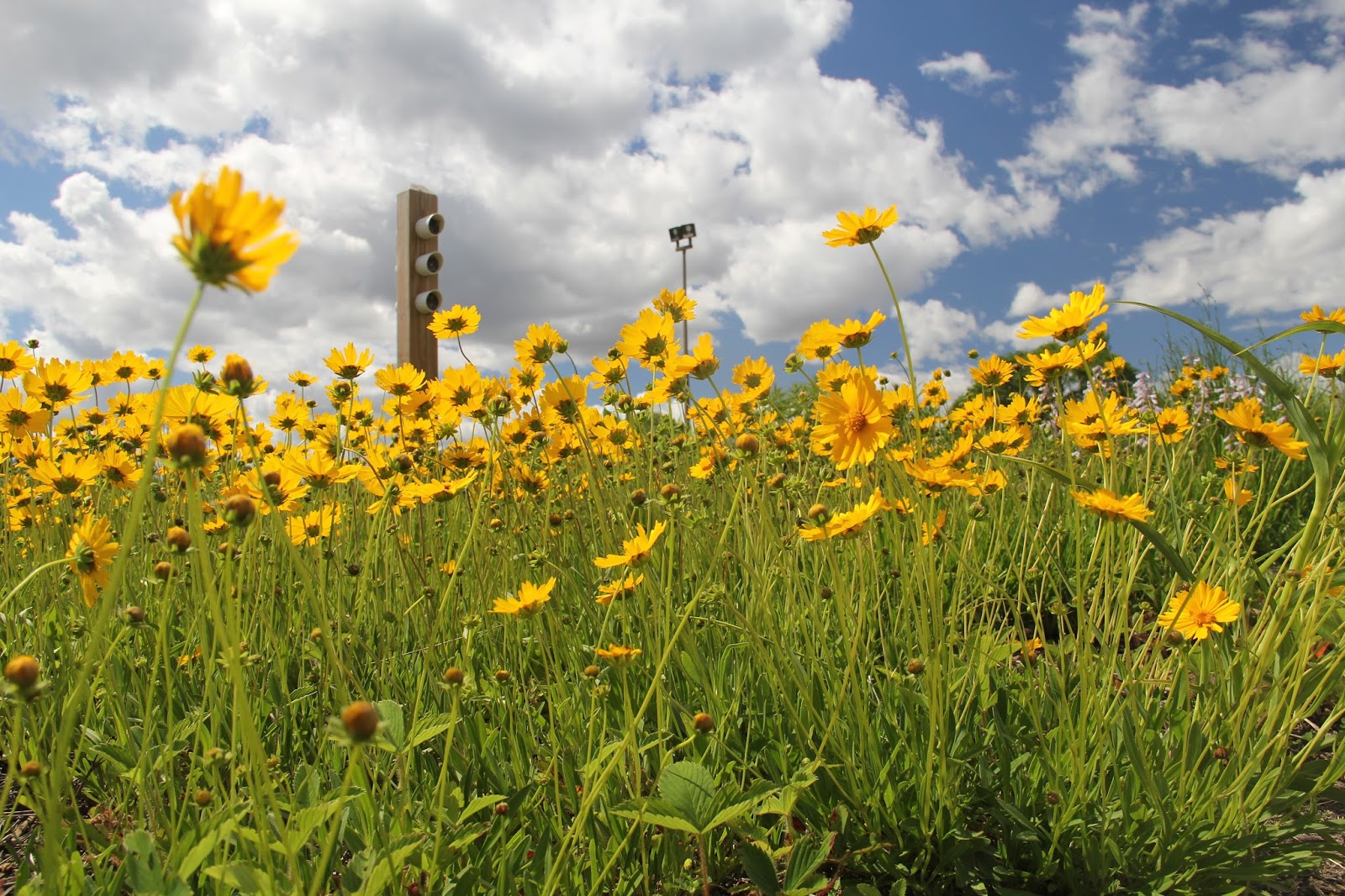
Lanceleaf Coreopsis (Coreopsis lanceolata)

Small native bee and Hairy Beardtongue

Common Bumblebee (upper left) and bee fly (bottom right)

American Alumroot (Heuchera americana) and Canada Anemone (Anemone canadensis)

Hairy Beardtongue and Lanceleaf Coreopsis

Common Bumblebee

A native bee - click on picture to see it closer

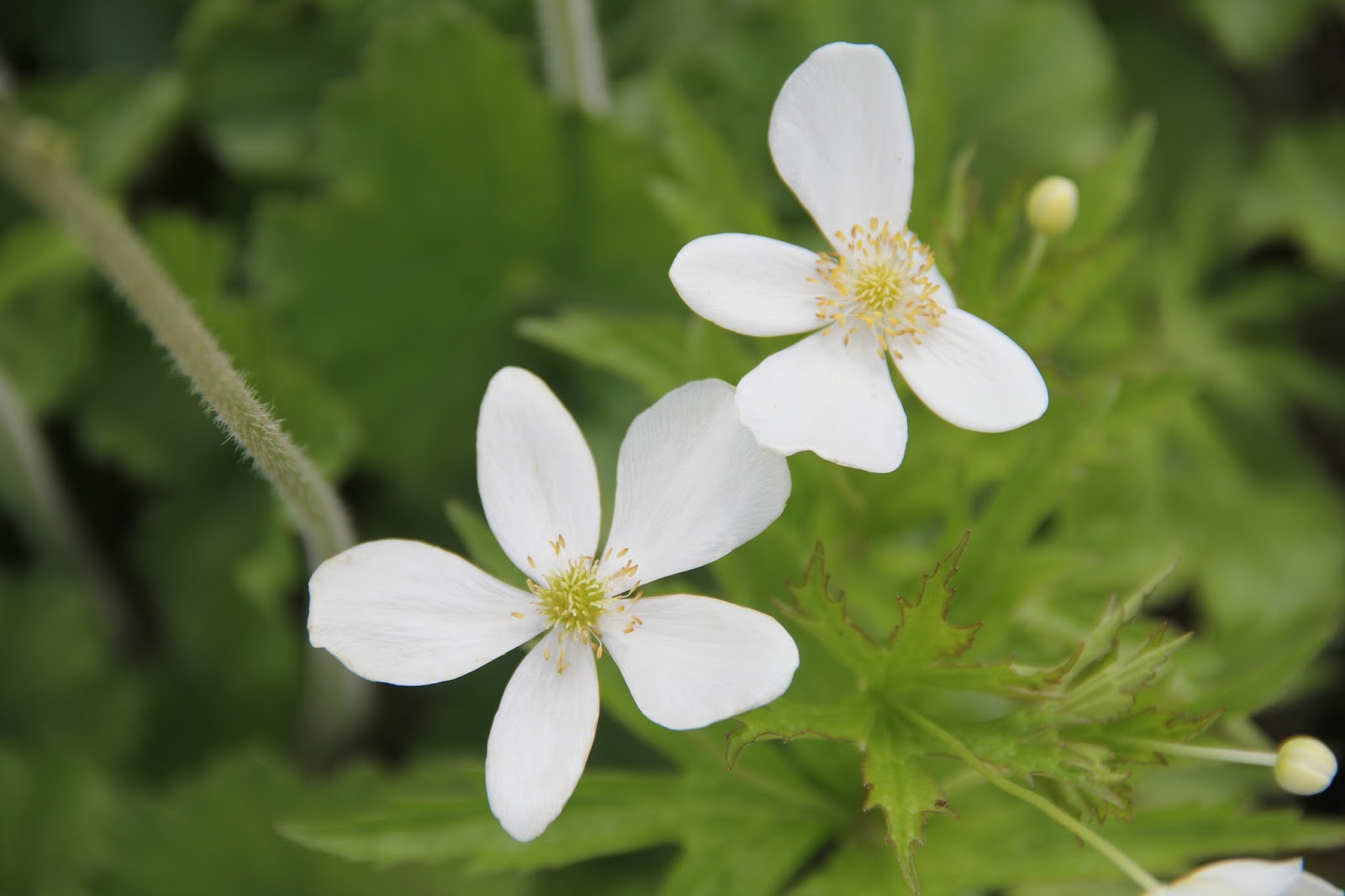
Canada Anemone

Common Bumblebee (Bombus impatiens) - if you click on the picture you can see the bee's five eyes