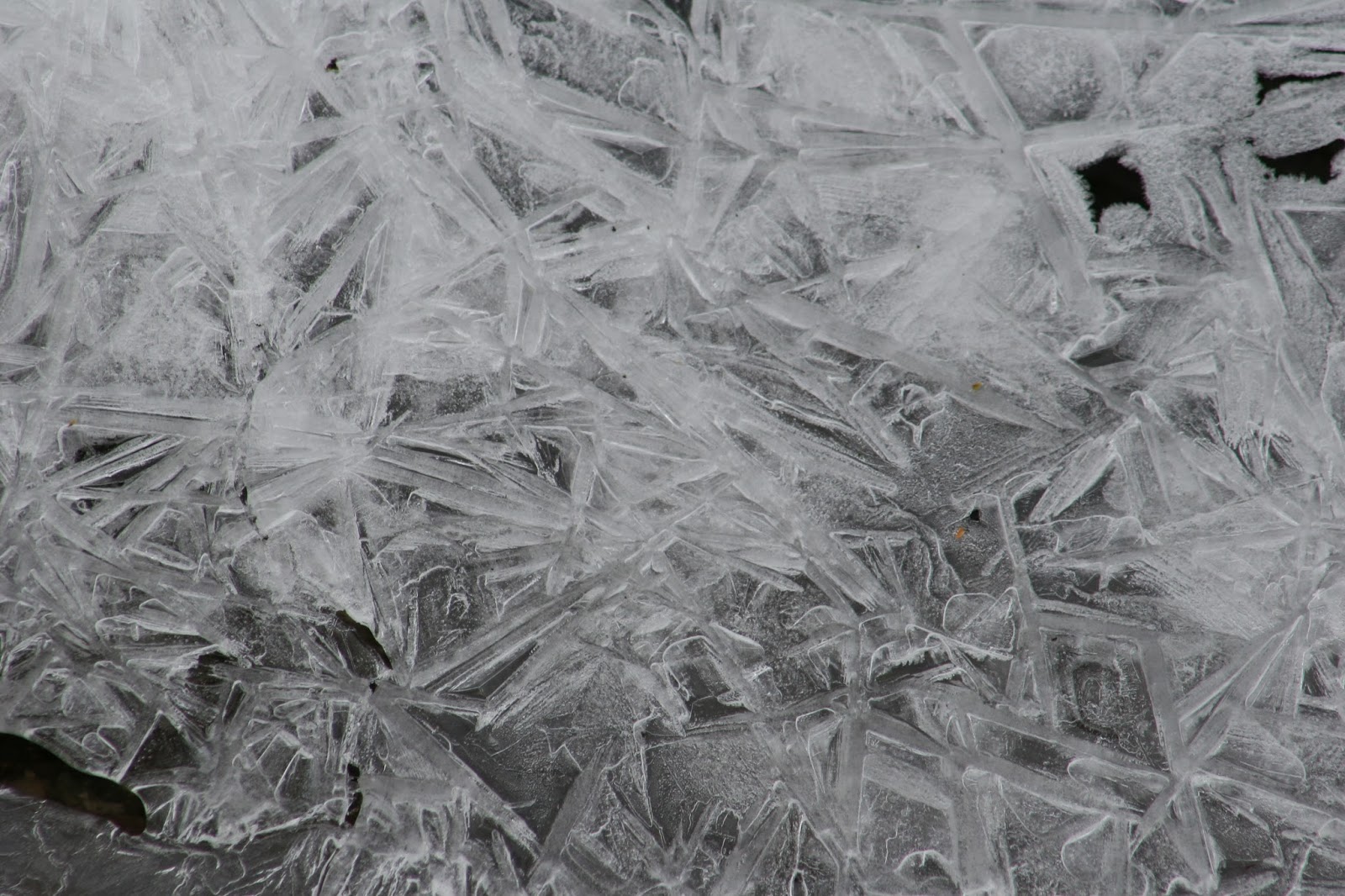
Fall officially began six weeks ago.
Many the leaves have fallen from the trees
Frost is becoming a regular morning discovery.
Over the next week, nighttime temperatures are forecast to be in the low 30s and even the upper 20s. We will probably see ice forming on puddles overnight.
Winter is only six weeks away...
Tuesday, November 5, 2013
Monday, November 4, 2013
Fungi!
I find fungi interesting because of their role in nature. While there are some species fungi that are parasites of living things, and many species that form symbiotic relationships with plants, a large number of fungus species get their nourishment by breaking down dead organisms. They are decomposers. With the help of bacteria, fungi release essential nutrients from the bodies of dead plants and animals and return them to the soil where they can be cycled back into living organisms. They are especially important in the carbon cycle. Without decomposers, much of the carbon in our world would be locked up in the remains of dead plants.
Another interesting things about fungi, is that the mushrooms that we see are only a small part of a much larger organism. Most of a fungus is hidden in the ground, in dead logs, or even in living trees as a syetem of root-like fibers called mycelium. The mushroom that we see on the surface only occurs when the larger fungus is ready to reproduce by sending microscopic spores into the wind. Essentially a mushroom is a fruiting body produced by the large hidden mass of mycelium for the purpose of reproduction.
I am not an expert at identifying mushrooms. Of the people that are very good at identifying fungi, most of them learned because they like to forage for wild mushrooms. I don't particularly like to eat mushrooms (I don't dislike them, but they are not among my favorite foods), therefore I have never learned to identify very many different species. There are some species that are very easy to identify - I have already talked about puffballs, stinkhorns, and Chicken Mushrooms.
Another interesting things about fungi, is that the mushrooms that we see are only a small part of a much larger organism. Most of a fungus is hidden in the ground, in dead logs, or even in living trees as a syetem of root-like fibers called mycelium. The mushroom that we see on the surface only occurs when the larger fungus is ready to reproduce by sending microscopic spores into the wind. Essentially a mushroom is a fruiting body produced by the large hidden mass of mycelium for the purpose of reproduction.
I am not an expert at identifying mushrooms. Of the people that are very good at identifying fungi, most of them learned because they like to forage for wild mushrooms. I don't particularly like to eat mushrooms (I don't dislike them, but they are not among my favorite foods), therefore I have never learned to identify very many different species. There are some species that are very easy to identify - I have already talked about puffballs, stinkhorns, and Chicken Mushrooms.
Friday, November 1, 2013
Upcoming Events - 02 & 03 November and 05 November 2013
Just a reminder that if you are in Mid-Michigan, the Mid-Michigan Rock Club Annual Show is this Saturday and Sunday at the Midland Resort Hotel and Conference Center.
On Tuesday November 5th, the Chippewa Valley Audubon Club will be hosting its monthly meeting at 7:00 PM at the Veterans Memorial Library in Mt. Pleasant. This is not our regular meeting time - we usually meet the second Wednesday of the month. The meeting date was moved this month due a previously scheduled event in the library. Our topic this month is Falconry. From the CVAC website:
Kory Koch from Midwest Aerial Solutions will give a program on the sport
of falconry.
Some topics will include permits, training of both
falcons and falconers, hunting with
falcons, and the use of falcons to
reduce damage caused by wild birds to fields, orchards,
and public places. There will be live birds.
Thursday, October 31, 2013
Mid-Michigan Habitats - Emergent Marsh
An Emergent Marsh is a type of wetland found in shallow water along the shores of ponds, lakes, and rivers. Emergent Marsh is one of the most common habitat types found in Mid-Michigan (and around the entire state). This type of wetland is characterized by narrow and broad leaved herbacious plants and grasses that float on the surface or emerge above the surface of the water (including water lilies, water plantains, arrowheads, grasses, sedges and cattails). Surface water may dry out seasonally, but groundwater is never far below the surface. While trees and shrubs are sometimes found in Emergent Marshes, the saturated soil prevent most woody species from becoming established. Emergent marshes are usually named aftert their dominant plant type (e.g. a cattail marsh). Emergent marshes are among the most biologically diverse forms of habitats and can be home to thousands of species of plants and animals. Among the species of animals that we associate with emergent marshes are the Muskrat (Ondatra zibethicus) and the Red-winged Blackbird (Agelaius phoeniceus).
Selected Plants of the Emergent Marsh
![]() |
| Northern Blue Flag Iris (Iris versicolor) |
| Blue Vervain (Verbena hastata) |
| Bur Marigold (Bidens cernua) |
Bur Reed (Sparganium
eurycarpum)
|
| Cardinal Flower (Lobelia cardinalis) |
| Common Arrowhead (Sagittaria latifolia) |
| Common Cattail (Typha latifolia) |
| Great Blue Lobelia (Lobelia siphilitica) |
| Marsh Vetchling (Lathyrus palustris) |
| Lizard's Tail (Saururs cernuus) |
| Mad-dog Skullcap (Scutellaria lateriflora) |
| Marsh Marigold (Caltha palustris) |
| Narrow-leafed Cattail (Sagittaria latifolia gracilis) |
| Narrow-leafed Cattail (Typha angustifolia) |
| Pickerelweed (Pontederia cordata) |
| Spotted Joe-pye Weed (Eutrochium maculatum) |
| Swamp Milkweed (Asclepias incarnata) |
| Sweet Flag (Acorus calamus) |
| Turtlehead (Chelone glabra) |
| Water Hemlock (Cicuta maculata) |
| Water Plantain (Alisma triviale) |
| White Water Lily (Nymphaea odorata) |
![]() |
| Yellow Water Lily (Nuphar variegatum) |
Wednesday, October 30, 2013
Five Science Things - Firsts in American Space Flight
My wife has a growing collection of space exploration memorabilia, including a number of buttons commemorating American space missions. I thought I would share five of these buttons.
The first button commemorates the first earth orbit by an American astronaut. Lt. Colonel John Glenn orbited the earth three times on 20 February 1962 aboard the Friendship 7. Glenn was the third American (and 5th human) successfully launched into space. John Glenn was one of the original seven American astronauts (Mercury 7) and is the last surviving member of that group. In addition to being the first American in orbit, John Glenn later became the oldest person in space when he participated flew aboard the Space Shuttle Discovery on STS-95 (29 October - 07 November 1998).
The second button commemorates the flight of the Gemini 3 spacecraft. Nicknamed "Molly Brown", Gemini 3 was the first flight of the Gemini space program and launched on 23 March 1965. Crewed by astronauts Virgil I "Gus" Grissom and John W. Young, Gemini 3 was the first American space flight crewed by two men. Gemini 3 was also the first spacecraft to perform an orbital maneuver - using rockets to maneuver the craft in space. Gus Grissom would later die in a fire aboard the Apollo 1 capsule during a training exercise (27 January 1967). John Young would remain with NASA until the 1980s and fly in a total of 6 space missions. He would land on the moon during the Apollo 16 mission (16 - 27 April 1972) and command the first Space Shuttle Mission STS-1 (12 April 1981).
The third button commemorates the Gemini 4 mission (3 June - 7 June 1965). This mission was crewed by astronauts James McDivitt and Edward White. This mission saw the first American walk in space when floated outside the exited the Gemini capsule and floated alongside for approximately 20 minutes. White (like Gus Grissom) died aboard the Apollo 1 capsule. McDivitt would fly in space one more time during the Apollo 9 mission. Later McDivitt became Manager of the Apollo Spacecraft Program before retiring from NASA in 1972.
The fourth button commemorates the flight of Apollo 8 (21 - 28 December 1968). Crewed by astronauts Frank Borman, Jim Lovell, and William Anders, Apollo 8 was the first manned flight to orbit the moon. The craft orbited the moon 10 times over the course of 20 hours before returning back to Earth. This marked the last space flight for Frank Borman - he also commanded the Gemini 7 flight (4 - 18 December 1965). Apollo 8 was the only space flight for William Anders. Apollo 8 was the third space flight of Jim Lovell. He had previously flown on Gemini 7 and Gemini 12. Later he would command the Apollo 13 mission (11 - 17 April 1970). Apollo 13 was supposed to land on the moon, but the mission was aborted due to an explosion on the command module. Lovell and the other two astronauts (Jack Swigert and Fred Haise) were able to safely pilot the Apollo 13 lunar module safely back to Earth.
The fifth and final button commemorates the Apollo 11 mission (16 -14 July 1969). This was the first manned space flight to land successfully on the moon. At 10:56AM on July 20th, Neil Armstrong became the first person to step foot on the moon's surface. Later he was joined by Edwin E. "Buzz" Aldrin on the moon's surface. Armstrong and Aldrin spent approximately 2 hours walking on the moon's surface. Armstrong and Aldrin remained on the surface of the moon in the lunar module for 20 hours before reuniting with the orbiting command module. Michael Collins orbited the moon in the command module during the mission, but did not land on the surface. Apollo 11 was the second (and last) space flight for all three astronauts. Armstrong had previously flown on the Gemini 8 mission, Aldrin on Gemini 12, and Collins on Gemini 10. The US would return astronauts to the moon only five more times, the last time in 1972 (Apollo 17). A total of only 24 humans have orbited the moon and of those 24, twelve have stood on the surface of the moon. There are no current plans for the United States to return astronauts to the moon.
The first button commemorates the first earth orbit by an American astronaut. Lt. Colonel John Glenn orbited the earth three times on 20 February 1962 aboard the Friendship 7. Glenn was the third American (and 5th human) successfully launched into space. John Glenn was one of the original seven American astronauts (Mercury 7) and is the last surviving member of that group. In addition to being the first American in orbit, John Glenn later became the oldest person in space when he participated flew aboard the Space Shuttle Discovery on STS-95 (29 October - 07 November 1998).
The second button commemorates the flight of the Gemini 3 spacecraft. Nicknamed "Molly Brown", Gemini 3 was the first flight of the Gemini space program and launched on 23 March 1965. Crewed by astronauts Virgil I "Gus" Grissom and John W. Young, Gemini 3 was the first American space flight crewed by two men. Gemini 3 was also the first spacecraft to perform an orbital maneuver - using rockets to maneuver the craft in space. Gus Grissom would later die in a fire aboard the Apollo 1 capsule during a training exercise (27 January 1967). John Young would remain with NASA until the 1980s and fly in a total of 6 space missions. He would land on the moon during the Apollo 16 mission (16 - 27 April 1972) and command the first Space Shuttle Mission STS-1 (12 April 1981).
The third button commemorates the Gemini 4 mission (3 June - 7 June 1965). This mission was crewed by astronauts James McDivitt and Edward White. This mission saw the first American walk in space when floated outside the exited the Gemini capsule and floated alongside for approximately 20 minutes. White (like Gus Grissom) died aboard the Apollo 1 capsule. McDivitt would fly in space one more time during the Apollo 9 mission. Later McDivitt became Manager of the Apollo Spacecraft Program before retiring from NASA in 1972.
The fourth button commemorates the flight of Apollo 8 (21 - 28 December 1968). Crewed by astronauts Frank Borman, Jim Lovell, and William Anders, Apollo 8 was the first manned flight to orbit the moon. The craft orbited the moon 10 times over the course of 20 hours before returning back to Earth. This marked the last space flight for Frank Borman - he also commanded the Gemini 7 flight (4 - 18 December 1965). Apollo 8 was the only space flight for William Anders. Apollo 8 was the third space flight of Jim Lovell. He had previously flown on Gemini 7 and Gemini 12. Later he would command the Apollo 13 mission (11 - 17 April 1970). Apollo 13 was supposed to land on the moon, but the mission was aborted due to an explosion on the command module. Lovell and the other two astronauts (Jack Swigert and Fred Haise) were able to safely pilot the Apollo 13 lunar module safely back to Earth.
The fifth and final button commemorates the Apollo 11 mission (16 -14 July 1969). This was the first manned space flight to land successfully on the moon. At 10:56AM on July 20th, Neil Armstrong became the first person to step foot on the moon's surface. Later he was joined by Edwin E. "Buzz" Aldrin on the moon's surface. Armstrong and Aldrin spent approximately 2 hours walking on the moon's surface. Armstrong and Aldrin remained on the surface of the moon in the lunar module for 20 hours before reuniting with the orbiting command module. Michael Collins orbited the moon in the command module during the mission, but did not land on the surface. Apollo 11 was the second (and last) space flight for all three astronauts. Armstrong had previously flown on the Gemini 8 mission, Aldrin on Gemini 12, and Collins on Gemini 10. The US would return astronauts to the moon only five more times, the last time in 1972 (Apollo 17). A total of only 24 humans have orbited the moon and of those 24, twelve have stood on the surface of the moon. There are no current plans for the United States to return astronauts to the moon.
Tuesday, October 29, 2013
Fall Photo
Monday, October 28, 2013
A Tree Might Forgive, But It Never Forgets
I recently started doing a program on plant adaptations for 4th grade classrooms. One of the things that we discuss in this program is the idea that plants can defend themselves. They do this either through chemical means (such as being toxic or tasting bad) or physical means (such as prickly leaves, thick bark, prickers, etc.).
I have a tree in my backyard that has taken physical defense to an extreme level.
Those thorns seem to rather far apart to deter an herbivore like a White-tailed Deer (Odocoileus virginianus). The thorns spiral around the branch and are all at least three inches apart. The distance between any two thorns on the same side of branch may be greater than eight inches. It would not be too difficult for a deer to avoid. Also the length of the thorns seems a little more than is needed to deter a deer. Many of the thorns are over 4 inches long!
I have a tree in my backyard that has taken physical defense to an extreme level.
| Honey Locust thorns |
Those long three-pronged thorns belong to a Honey Locust (Gleditsia triacanthos). The Honey Locust is a deciduous tree that native to the central United States from the west slope of the Appalachians westward to a line running from central Texas north to central Kansas and eastern Nebraska. It ranges south to the Gulf Coast and north as far as Minnesota and Wisconsin. In Michigan it is native only to the southern tier of counties. The Honey Locust can grow to heights of 80 feet and commonly lives 120 to 150 years. It has compound leaves and as a member of the Bean Family (Fabaceae) it produces long seed pods with large seeds.
| Honey Locust seed pod and leaves |
The Honey Locust developed its impressive thorns to deter herbivores from browsing its leaves and branches. This seems like a sensible approach, many other species have developed similar defenses (roses, raspberries, prickly ash, etc.). Let's take a closer look at those thorns to see if they would be a good defense.
| Honey Locust branch with leaves removed to show thorns |
The thorns are certainly impressive and would seem to be enough to deter the average herbivore, but lets add a ruler for scale.
| Honey Locust branch with 12-inch rule for scale |
Those thorns seem to rather far apart to deter an herbivore like a White-tailed Deer (Odocoileus virginianus). The thorns spiral around the branch and are all at least three inches apart. The distance between any two thorns on the same side of branch may be greater than eight inches. It would not be too difficult for a deer to avoid. Also the length of the thorns seems a little more than is needed to deter a deer. Many of the thorns are over 4 inches long!
| This Honey Locust thorn measures more than four inches long! |
Just for fun here is picture of one of the thorns with my hand for scale. I have repeatedly stepped on fallen limbs in my yard and stuck those small thorns in the soles of my shoes. I definitely do not want to close my hand around them.
| A Honey Locust thorn in hand |
So these thorns are a little big to be defense against herbivores like White-tailed Deer. Just what is the Honey Locust trying to protect itself against?
The Honey Locust, like most plants, has a long memory. A very long memory. While each individual tree might only reach an age of 150 years, the memory of the species goes back much further. When the tree species was developing those thorns there were much larger herbivores walking around North America.
How much larger?
Subscribe to:
Posts (Atom)


+6.jpg)