Showing posts with label moon. Show all posts

Monday, June 10, 2019

Vernal: A Spring Photo Project (Day 51 through Day 60)

I've fallen way behind on sharing the images from my spring photography project.  Here are my photos from Day 51 (09 May) through Day 60 (18 May).  If you haven't been following along, my goal is to photograph something outdoors in nature every single day this spring.

Day 51 (09 May 2019) - Tulips


I love tulips.  They are the only non-native flower that I regularly add to our home garden.  Last fall we planted nearly three hundred tulip bulbs all red, orange, and yellow.  I love the pop of color that they add to spring.

Day 52 (10 May 2019) - Blue-gray Gnatcatcher


I am not now, nor have I ever been, a birder.  I do not chase birds, but this spring the birds seemed to find me everywhere I went.  This blue-gray gnatcatcher (Polioptila caerulea) was photographed at Mission Creek Woodland Park as it foraged on low branches of an eastern hemlock tree.  A second after I captured this image the bird flew off.

Day 53 (11 May 2019) - World Migratory Bird Celebration


So this photograph was taken indoors.  It's the only image of this entire photography project to be taken inside a building.  (I also took one indoor image during my Summer 2018 photography project.)  This picture shows my friend Rebecca Lessard with Pearl the red-tailed hawk at the World Migratory Bird Day Celebration at the Ziibiwing Center in Mt. Pleasant.  Rebecca is the founder and executive director of Wings of Wonder, a raptor rehabilitation center located near Empire, MI.  She has been the presenter at the Ziibiwing Center WMB Celebration several times.  I think this is the best image that I have ever taken of Rebecca - she is a blur of motion when presenting and it's almost impossible to photograph her well in low light.

Day 54 (12 May 2019) - Jack-in-the-pulpit


Forest Hill Natura Area is not particularly rich in spring woodland wildflowers, but I did manage to find several jack-in-the-pulpit (Arisaema triphyllum) plants in the South Woods.  I love all the shades of green in this image.  This photo was taken right at ground level using the LCD live viewer to compose the shot - I like this feature as it means I no longer have to lay on the ground to shoot images from this angle.

Day 55 (13 May 2019) - Northern Parula Warbler


Another bird that found me.  This male Northern Parula (Setophaga americana) landed on a branch right at eye level during a walk through Mill Pond Park.  Normally these birds are found high in the canopy, but they will be found lower in the forest during migration.  Although as I said before, I am not a birder, it's hard not to admire a bird as beautiful as this one.

Day 56 (14 May 2019) - Large-flowered Trillium


The Chippewa Watershed Conservancy has recently been gifted a new property along the Chippewa River east of Mt. Pleasant.  This property consists of three acres of riverbank and will eventually be developed as a preserve with a canoe landing.  On May 14th a small group visited the property to conduct a biological survey.  I identified approximately forty species of herbaceous plants including this large-flowered trillium (Trillium grandiflorum).  This image has be deliberately underexposed so that the highlight didn't completely wash out.  I like that you can see all the little grains of pollen both on the stamens and on the white petals surrounding the stamens.

Day 57 (15 May 2019) - Waxing Gibbous Moon


I have really grown to enjoy photographing the moon.  Fortunately, the sky in Alma is dark enough that I can do it right from my driveway any time the notion strikes me.  I recently purchased a new (better) tripod head that holds long lenses in place much better than what I was previously using, making this kind of photography easier.  This image of a waxing gibbous moon has been cropped to a 16:9 widescreen format for no other reason than I like how it looks.

Day 58 (16 May 2019) - Common Blue Violet


Another image photographed at home.  Common blue violets (Viola sororia) are slowly trying to take over both as a groundcover is our flower gardens and as the dominant plant in parts of our lawn.  The seeds of this flower are eagerly collected by ants.  The ants eat a fleshy coating known as an eliasome and discard the seeds in their garbage middens where they sprout easily.  I like the details such as the hairs of the flower's beard and the dark veins on the petals.

Day 59 (17 May 2019) - Environmental Education Day


For each of the past ten years the Isabella Conservation District has hosted an environmental education day for third grade classrooms in the county.  This year over 550 students and 100 adults attended.  One of the many highlights is a live display of Michigan reptiles and amphibians.  I love how the students in this image are interacting calmly and with curiosity toward an eastern garter snake.

Day 60 (18 May 2019) - Bleeding Hearts


Another photograph from our home flower gardens.  While tulips are my favorite garden flower, Shara loves bleeding hearts.  She is still upset about the bleeding heart plants that we left behind when we moved more than eight years ago.  (I will admit that the bleeding hearts that we planted in Alma have not yet grown to the magnificence of the plants that we left behind.)  One of the first photographs that I ever took with my first digital SLR camera was of a bleeding heart flower in that garden.  I cropped this image to a 16:9 widescreen format to focus solely on the flowers and remove some of the distracting foliage of other plants.

Monday, March 11, 2019

Crescent Moon (11 March 2019) and an upcoming event

Tonight's waxing crescent moon as seen from my driveway...


Our next full moon will be on the Spring Equinox (20 March) - I am leading a hike that night at the Chippewa Watershed Conservancy's Sylvan Solace Preserve.  For more information, check their website.

Wednesday, February 20, 2019

Full Moon - February 2019

On Monday (18 February 2019) I led a nighttime hike at the Chippewa Watershed Conservancy's Sylvan Solace Preserve.  The snowy woods was well-lit by a nearly full moon - at 98% visible the moon could be considered full.  This was my third full moon hike of the winter.  Altogether, about 50 people have joined me on the three hikes.  Monday's hike was attended by nine people.

Monday's full moon was the best we have seen this winter here in Mid-Michigan.  Not only was the sky clear (unlike December) and the temperature moderate (not like the 20 below windchill in January, but February's full moon could be considered a "supermoon".  A supermoon occurs because the moon's orbit around the earth is not a perfect circle.  Instead the orbit is more like an ellipse, resulting in times when the moon is closer to the earth than other times.  If the moon is near its closest point at the full moon stage, the moon is commonly referred to as a supermoon.

Although I didn't photograph the hike, I took several photos of the moon from the parking lot before the hike began.  This was my favorite image - it has been cropped down to a square shape.


I have one more night hike scheduled this winter at Sylvan Solace.  This final hike will take place on the next full moon.  This full moon just happens to coincide with the Vernal Equinox on March 20th.

Monday, January 21, 2019

Lunar Eclipse (20 January 2019)

A lunar eclipse occurs any time the earth's shadow passes across the moon's surface.  This can only happen during a full moon, when the sun and moon are on opposite sides of the sky.  A full moon occurs approximately every 27 days - so you might think that a lunar eclipse would happen every month. 

That is not the case. 

The moon's orbit around the earth does not line up exactly with the plane of the earth's orbit around the sun.  The moon's orbit is offset by about 5 degrees so a lunar eclipse is a rarer occurrence than a full moon.  The next total lunar eclipse will not happen until May 2021, but it will not be visible in Mid-Michigan.  The next total lunar eclipse that we will be able to see in its entirety will be on the night of 15-16 May 2022.

Last night's eclipse was special for another reason.  The path that the moon takes around the earth is not a perfect circle - it's more of an ellipse.  Sometime the moon is closer to the earth than it is at other times.  The closest approach to the earth is approximately 221,000 miles and the furthest is more than 252,000 miles!  The closest approach to the earth is known as the perigee; the furthest distance from the earth is known as the apogee.  Last night's full moon occurred when the moon was near perigee.  These mean that the moon appeared larger than normal (about 14% larger than it would during apogee).  Although not an astronomical term, a full moon at perigee is commonly called a "supermoon".

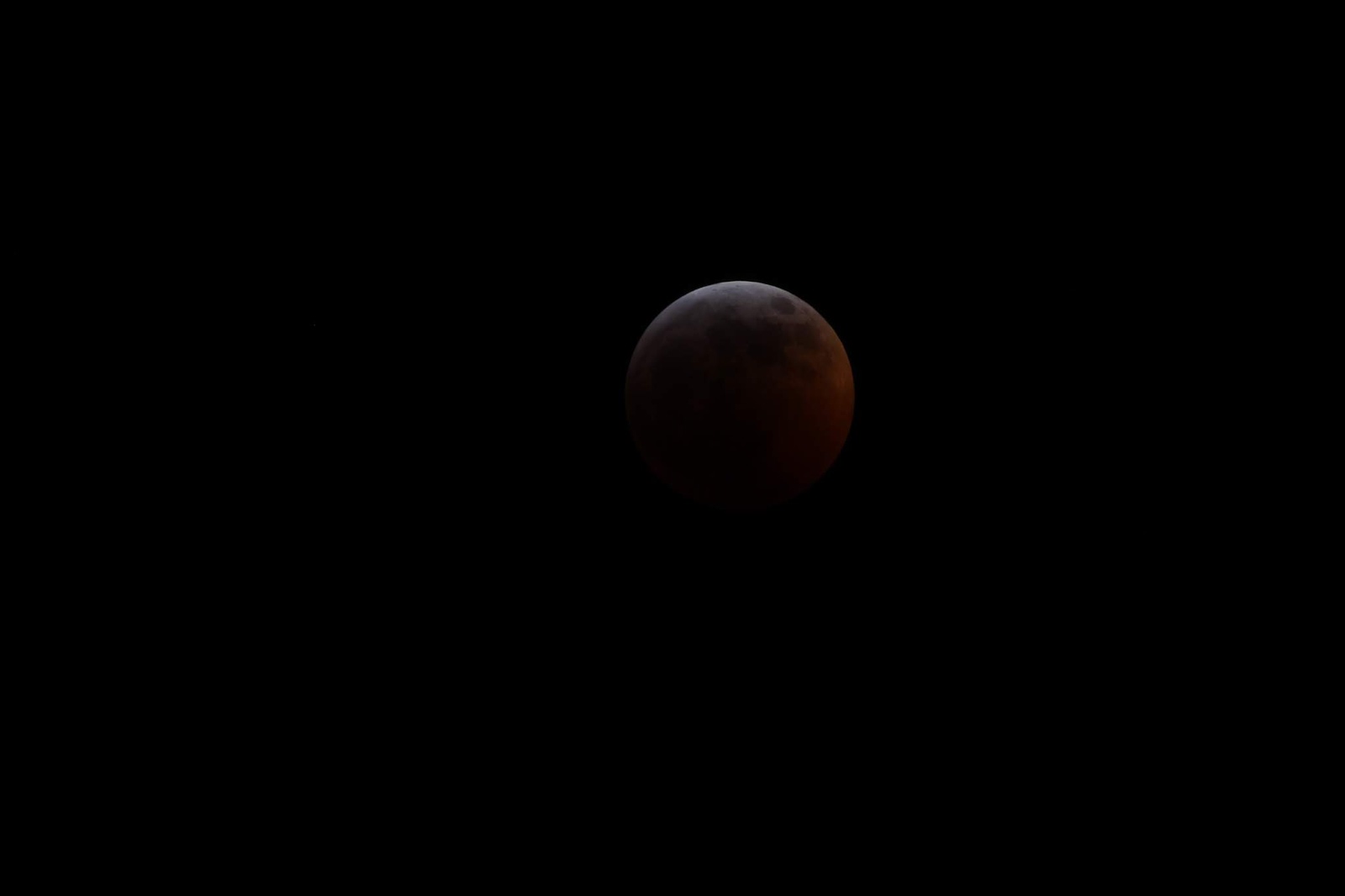
Luckily for me, I didn't have to go far to see and photograph last nights eclipse.  I took the following sequence of photographs from my driveway.  In the first image the eclipse has not yet started.  The second two pictures show a partial eclipse as the earth's shadow begins to pass over the moon.  


The final photograph shows the moon at full eclipse.  Even at full eclipse some light does leak around the earth and reflect from the moon's surface.  The earth's atmosphere scatters the shorter wavelengths of visible light (blue and violet) with only the longest wavelengths (orange and red) passing through unchanged - this is the same reason sunsets and sunrises appear red.  Because the red light is the most likely to pass through the atmosphere, the moon appears red during a full lunar eclipse. 


Tuesday, December 18, 2018

Celebrating a (Solar) New Year


On January 1st, much of the world will be celebrating the new year, but this Friday might be a more appropriate day to celebrate (at least from an astronomical viewpoint).

This Friday (22 December 2018) marks the Winter Solstice, the date on which the calendar changes seasons from Fall to Winter here in Mid-Michigan (and the rest of the Northern Hemisphere).  Winter will officially begin at 5:23 PM EST.

The word solstice comes from two Latin root words sol (sun) and sistere (to stand still).  On the solstice, the path of the sun appears to stand still! 

Assume that you were to awaken every morning before dawn and mark the location that the sun rises on the eastern horizon.  You would notice that the sun does not in fact arise from the same place every day.  Instead it wanders north and south along the horizon, moving north during the Winter and Spring and back south again during the Summer and Fall.  On the Summer Solstice (June 21st) and Winter Solstice (December 21st), the sun ceases to move further along the horizon, appearing to "stand still" before reversing its course the next day.

You have probably already noticed in addition to the location of the rising sun, the length of day and night vary throughout the year.  As the sun progresses south, the day shortens and the night lengthens.  The Winter Solstice marks the shortest day (and longest night) of the year in the Northern Hemisphere.  Here in Mid-Michigan we will mark the date with approximately 8 hours 57 minutes of daylight.  As the sunrise moves back north along the horizon our days will slowly get longer until on the Summer Solstice we will experience nearly 15 hours 25 minutes of daylight.

Why does the sun move and the length of day vary?

It all has to do with a tilt in the Earth's axis.  The Earth rotates on its axis approximately once every 24 hours - giving us the length of our day.  It also revolves around the sun approximately once every 365 days - the length of our year.  If the Earth's axis was perpendicular the plane on which it revolves around the sun, our days would be the same length throughout the year (approximately 12 hours), but the axis is not perpendicular to this plane.  Instead the Earth's axis tilts 23.5 degrees from the vertical.

The points on the globe that the axis revolves around are referred to as the North and South Poles.  The axis is always pointed toward the same location in the sky.  The North Pole points toward the "North Star" - Polaris.  As the earth revolves around the sun, sometimes the North Pole is closer to the sun, sometimes the South Pole is closer to the sun.  When the North Pole is at its closest, we experience Summer in Mid-Michigan and the Southern Hemisphere experiences Winter.  When the North Pole is at its furthest, we experience Winter and the Southern Hemisphere experiences Summer.

On two days of the year, the Earth's axis is perpendicular to the plane of its revolution.  On those two days we do experience equal periods of day and night because the sun rises due east and sets due west.  During the rest of the year our hours of daylight vary depending on where the axis is pointed.  During our summer months, the tilt in the axis means that the northern hemisphere is closer to the sun and receives more hours of sunlight.  During the winter months, the reverse is true.  On the Winter Solstice, the North Pole is tilted at its furthest angle from the sun resulting in the shortest day (and longest night) of the year for those of us in the Northern Hemisphere.

Why did I say that the Winter Solstice would be a better day to celebrate the new year?

Tracking the position of the rising sun was among the first astronomical observations.  Many ancient monuments seem to have been constructed as solar observatories, aligned with the locations of sunrise and sunset on the longest and shortest day of the year.  To early agricultural societies especially, tracking the seasons accurately could mean the difference between a bountiful harvest and failure of a year's crops.  The day that the sun "stood still" in its southward journey and then began to return north, bringing more hours of daylight and eventually warmer weather seems such an obvious point to mark the beginning of a new year!

Join me on a hike to celebrate the Solstice!

To celebrate the Winter Solstice, I am leading a nighttime hike at the Chippewa Watershed Conservancy's Sylvan Solace Preserve.  This hike will begin at 7:00PM.  Sylvan Solace Preserve is located on Pickard Road, between Gilmore Road and Littlefield Road, approximately 8 miles west of downtown Mt. Pleasant.


We are doing a nighttime hike because another celestial event lines up with the solstice this year - a full moon.  (Technically the full moon will be on December 22nd, but it will be more than 97% illuminated on the night of the 21st.)  We are expecting light snowfall early in the day - this should brighten up the woods.  Hopefully the moon will peek through the expected clouds and illuminate our hike.  The trails at Sylvan Solace are flat and well-defined making this a great first night hiking experience!  I hope to do the hike without any artificial lights.  Wear warm clothes and bring a headlamp or flashlight just to be safe.

Saturday, July 21, 2018

The Days of Summer - Day Twenty-four through Day Thirty

This part four of my Days of Summer photography project.  Sometimes I get so busy with work and everything else in life that I forget to take time to get out in nature.  So I've given myself a photography project that requires me to get outdoors every single day.  Starting with the Summer Solstice (21 June 2018) and ending on the Fall Equinox (22 September 2018), I will get outdoors every single day to take photos.  One picture from each day will be shared here.  To see last week's installment click here.

I hope you enjoy looking at this photos as much as I enjoy taking them.


Day 24 (14 July 2018) - Queen Anne's Sunset


This image of the sun setting behind a Queen Anne's Lace or Wild Carrot (Daucus carota) bloom was photographed at Forest Hill Nature Area.  This has become my go-to location for photography for this project.  Forest Hill is located less than fifteen minutes from home.  If I didn't get anywhere else during the day, I can always find time to run to Forest Hill for a short photo visit.

Day 25 (15 July 2018) - Square-stemmed Monkeyflower


On Sunday July 15th I spent the afternoon at Chipp-A-Waters Park in Mt Pleasant for the second annual Chippewa River Water Festival.  The Isabella Conservation District had a booth at the festival and I was helping pass out conservation swag and literature.  I was also scheduled to lead three nature hikes through the park during the afternoon.  During one of the scheduled times, I had no takers so I went by myself with just my camera as a companion.  This Square-stemmed Monkeyflower (Mimulus ringens) was growing on a point bar along the edge of the Chippewa River.  There were probably thirty of these plants total - I normally find less than ten a year.

Day 26 (16 July 2018) - Wheatfields and Stormclouds


This picture was taken near the Chippewa Watershed Conservancy's Sylvan Solace Preserve wet of Mt. Pleasant.  Clouds are always a good photo subject.  So are fields of ripening wheat.  This location had both.  This is my second photo of a wheat field, but I think this image is more about the clouds than the wheat.   I also liked that I could get a picture without trees on the horizon.  (There are a couple on the far left of the picture, but they don't detract from the open horizon feel.)  About ninety minutes after this picture rainstorms moved into the area.

Day 27 (17 July 2018) - Waxing Crescent Moon


This photo of a waxing crescent moon was taken from my backyard at 10:25PM.  This picture has been cropped from the original to a square image.  I like the sharp lies of the crater edges where the sunlit side of the moon meets the half in shadow. 

Day 28 (18 July 2018) - Twelve-spotted Skimmer


Some days it's hard to pick a favorite photo to share.  This was not one of those days.  This male Twelve-spotted Skimmer (Libellula pulchella) was taken at Forest Hill.  When I spied it perched on this grass, back-lit by the setting sun, I knew it was a "winner".  This image has been cropped from a horizontal to a vertical format.

Day 29 (19 July 2018) - Cedar Waxwing


I spent nearly thirty minutes at Mill Pond Park watching Cedar Waxwings (Bombycilla cedrorum) flying over the Chippewa River to snag insects out of the air.  Occasionally one would land on a tree limb about twenty feet in front of me.  This is one of about seventy-five picture of fur different Waxwings.  This image has been cropped considerably with about 1/3 of the picture removed from the left and 1/3 removed from the bottom.

Day 30 (20 July 2018) - A Hole in the Clouds


The final image of the week was another one from Forest Hill Nature Area.  I spent an hour photographing the setting sun, the moon, clouds, and a sun dog.  As we were preparing to leave I spied this patch of light peeking through a dark cloud. 

Friday, June 29, 2018

The Days of Summer - Day One through Day Nine

I've given myself a photo project.  I love nature photography, but sometimes everything else in life gets in the way and I don't take time to get outdoors and take pictures.  So this summer I decided to do something about it.  Starting with the first day of Summer (21 June) I am going to take at least one photo every day of the season and share it here.  I wish this was an original idea, but it's not.  One of my favorite nature photographers is Jim Brandenburg.  For one season (in this case Autumn), Brandenburg took only one photo per day.  A personal project to reignite his love of photography and to connect with his home ground, these photos were not originally meant to be published but they resulted in the book called Chased By The Light: A 90-Day Journey (1998).  Five years later he published a companion book titled Looking for Summer (2003).  For Looking Brandenburg did not take one photo per day as he did for Chased, but the goal was the same to connect with a place and a time. Both Chased and Looking are sitting in our living room right now - they are among the books I turn to for photographic inspiration. 

So I'm inspired... I sit typing these words on June 29th, the ninth day of summer and I have nine photographs to share.  I am not taking a single photo a day as per Chased By The Light, but I am picking a single image to represent each day.  Collectively, I hope these photos represent the season as I experience it.  Expect updates on a weekly basis from here out.

Day One (21 June 2018) - Summer Solstice


I started summer with a sunrise hike at the Chippewa Watershed Conservancy's Bundy Hill Preserve.  While I took over 200 photos that morning, this image of a pair of brightly lit broadleaf trees in a dark pine forest is my favorite.

Day Two (22 June 2018) - Mare's Tails


I am drawn to clouds - I photograph them over and over again.  A good cloud always merits a photograph.  This image of cirrus clouds was taken on the Saginaw Chippewa Reservation just east of Mt. Pleasant on my way home from work.  I noticed the clouds and pulled into a parking lot to get this image. Cirrus clouds are often referred to as Mare's Tails because of their resemblance to the curling hairs of a horse's tail.  The word cirrus actually means "a curl of hair" in Latin.

Day Three (23 June 2018) - Baby Birds


A Boston Fern on our front porch is currently home to a nest full of baby House Finches (Haemorhous mexicanus).  When I took this picture, the nestlings were several days old but had yet to open their eyes.

Day Four (24 June 2018) - Raindrops on Butterflyweed


Sunday June 24th found us leaving for a trip to Chicago for a graduation party, and then on to Wisconsin and Iowa for a mini-vacation. I photographed this Butterflyweed (Asclepias tuberosa) in our home pollinator garden while I was packing for the truck for our trip.  It had just started to rain and the flowers were covered with hundreds of tiny water droplets. 

Day Five (25 June 2018) - Wading Whooper


One of my favorite places is the International Crane Foundation in Baraboo, Wisconsin.  We originally visited there in July 2015.  When we decided to head back to Wisconsin this summer, ICF was at the top of our list of places to visit.  During our first trip the pair of Whooping Cranes (Grus americana) stayed toward the back of their exhibit space and we barely saw them.  That almost happened again this time, but we hung around the exhibit and the birds decided it was time to feed in the pond near the viewing area.  This is not the closest image that I took, but it is my favorite of the bird in action stalking something in the pond.

Day Six (26 June 2018) -  A Row of Mounds


Our next day found us in eastern Iowa at Effigy Mounds National Monument.  I am fascinated by Native American earthworks, especially mounds.  In 2016 we visited Great Serpent Mound in Ohio and Cahokia Mounds in Illinois.  Effigy Mounds was next on my list.  These mounds are attributed to the Hopewell Culture that existed in the area approximately 1500-2000 years ago.  Although the site is best know for its effigy mounds (earthen mounds in the shapes of animals or humans) I was equally impressed by the rows of conical mounds such as this group leading up the the area known as Fire Point.


Day Seven (27 June 2018) -  Bufflehead Drake


Shara firmly believes that if a city you are visiting has an aquarium it must be visited; I tend to agree.  That's how we ended up at the National Mississippi River Museum and Aquarium in Dubuque, Iowa. My favorite thing was the American Paddlefish feeding (daily at 10:30AM), but my favorite photo was this one of a Bufflehead (Bucephala albeola) drake at the Backwater Marsh exhibit. 


Day Eight (28 June 2018) - Moonrise


The photo for June 28th was taken back home in Michigan at the Forest Hill Nature Area.  After driving home from Iowa earlier in the day, I decided to go out to Forest Hill to watch the sun set and the full moon rise.  There were not enough clouds for a spectacular sunset, but just enough to prevent really clear photos of the moon.  Even so I really like this yellow moon in the inigo sky as barely rises above the black treeline.

Day Nine (29 June 2018) - Hope is a tree with seeds


Emily Dickinson famously wrote that '"Hope" is the thing with feathers-', but to me this tree represents hope.  It's a Green Ash (Fraxinus pennsylvanica).  Why does this tree give me hope?  Do you see all the dead trees in the background?  Those are also Green Ash trees.  They were killed by the Emerald Ash Borer, an invasive species that has obliterated ash populations in Michigan and across the Midwest.  Entire forests were wiped out in a few short years.

But...

The Emerald Ash Borer didn't get every tree.  Trees that were small when the Ash Borer arrived in an area were sometimes passed over as Ash Borer populations moved on to more promising feeding grounds.  These small trees are now reaching a size where they are capable of reproducing.  In a short walk at Mill Pond Park I discovered several 15 - 25 foot Green Ash trees.  The best part of the discovery; they all had seeds (hundreds of them)!  These seeds represent hope for the survival of the species as a viable component of our forests.

Monday, January 29, 2018

Waxing gibbous moon (27 January 2018)

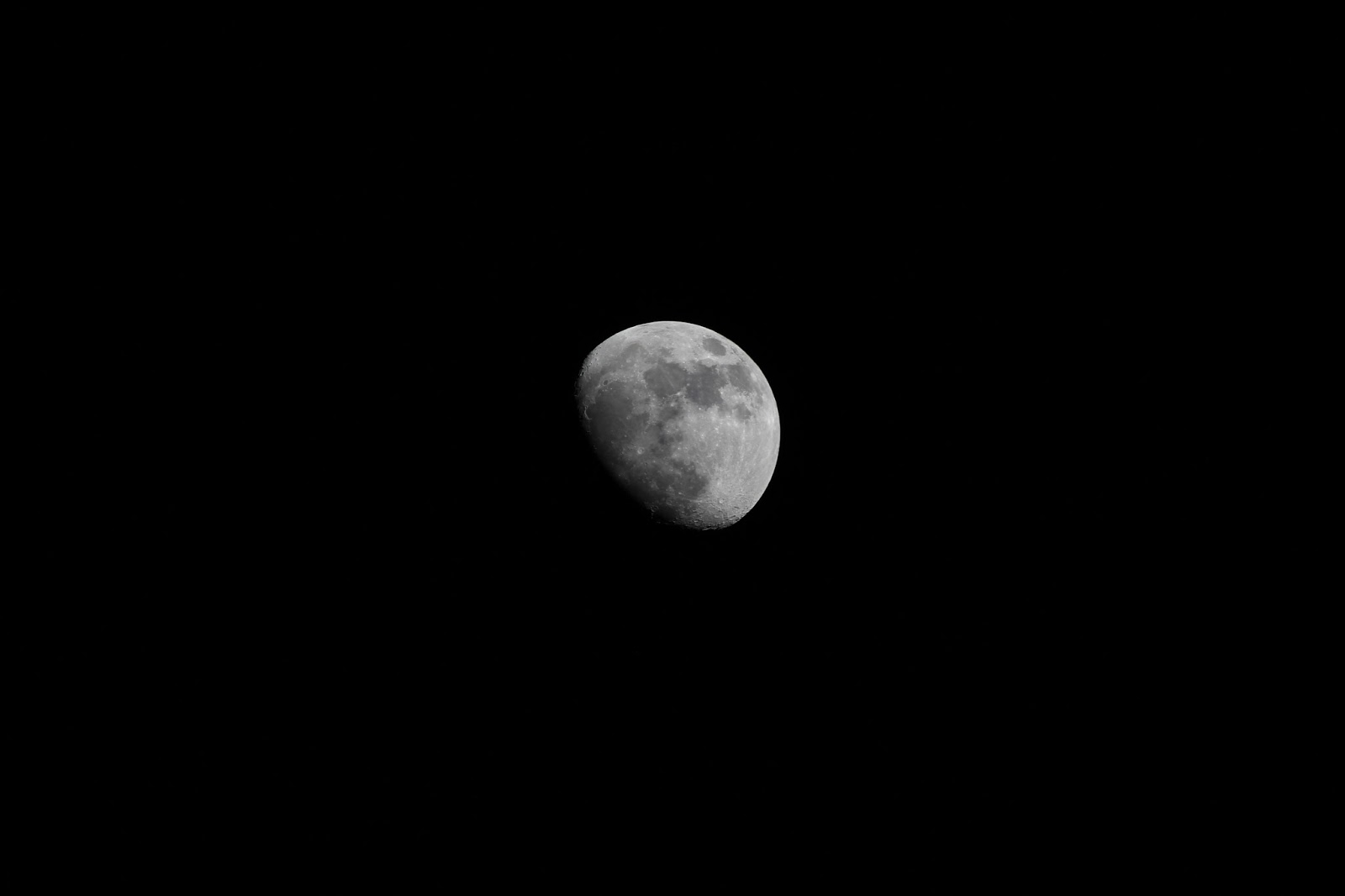
On Saturday (27 JAN) shortly after sunset I went outside and noticed a gorgeous waxing gibbous moon.  To say that a moon is waxing means that the illuminated portion of the moon is growing - the moon is getting closer to being full.  The opposite of waxing is waning.  A waning moon is a moon that is past full and its illuminated percentage is decreasing.  Gibbous means that a moon is more than 50% full - the moon last night was at 83%.

I took about 30 images of the moon in all.  Here is one of the original images.


For the photo geeks out there - this image was shot on a Canon 60D with a Canon 100-400 lens (at 400mm), shot at f/11, using an ISO of 100 and exposed for 1/100 second.


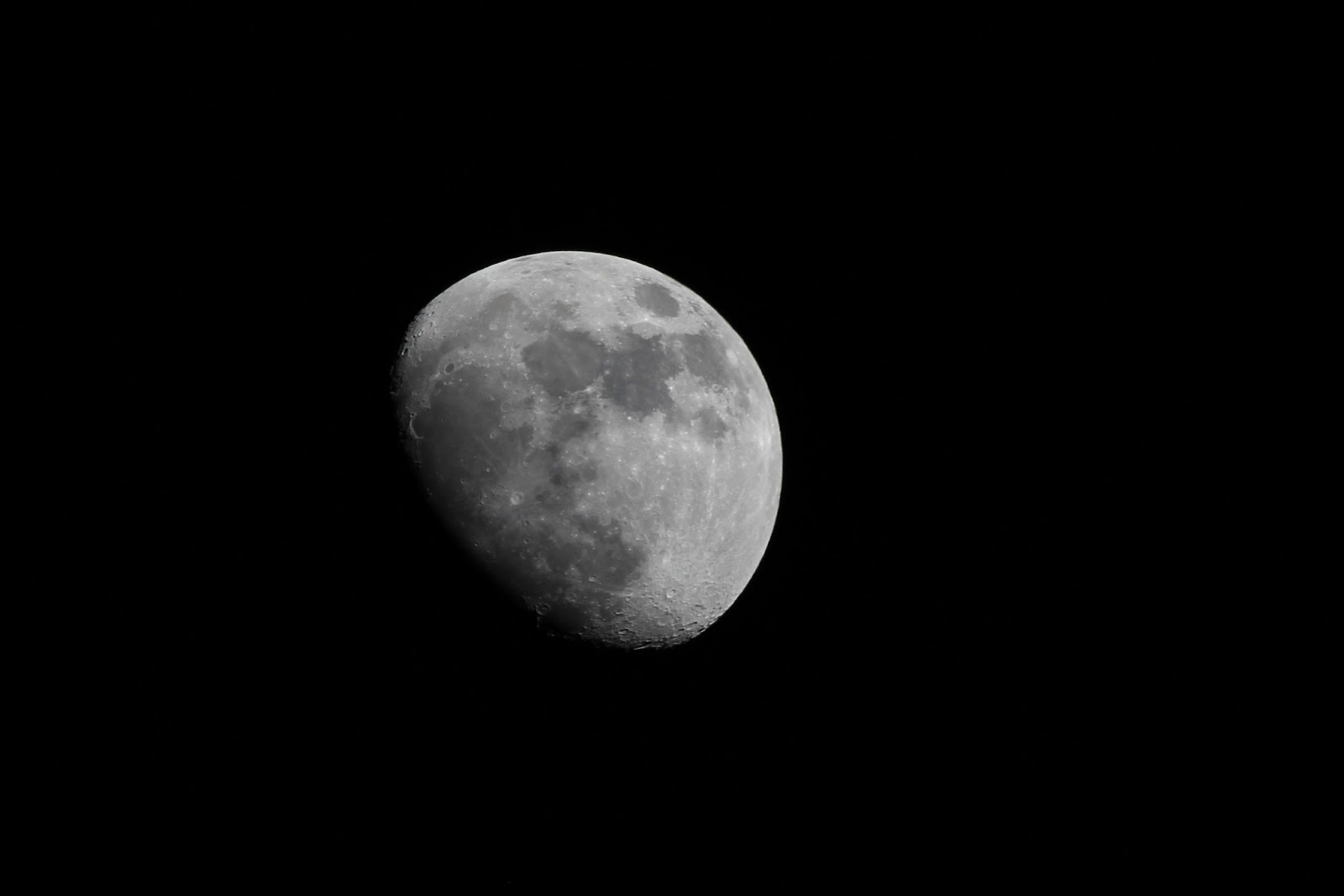
I decided to crop this image in a couple of different ways.  First as a horizontal image...


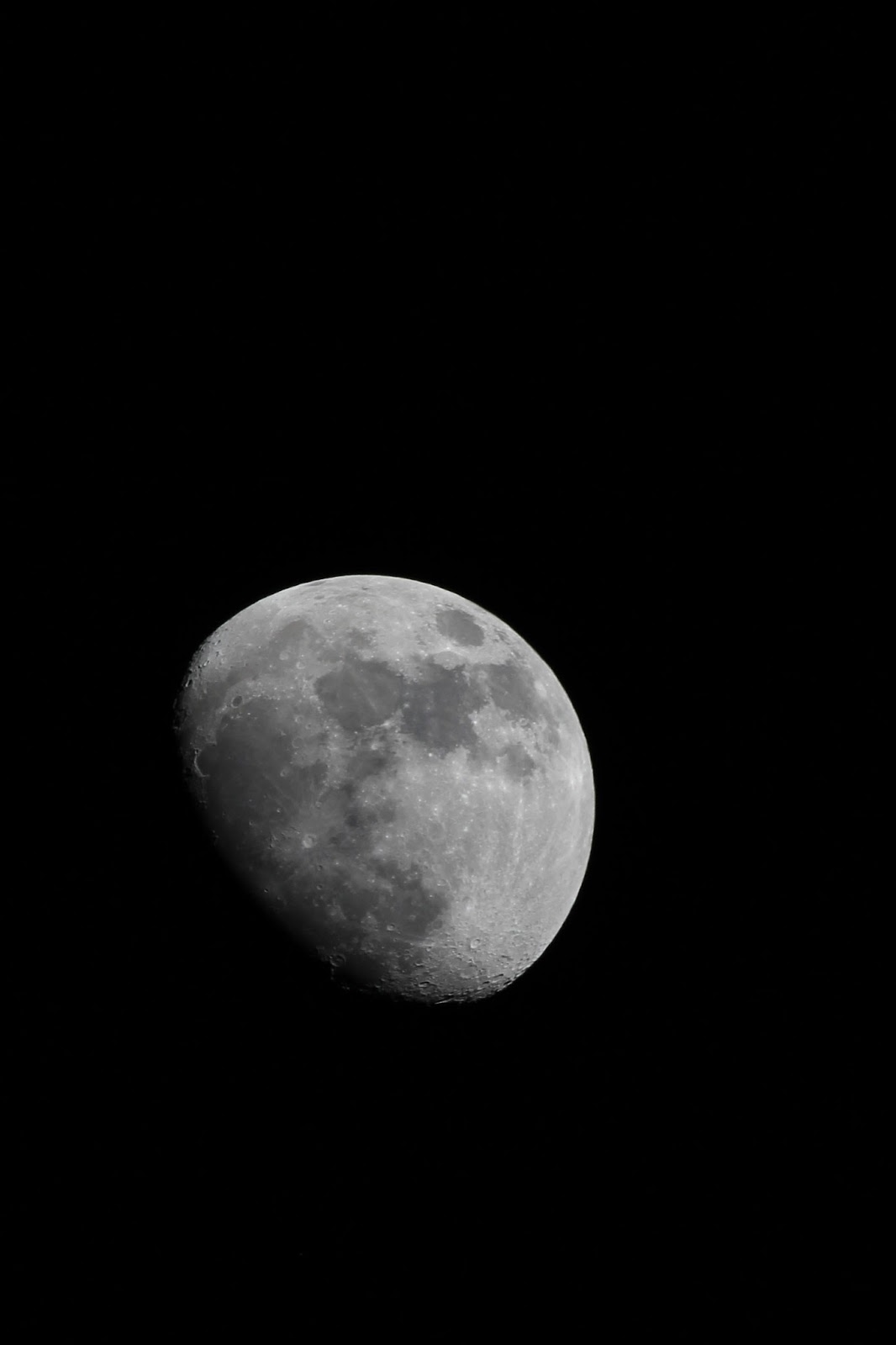
Then as a vertical image...


I'm not sure which of these crops I like better.  In both I intentionally placed the moon slightly off-center.  I like the expanse of black extending further from the lit face of the moon.  This is the same technique used in portraits to give the subject somewhere to look or in photos of animals to give them space within the frame of the photo to look or move.

Friday, November 17, 2017

Photography (03 - 16 November 2017)

 Here are a few photos that I have taken since November 1st.

Full Moon - Alma, MI (03 November 2017)

Cattails at Chipp-A-Waters Park - Mt. Pleasant, MI (06 November 2017)

American Beech and pedestrian bridge - Mt. Pleasant, MI (06 November 2017)
 
Blue skies and golden leaves - Mt. Pleasant, MI (06 November 2017)

Milkweed seeds at the Isabella Conservation District office - Mt. Pleasant, MI (10 November 2017)

Quaking Aspen trunks at the Saginaw Chippewa Academy - Mt. Pleasant, MI (10 November 2017)

Mushrooms and moss - Mt. Pleasant, MI (16 November 2017)

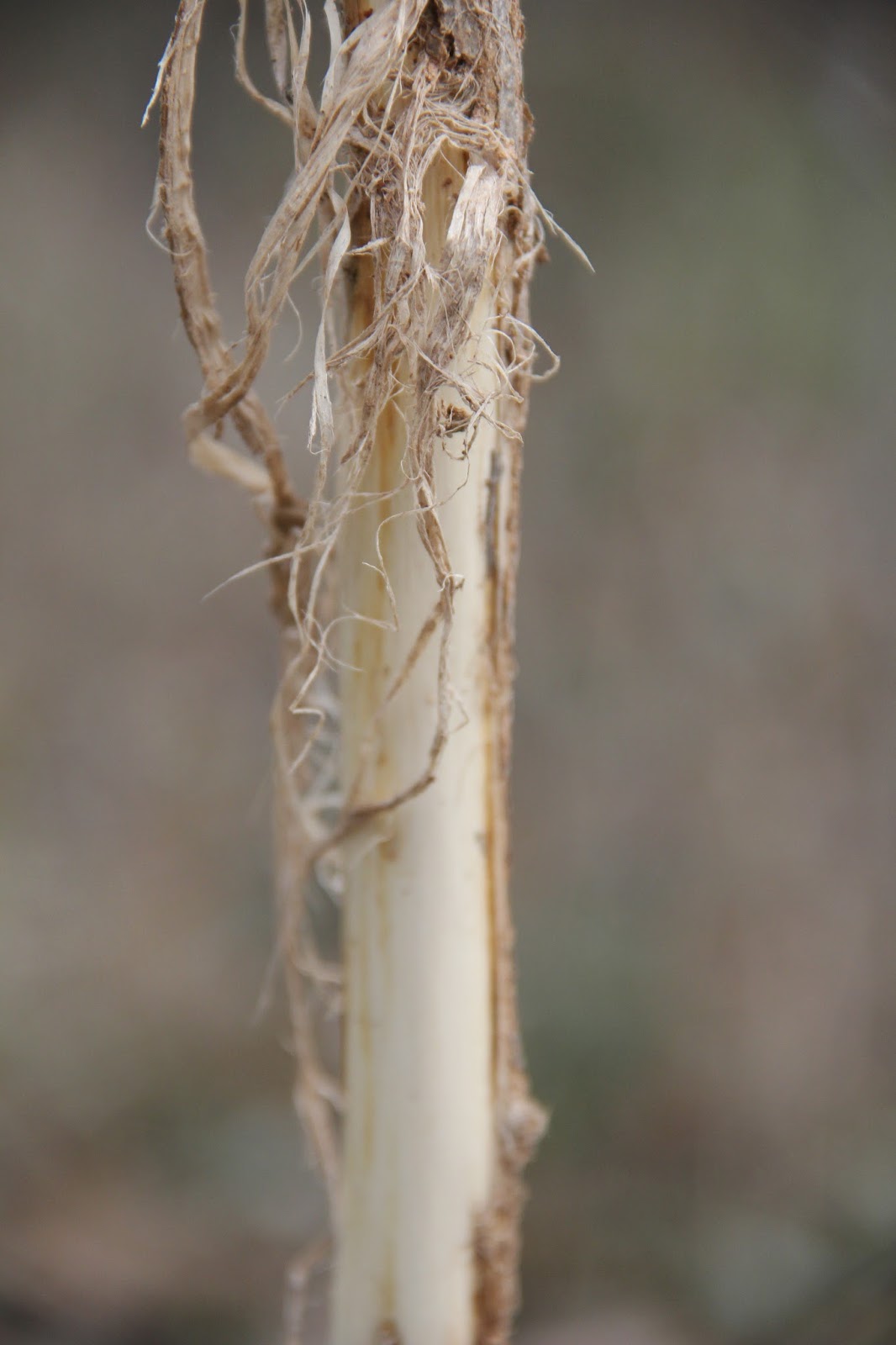
Buck rub at Chipp-A-Waters Park - Mt. Pleasant, MI (16 November 2017)

Chinquapin Oak leaves - Mt. Pleasant, MI (16 November 2017)

Jack Pine - Mt. Pleasant, MI (16 November 2017)
 
Swamp White Oak leaf and moss - Mt. Pleasant, MI (16 November 2017)


Scots Pine - Mt. Pleasant, MI (16 November 2017)

Closeup of a buck rub - Mt. Pleasant, MI (16 November 2017)

Cattail - Mt. Pleasant, MI (16 November 2017)

Motherwort - Mt. Pleasant, MI (16 November 2017)