I've been writing this blog since January 2013. In that time I have created more than eleven hundred individual posts. It's often a challenge thinking of something new to write about...
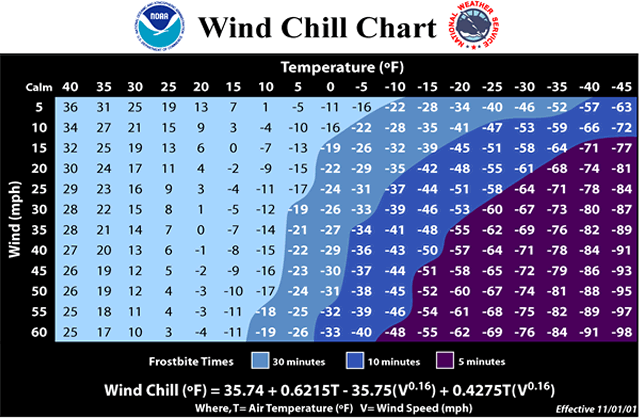
Today I thought I'd sit down and write something about windchill - a measure of how wind changes the perception of air temperature and its impact on exposed skin..
Many of the schools in Michigan were closed four or five days last week. Two cancellations were due to snow and two more were because of extremely low windchill - on Friday some schools closed because of a combination of windchill and road conditions.
Surely I haven't already written anything about windchill!
Have I?
It appears that I have... in February 2015
Wind Chill - What is it and why is it important?
Sunday, February 3, 2019
Monday, January 28, 2019
Backyard Birds (28 January 2019)
Our yard was absolutely filled with birds today! At one point I counted five male/female pairs of Northern Cardinals, more than fifty birds in a mixed flock of finches and sparrows, and eight Black-capped Chickadees. I also saw several Mourning Doves, Dark-eyed Juncos, a Hairy Woodpecker, several White-breasted Nuthatches, and a single Red-Breasted Nuthatch over the course of the day. A pair of Fox Squirrels appeared for a short time this morning, but didn't stay long.
The birds were busy feeding on suet cakes and black oil sunflower seeds both in hanging feeders and on the ground. Even though the birds don't really need us to provide food to get through the winter, when heavy now or ice makes it difficult to find natural foods they sure do appreciate the food that we provide. These birds were so intent on feeding that some of them let me photograph them from about ten feet away as they went to and from the feeder.
| White-breasted Nuthatch (female) - note grey cap |
| White-breasted Nuthatch (male) - note black cap |
| White-breasted Nuthatch (male) |
| House Finch (male) |
| House Finch (male) |
| Black-capped Chickadee eating a sunflower seed |
| Northern Cardinal (male) |
| Dark-eyed Junco |
| American Goldfinch |
| White-breasted Nuthatch (female) |
| Northern Cardinal (male) |
Space Shuttle Challenger - Thirty-two Years Later
Today (January 28th) marks the thirty-second anniversary of the Space
Shuttle Challenger disaster. On January 28th, 1986 at 11:39:13 EST, the
Challenger broke apart 73 seconds after liftoff when an O-ring in one
of the solid rocket boosters failed. All seven crew members died in the
accident.
I remember watching the accident at school. I was in 5th Grade at the time. I don't remember if we were supposed to watch the launch or if the teacher brought in a television after the accident happened.
Officially titled STS-51L, this mission of the Challenger was scheduled to be a special one. STS-51L was carrying a teacher into space. In 1984, NASA began the Teacher in Space Project (TISP) to inspire students and ignite interest in math, science, and space exploration. More than 11,000 teachers applied for the program. Sharon "Christa" McAuliffe was selected to be the first Teacher in Space (with Barbara Morgan as her backup). McAuliffe (and Morgan) trained for 5 months for the mission. Once the Challenger reached space, McAuliffe was scheduled to teach two lessons to students back on Earth. On here return back to Earth, McAuliffe was supposed to go back to teaching in the classroom.
The destruction of the Challenger and the death of seven crew members was a big blow to NASA. Because of the presence of a non-professional (McAuliffe) on the flight, Challenger had received more press attention than most previous Shuttle flights. NASA cancelled flights of the remaining Space Shuttles for nearly three years to examine safety issues and determine the cause of the accident. The Teacher in Space Project was officially replaced with the Educator Astronaut Project in the 1990s.
Barbara Morgan would eventually make it to space. She retired from teaching in 1998 and went to work at NASA as a full-time employee. She flew as a mission specialist on STS-118 in August 2007.
For more information on STS-51L please visit the official NASA website. Information on Christa McAuliffe and Barbara Morgan can be found on their official NASA bios.
Tuesday, January 22, 2019
2019 Isabella Conservation District Spring Tree Order Form
The 2019 Isabella Conservation District Spring Tree Order form is now available. Orders can be dropped off or mailed to the following address:
Isabella Conservation District
5979 E. Broadway Road
Mt. Pleasant, MI 48858
Orders may also be emailed to crystal.beutler@mi.nacdnet.net
A fill-able PDF order form can be found by following this link.
Deadline for ordering is April 9th 2019. Orders must be paid in full at the time of the order - we will accept cash, check, or major credit card (Visa/MC/Discover/AMEX)
Despite the form below saying 2018 Tree and Shrub Order Blank this is the correct form for 2019.
Monday, January 21, 2019
Lunar Eclipse (20 January 2019)
A lunar eclipse occurs any time the earth's shadow passes across the moon's surface. This can only happen during a full moon, when the sun and moon are on opposite sides of the sky. A full moon occurs approximately every 27 days - so you might think that a lunar eclipse would happen every month.
That is not the case.
The moon's orbit around the earth does not line up exactly with the plane of the earth's orbit around the sun. The moon's orbit is offset by about 5 degrees so a lunar eclipse is a rarer occurrence than a full moon. The next total lunar eclipse will not happen until May 2021, but it will not be visible in Mid-Michigan. The next total lunar eclipse that we will be able to see in its entirety will be on the night of 15-16 May 2022.
Last night's eclipse was special for another reason. The path that the moon takes around the earth is not a perfect circle - it's more of an ellipse. Sometime the moon is closer to the earth than it is at other times. The closest approach to the earth is approximately 221,000 miles and the furthest is more than 252,000 miles! The closest approach to the earth is known as the perigee; the furthest distance from the earth is known as the apogee. Last night's full moon occurred when the moon was near perigee. These mean that the moon appeared larger than normal (about 14% larger than it would during apogee). Although not an astronomical term, a full moon at perigee is commonly called a "supermoon".
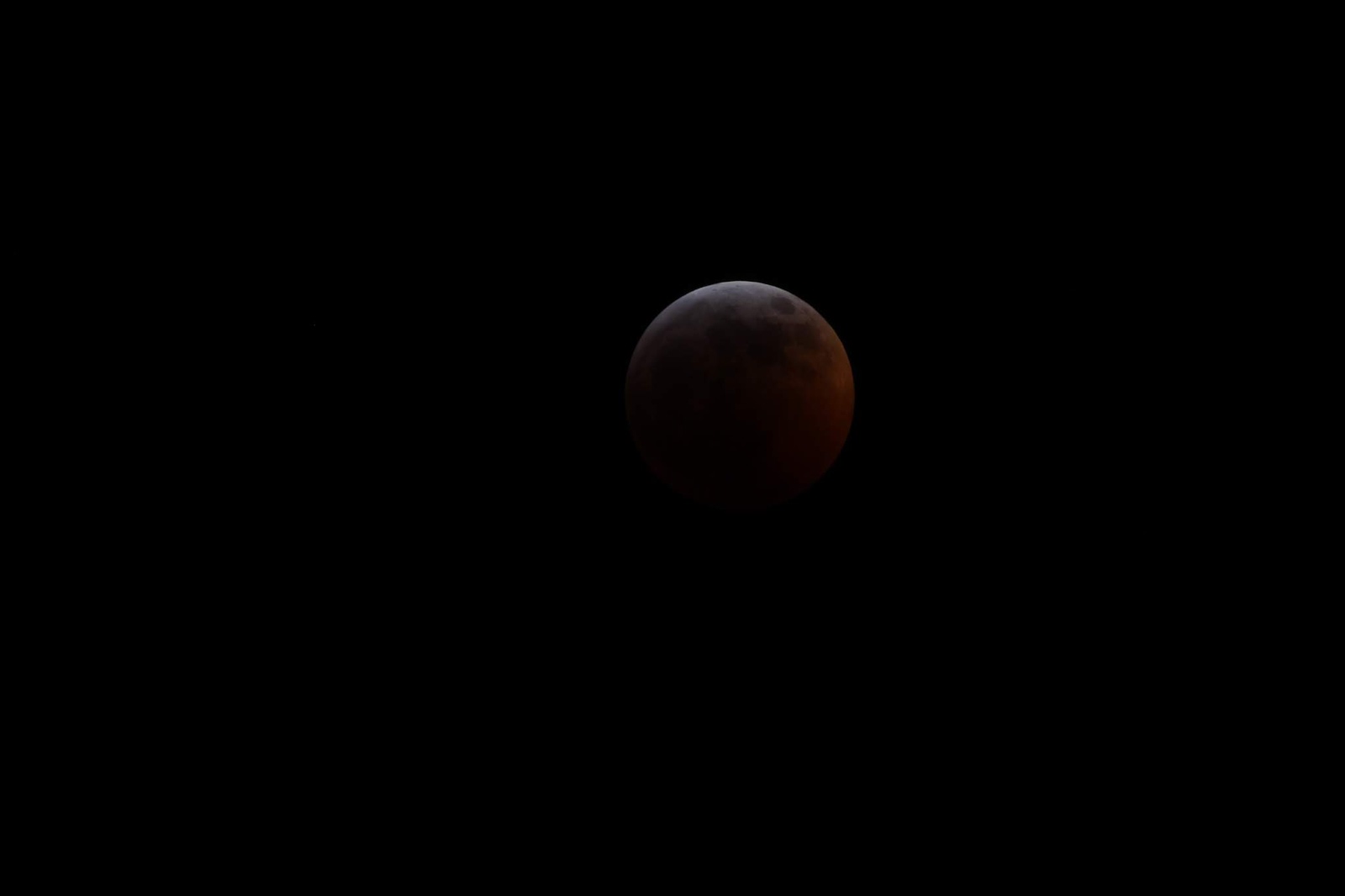
Luckily for me, I didn't have to go far to see and photograph last nights eclipse. I took the following sequence of photographs from my driveway. In the first image the eclipse has not yet started. The second two pictures show a partial eclipse as the earth's shadow begins to pass over the moon.
The final photograph shows the moon at full eclipse. Even at full eclipse some light does leak around the earth and reflect from the moon's surface. The earth's atmosphere scatters the shorter wavelengths of visible light (blue and violet) with only the longest wavelengths (orange and red) passing through unchanged - this is the same reason sunsets and sunrises appear red. Because the red light is the most likely to pass through the atmosphere, the moon appears red during a full lunar eclipse.
Thursday, January 17, 2019
Trail cam pics and a walk in the January woods.
In late December I placed my trail cameras in the woods for the first time in nearly a year. Today I went to switch out the memory cards. Although I managed to get pictures of red fox, raccoon, squirrels, and deer (including several bucks) I was disappointed by the results and ended up moving both cameras.
After moving the cameras I used the opportunity to take a walk through the woods and take some photographs. There was no snow on the ground, but lots of ice. My favorite photos of the day were probably those showing leaves locked in ice. Here are a few of the images that I captured.
| A fox runs in front of the camera |
| Part of a herd of deer, including two bucks, passing by the camera |
After moving the cameras I used the opportunity to take a walk through the woods and take some photographs. There was no snow on the ground, but lots of ice. My favorite photos of the day were probably those showing leaves locked in ice. Here are a few of the images that I captured.
| Bright sunlight has been a rare sight in recent days |
| This picture was not planned - the plane flew over just as I was taking the picture. |
| Flowing water carved this channel down through the ice |
| Many shades of brown |
| Living and dead trees stand bare in the winter swamp |
| Oak leaves trapped in ice |
| Coyote scat on top of a pile of deer scat |
| Water levels have dropped several inches since this ice formed |
| Eastern Hemlock |
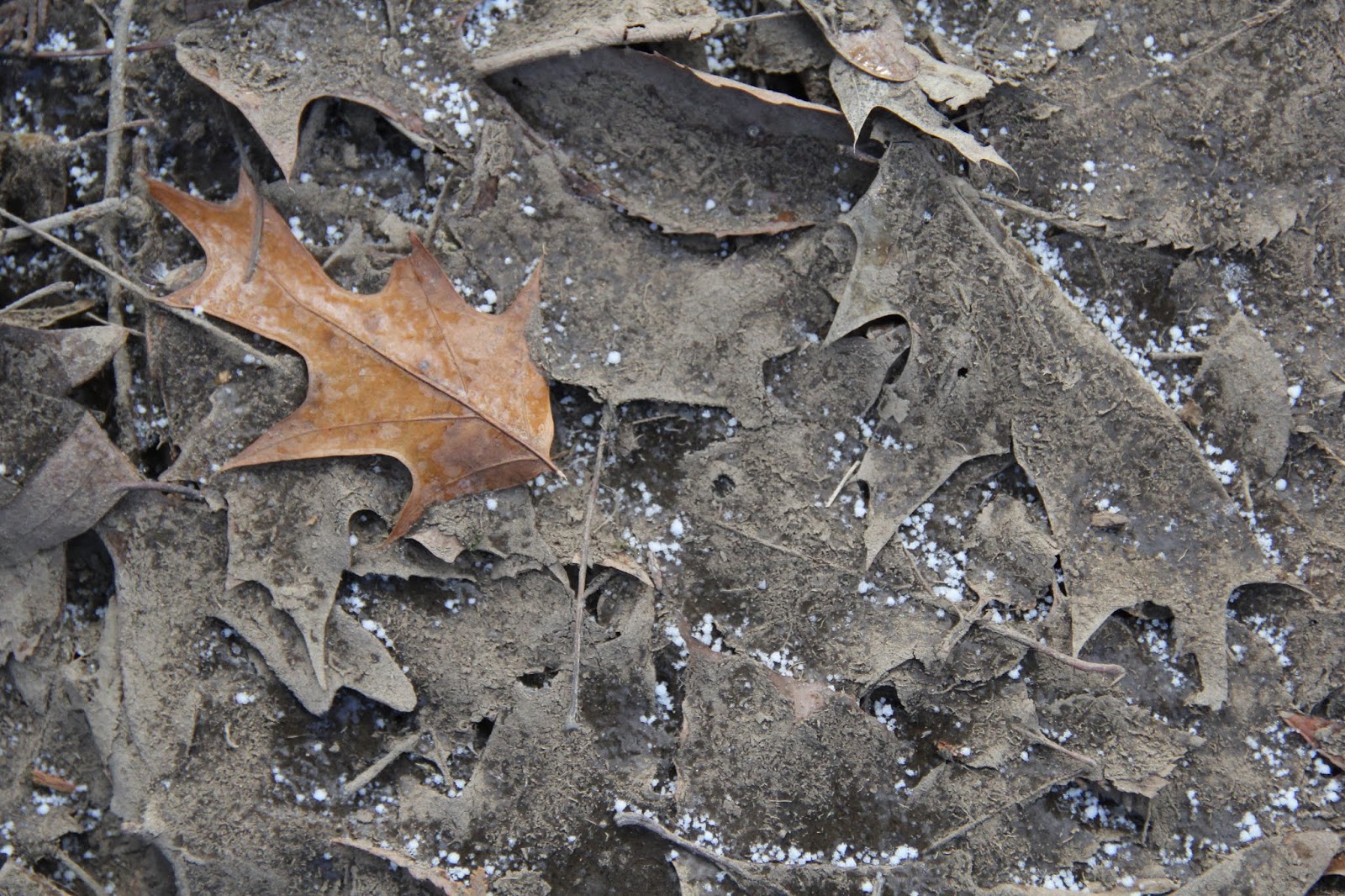
| Silt covered leaves, topped by a single clean oak leaf |
| A boardwalk crosses an eroded area on the trail |
| Northern White Cedar |
| The bright trunks of aspen trees glow in the sunlight |
Tuesday, January 15, 2019
A new way of looking at ice
This morning, Mid-Michigan woke up to find everything covered in a layer of ice. The icy road meant that dozens of schools throughout the state canceled classes for the day. Weather conditions haven't changed so there is a good chance that classes will be canceled again tomorrow.It's winter here in Mid-Michigan. During winter you might expect to see everything covered in ice and snow, but have you ever thought about what ice and snow are?
The obvious answer is that ice (and snow) is the solid state of water.
The less obvious answer is that ice is a mineral.
Yes, a mineral.
Like the thing that rocks are made of.
How is that possible? If you look at the definition of a mineral, ice checks all of the boxes. A mineral is a naturally-occurring inorganic crystalline solid with a specific chemical composition.
Ice is naturally-occurring. Ice can form outdoors when the temperature drops below 32 degrees Fahrenheit. (As I write, the temperature outdoors is 28 degrees.) Ice that forms in your freezer is not a mineral because it would be considered man-made.
Ice is inorganic. Inorganic simply means that it has never been alive. Things might live in ice, but the ice itself has never been alive.
Ice is crystalline. Ice forms crystals that have a specific internal structure - the water molecules that form ice bond together in a predictable pattern. Liquid water and water vapor form much looser bonds and do not lock together in a predictable patter.
Ice is a solid. When water drops below 32 degrees Fahrenheit, the molecules of water bond together to form a solid. Only in its solid form can water be considered a mineral; neither liquid water or water vapor meet the definition of being a mineral.
Ice has a specific chemical composition. Ice is formed from bonded molecules of water, each composed of two atoms of hydrogen and one atom of oxygen. Other elements or molecules may be included in the ice, but the ice itself is formed only from the water molecules.
Ice is the only state of water that can be called a mineral. If the ice melts or evaporates to form water vapor (a process known as sublimation) it ceases to be a mineral. Due to the ability of water to shift states of matter, ice is a very ephemeral mineral across most of the earth. In mid-latitudes such as where Michigan is located, ice can only be found during roughly half of the year. At latitudes closer to the equator, ice would only be found in the highest elevations where the temperature can drop below the freezing point. It is only in the highest elevations and the highest latitudes (the Arctic and Antarctic) that ice can be found year round.
It's fun to look at familiar things in new and unexpected ways - like looking at ice as a mineral. Right now large portions of the United States and Canada are rich in naturally formed ice, but come the period May to September it will be unavailable at any price throughout much of the same region.
The obvious answer is that ice (and snow) is the solid state of water.
The less obvious answer is that ice is a mineral.
Yes, a mineral.
Like the thing that rocks are made of.
How is that possible? If you look at the definition of a mineral, ice checks all of the boxes. A mineral is a naturally-occurring inorganic crystalline solid with a specific chemical composition.
Ice is naturally-occurring. Ice can form outdoors when the temperature drops below 32 degrees Fahrenheit. (As I write, the temperature outdoors is 28 degrees.) Ice that forms in your freezer is not a mineral because it would be considered man-made.
Ice is inorganic. Inorganic simply means that it has never been alive. Things might live in ice, but the ice itself has never been alive.
Ice is crystalline. Ice forms crystals that have a specific internal structure - the water molecules that form ice bond together in a predictable pattern. Liquid water and water vapor form much looser bonds and do not lock together in a predictable patter.
Ice is a solid. When water drops below 32 degrees Fahrenheit, the molecules of water bond together to form a solid. Only in its solid form can water be considered a mineral; neither liquid water or water vapor meet the definition of being a mineral.
Ice has a specific chemical composition. Ice is formed from bonded molecules of water, each composed of two atoms of hydrogen and one atom of oxygen. Other elements or molecules may be included in the ice, but the ice itself is formed only from the water molecules.
Ice is the only state of water that can be called a mineral. If the ice melts or evaporates to form water vapor (a process known as sublimation) it ceases to be a mineral. Due to the ability of water to shift states of matter, ice is a very ephemeral mineral across most of the earth. In mid-latitudes such as where Michigan is located, ice can only be found during roughly half of the year. At latitudes closer to the equator, ice would only be found in the highest elevations where the temperature can drop below the freezing point. It is only in the highest elevations and the highest latitudes (the Arctic and Antarctic) that ice can be found year round.
It's fun to look at familiar things in new and unexpected ways - like looking at ice as a mineral. Right now large portions of the United States and Canada are rich in naturally formed ice, but come the period May to September it will be unavailable at any price throughout much of the same region.
Subscribe to:
Posts (Atom)