Showing posts with label storms. Show all posts
Saturday, November 10, 2018
When the gales of November came early...
Today marks the 43rd Anniversary of the wreck of the S.S. Edmund Fitzgerald, the most famous shipwreck in the Great Lakes.
On the evening of 10 November 1975, the freighter S.S. Edmund Fitzgerald was approaching Whitefish Point, MI with a full load of taconite (iron ore) in a Lake Superior storm. Despite the hurricane force winds, the 729 foot ship did not appear to be under distress before it sank suddenly at 7:10 PM. All twenty-nine men aboard the Edmund Fitzgerald perished. To this day, the exact cause of the ship's sinking is unknown, but a rogue wave (or series of rogue waves) is the prime suspect.
The ship was commemorated by Canadian singer/songwriter Gordon Lightfoot in his 1976 song "The Wreck of the Edmund Fitzgerald".
The wreck site was visited by dive teams in 1989, 1995, and 1995 to survey the site and collect artifacts. The ship's bell was recovered during the 1995 dive. The bell was restored and now rests at the Great Lakes Shipwreck Museum at Whitefish Point, MI. For more information on the Edmund Fitzgerald visit the Great Lakes Shipwreck Museum website.
Although the Edmund Fitzgerald is the Great Lakes' most famous shipwreck, 1975 was not the first time that "the gales of November" turned deadly. A November storm in 1913 claimed the lives of approximately 250 sailors, sank 12 ships, and foundered approximately 30 more ships across the Great Lakes. This massive storm which lasted for nearly five days became known as the "Big Blow" or the "White Hurricane' among other names.
On 11 November 1940, a storm known as the "Armistice Day Blizzard" sank three freighters in Lake Michigan with the loss of 66 lives. The same storm caused the deaths of dozens of duck hunters along the Mississippi River.
Friday, August 31, 2018
The Days of Summer - Day Fifty-nine through Day Sixty-five
Here is installment nine of my Days of Summer photo project - I am trying to catch up, but I have been very busy with scheduling school program I started this project on the Summer Solstice (21 June 2018) with a photo from a sunrise hike at the Chippewa Watershed Conservancy's Bundy Hill Preserve. My plan is to photograph something every day until the Fall Equinox (22 September 2018) and share one image from each day. I am currently in week ten of the project. To see the previous installments click here.
Day 59 (18 August 2018) - American Robin feathers
This image was photographed at my parent's home in Clinton County. While searching for something to photograph, I found a dead American Robin lying on the ground on a mowed path through the woods. This picture shows some of the feathers on its back and wings, with just a tiny bit of orange from its neck at the bottom left of the image.
Day 60 (19 August 2018) - Woodpecker holes in a birch trunk
This picture was taken at the Chippewa Watershed Conservancy's Hall's Lake Natural Area during a stewardship outing. I noticed this log while searching the woods for Autumn Olive (an invasive species) and went back to photograph it later. These holes were probably originally created by a Yellow-bellied Sapsucker. Now a Hairy Woodpecker was taking advantage of the easy access to search for insects in the rotting trunk.
Day 61 (20 August 2018) - Goldenrod Soldier Beetles on Rosinweed
This image was taken in our home native pollinator garden. At any given time (especially during late summer) I can find dozens pollinators in our garden. This year, for the first time, I noticed an influx of Goldenrod Soldier Beetles. This mating pair was crawling around on one of the Rosinweed plants. This image has been cropped from a horizontal to a vertical format.
Day 62 (21 August 2018) - Bombus impatiens on Purple Coneflower
I love bees, especially bumble bees! This image of a Common Eastern Bumble Bee (Bombus impatiens) was taken at the Forest Hill Nature Area. I cropped the image to a square just because I thought it looked best in this format.
Day 63 (22 August 2018) - Storm clouds
This picture was taken at Chipp-A-Waters Park in Mt. Pleasant late in the day. This image reminds me of the froth created by waves crashing on a beach.
Day 64 (23 August 2018) - Monarch caterpillar
This Monarch (Danaus plexippus) on a Common Milkweed (Asclepias syriaca) was photographed in the field next to the Isabella Conservation District office. On days that I spend a lot of time in the office, sometimes I just need to go outside for a few minutes.
Day 65 (24 August 2018) - Native Pollinator Garden at Winn Elementary
The Isabella Conservation District planted and currently helps maintain native pollinator gardens at two local schools and the Mt. Pleasant Discovery Museum. With school starting, I spent a couple hours pulling weeds and moving "volunteer" plants from pathways at the Winn Elementary School Garden. The Leopold bench in the picture was one of six constructed with students back in 2013. They were all recently repainted in the school colors.
Day 59 (18 August 2018) - American Robin feathers
This image was photographed at my parent's home in Clinton County. While searching for something to photograph, I found a dead American Robin lying on the ground on a mowed path through the woods. This picture shows some of the feathers on its back and wings, with just a tiny bit of orange from its neck at the bottom left of the image.
Day 60 (19 August 2018) - Woodpecker holes in a birch trunk
This picture was taken at the Chippewa Watershed Conservancy's Hall's Lake Natural Area during a stewardship outing. I noticed this log while searching the woods for Autumn Olive (an invasive species) and went back to photograph it later. These holes were probably originally created by a Yellow-bellied Sapsucker. Now a Hairy Woodpecker was taking advantage of the easy access to search for insects in the rotting trunk.
Day 61 (20 August 2018) - Goldenrod Soldier Beetles on Rosinweed
This image was taken in our home native pollinator garden. At any given time (especially during late summer) I can find dozens pollinators in our garden. This year, for the first time, I noticed an influx of Goldenrod Soldier Beetles. This mating pair was crawling around on one of the Rosinweed plants. This image has been cropped from a horizontal to a vertical format.
Day 62 (21 August 2018) - Bombus impatiens on Purple Coneflower
I love bees, especially bumble bees! This image of a Common Eastern Bumble Bee (Bombus impatiens) was taken at the Forest Hill Nature Area. I cropped the image to a square just because I thought it looked best in this format.
Day 63 (22 August 2018) - Storm clouds
This picture was taken at Chipp-A-Waters Park in Mt. Pleasant late in the day. This image reminds me of the froth created by waves crashing on a beach.
Day 64 (23 August 2018) - Monarch caterpillar
This Monarch (Danaus plexippus) on a Common Milkweed (Asclepias syriaca) was photographed in the field next to the Isabella Conservation District office. On days that I spend a lot of time in the office, sometimes I just need to go outside for a few minutes.
Day 65 (24 August 2018) - Native Pollinator Garden at Winn Elementary
Friday, November 10, 2017
The witch of November come stealin'
Today marks the 42nd Anniversary of the wreck of the S.S. Edmund Fitzgerald, the most famous shipwreck in the Great Lakes.
On the evening of 10 November 1975, the freighter S.S. Edmund Fitzgerald was approaching Whitefish Point, MI with a full load of taconite (iron ore) in a Lake Superior storm. Despite the hurricane force winds, the 729 foot ship did not appear to be under distress before it sank suddenly at 7:10 PM. All twenty-nine men aboard the Edmund Fitzgerald perished. To this day, the exact cause of the ship's sinking is unknown.
The ship was commemorated by Canadian singer/songwriter Gordon Lightfoot in his 1976 song "The Wreck of the Edmund Fitzgerald".
The wreck site was visited by dive teams in 1989, 1995, and 1995 to survey the site and collect artifacts. The ship's bell was recovered during the 1995 dive. The bell was restored and now rests at the Great Lakes Shipwreck Museum at Whitefish Point, MI. For more information on the Edmund Fitzgerald visit the Great Lakes Shipwreck Museum website.
Although the Edmund Fitzgerald is the Great Lakes' most famous shipwreck, 1975 was not the first time that "the gales of November" turned deadly. A November storm in 1913 claimed the lives of approximately 250 sailors, sank 12 ships, and foundered approximately 30 more ships across the great lakes. This massive storm which lasted for nearly five days became known as the "Big Blow" or the "White Hurricane' among other names.
On 11 November 1940, a storm known as the "Armistice Day Blizzard" sank three freighters in Lake Michigan with the loss of 66 lives. The same storm caused the deaths of dozens of duck hunters along the Mississippi River.
Monday, November 28, 2016
Clouds over Lake Michigan (26 November 2016)
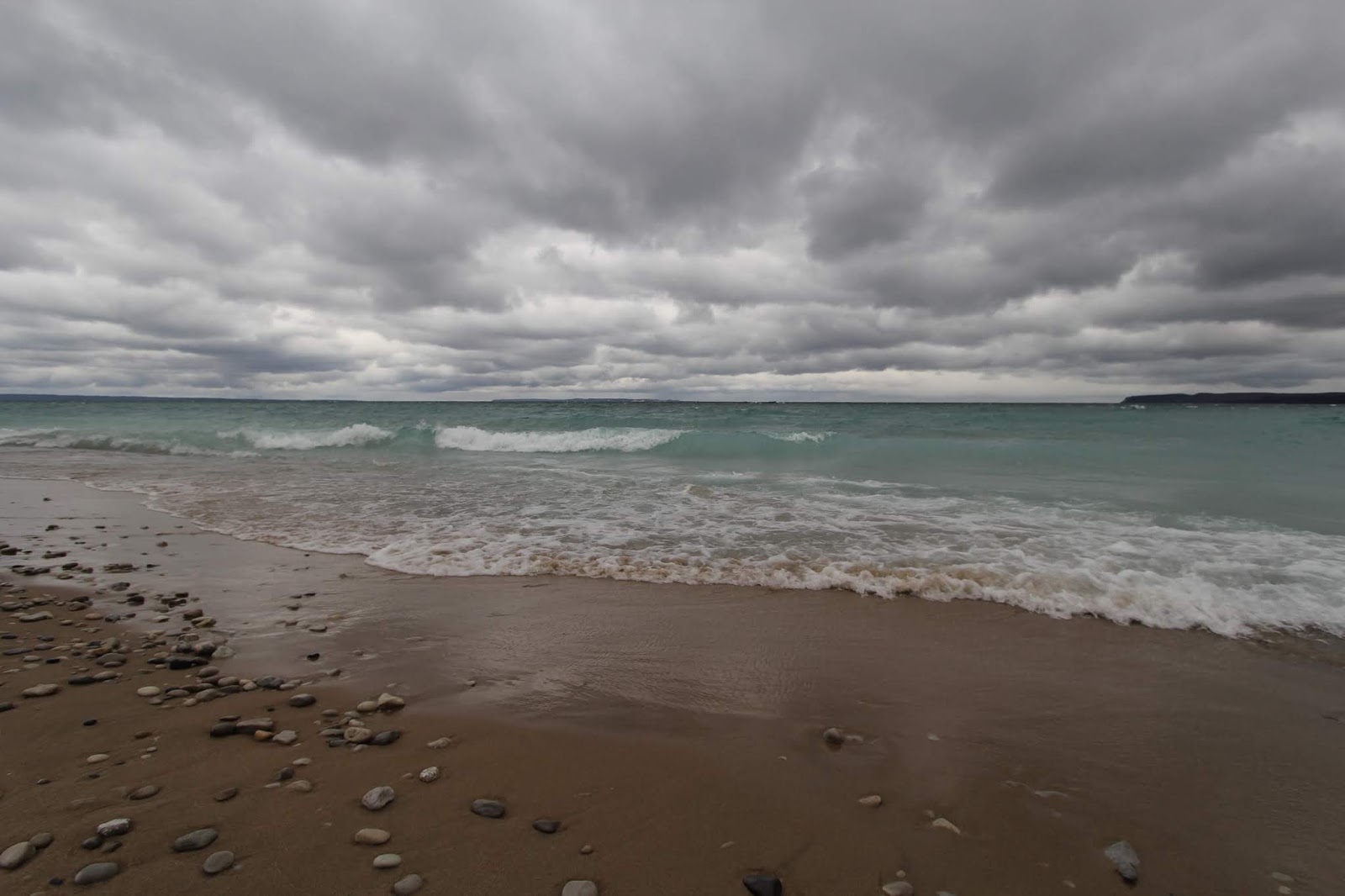
Stormy skies and waves are among my favorite subjects to photograph - It's almost impossible to take a bad picture. We spent this past weekend visiting northwest Michigan and I got plenty of photographic opportunities on Saturday (26 November).
The first set of photos was taken at the Empire municipal beach. Despite years of visiting this part of the state. This was the first time that we have ever stopped at this beach.
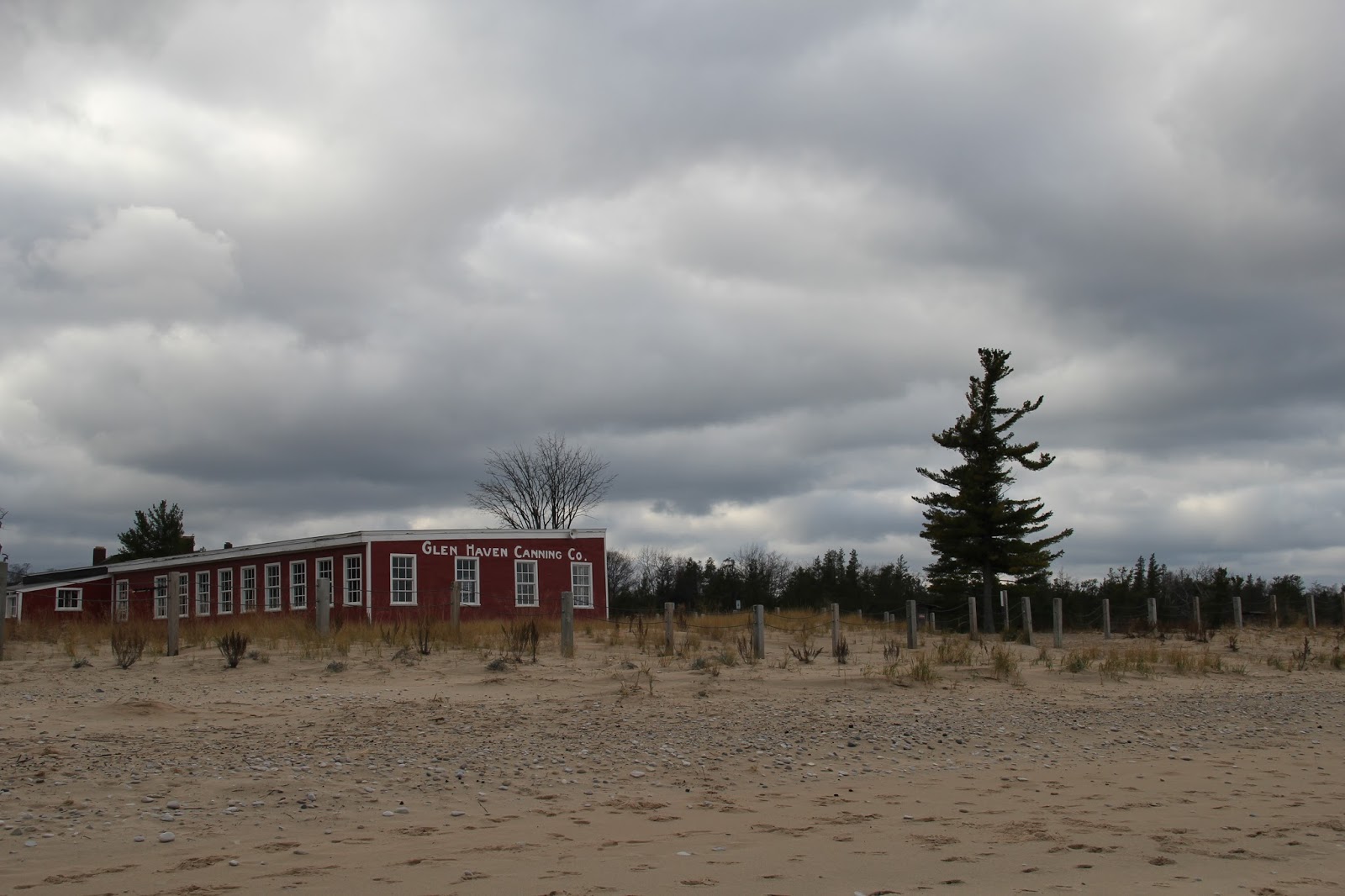
After leaving Empire, we next made a stop at Glen Haven. Glen Haven is a restored fishing village located within Sleeping Bear Dunes National Lakeshore.
Our final shoreline stop of the day was the Mission Point Lighthouse located at the tip of the Old Mission Peninsula that divides the East Arm and West Arm of Grand Traverse Bay. This is one of my favorite places to photograph.
The first set of photos was taken at the Empire municipal beach. Despite years of visiting this part of the state. This was the first time that we have ever stopped at this beach.
After leaving Empire, we next made a stop at Glen Haven. Glen Haven is a restored fishing village located within Sleeping Bear Dunes National Lakeshore.
Our final shoreline stop of the day was the Mission Point Lighthouse located at the tip of the Old Mission Peninsula that divides the East Arm and West Arm of Grand Traverse Bay. This is one of my favorite places to photograph.
Monday, December 30, 2013
Ice Storm Photos
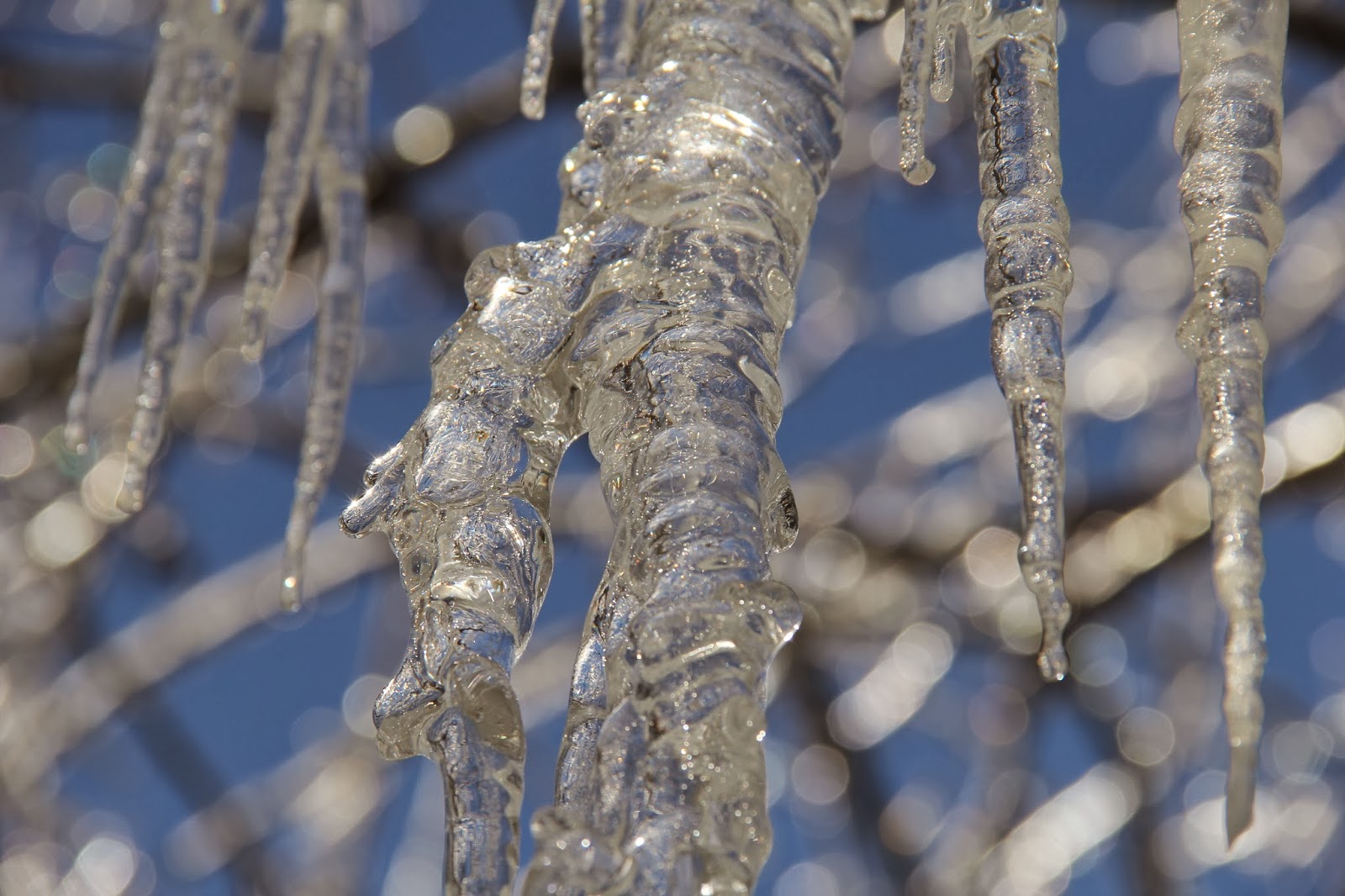
On the night of 21-22 December much of Lower Michigan experienced an ice storm. This storm knocked out power for nearly half a million homes in Michigan before continuing on through Canada and Maine. Some people are still without power more than a week later. Fortunately, Alma did not have any major damage from the storm. We ended up with about 1/4 inch of ice covering everything. It made for a beautiful, but slippery, scene in our neighborhood.
Tuesday, November 19, 2013
Electricity (or the lack thereof)
We think very little about the wonder of electricity until it goes out. Our lights are electric. Many of us cook on electric stoves, or in electric ovens, or in microwave ovens. Our furnaces will not turn on without electricity. If your home has a well, it runs with an electric pump. That water is then heated with a water heater that requires electricity to turn on and off.
The United States is a nation that runs on electricity. Sometimes that electricity shuts off. People cannot do their work. It relies on electricity. Schools close down because there are no lights (and the windows do not let in enough natural light) and the heat won't kick on without electricity. Neighborhoods go dark except for candles or lanterns. Some people possess gasoline powered generators, but this is a temporary solution.
My house was without power for only 26 hours, but in that time the inside temperature dropped by 15 degrees (Fahrenheit). It wasn't cold, but it was less comfortable. My wife had some work that she had to do - work requiring a computer and internet access (which doesn't work without power). I sent her to a hotel room for the night. A friend's family was staying in the same hotel, while he was trying to find a generator to run a pump to keep their basement from flooding.
Compared the effects of storms on other parts of the world, what we experienced was an inconvenience.
Interestingly, two of the last three books that I have read were about people living in hard times and hard places.
Paddling to Winter by Julie Buckles is a book about a newlywed couple's decision to canoe from their home in Wisconsin north to the Canadian Arctic. They traveled 1700 miles by canoe and then spent the winter in a cabin (with no electricity, heated by wood, no running water) loaned by a couple they met along their journey.
Little Heathens: Hard Times and High Spirits on an Iowa Farm During the Great Depression by Mildred Armstrong Kalish is a memoir of a childhood spent on a family farm in small town Iowa during the 1930s. Her childhood homes were lit by lantern and gas lamp, heated by wood (only in the kitchen and parlor - no heat upstairs in the bedrooms), food was prepared on the wood stove, water was pumped from a well by windmill or by hand, and the bathroom was an outhouse in the back yard.
While both authors' experience were hard, they were prepared for the hardships. They knew what to expect.
Reading books like these puts an interesting spin on losing your own electricity (if even for only a short time). Realizing that much of the world's population still lives without electricity really makes me thankful for those things that we have.
The United States is a nation that runs on electricity. Sometimes that electricity shuts off. People cannot do their work. It relies on electricity. Schools close down because there are no lights (and the windows do not let in enough natural light) and the heat won't kick on without electricity. Neighborhoods go dark except for candles or lanterns. Some people possess gasoline powered generators, but this is a temporary solution.
My house was without power for only 26 hours, but in that time the inside temperature dropped by 15 degrees (Fahrenheit). It wasn't cold, but it was less comfortable. My wife had some work that she had to do - work requiring a computer and internet access (which doesn't work without power). I sent her to a hotel room for the night. A friend's family was staying in the same hotel, while he was trying to find a generator to run a pump to keep their basement from flooding.
Compared the effects of storms on other parts of the world, what we experienced was an inconvenience.
Interestingly, two of the last three books that I have read were about people living in hard times and hard places.
Paddling to Winter by Julie Buckles is a book about a newlywed couple's decision to canoe from their home in Wisconsin north to the Canadian Arctic. They traveled 1700 miles by canoe and then spent the winter in a cabin (with no electricity, heated by wood, no running water) loaned by a couple they met along their journey.
Little Heathens: Hard Times and High Spirits on an Iowa Farm During the Great Depression by Mildred Armstrong Kalish is a memoir of a childhood spent on a family farm in small town Iowa during the 1930s. Her childhood homes were lit by lantern and gas lamp, heated by wood (only in the kitchen and parlor - no heat upstairs in the bedrooms), food was prepared on the wood stove, water was pumped from a well by windmill or by hand, and the bathroom was an outhouse in the back yard.
While both authors' experience were hard, they were prepared for the hardships. They knew what to expect.
Reading books like these puts an interesting spin on losing your own electricity (if even for only a short time). Realizing that much of the world's population still lives without electricity really makes me thankful for those things that we have.
Subscribe to:
Posts (Atom)